29 May
|
19
min read

Omnichannel retail experience: where brands fail and what gets right

Omnichannel Support
Support Ops & Teams
Omnichannel retail experience: where brands fail and what gets right banner
Delivery Manager Everhelp
Hlib
Delivery Manager
TL;DR: Most retailers claim omnichannel. Few deliver it. The gaps show up in the friction: prices that don't match online and in-store, loyalty points that reset by channel, and store staff with no record of an online order. This guide covers the customer emotional journey, social commerce as a purchase channel, the post-purchase experience nobody talks about, and a 3-phase roadmap mid-size retailers can realistically use.

What if your biggest competitive risk is not another brand, but your own channel friction? Today, shoppers use an average of 6 touchpoints before completing a purchase (UniformMarket), yet only 13% of businesses fully carry customer context across those channels (Forrester). That gap is where the omnichannel retail customer experience either builds trust or quietly destroys it. 

This guide goes beyond definitions to show what bad omnichannel feels like, what Nike and Sephora get right, and how mid-size retailers can build something meaningful without an enterprise budget.

What bad omnichannel actually feels like

Every top article explains what omnichannel is. Few show what happens to the customer when it fails. Here are five scenarios your customers have likely already lived through:

  1. The price mismatch: Let’s say you are a shopper who spots a sweater online for $79, drives to the store, and finds it priced at $94. The cashier can't honour the online price. The customer leaves empty-handed and doesn't return.
  2. The loyalty blackout: A customer earns points through your app all year, then tries to redeem them in-store. The POS doesn't recognise the account. The associate shrugs.
  3. The invisible order: A customer places a click-and-collect order online, arrives at the store, and is asked: "Do you have a confirmation number?" The order doesn't appear in any system.
  4. The support loop: A buyer contacts live chat about a delayed delivery, follows up by email with a new agent who has zero context, then calls and explains the same issue a third time. Salesforce research confirms that 56% of customers say they repeat themselves across support interactions.
  5. The return wall: A customer tries to return an online order at a physical location. The store can't process it. Three weeks and two follow-up emails later, no refund has arrived.

Cart abandonment alone costs e-commerce an estimated $4 trillion annually, according to the Baymard Institute, much of it driven by this kind of preventable friction.

The customer emotional journey in omnichannel retail

Most journey maps show the logical path: research, browse, purchase, return. The emotional layer is where customer retention is actually won or lost. Here is what customers feel at each stage, and where the experience either earns trust or loses it:

  • Discovery (social, search, ads): A product sparks genuine interest. If tapping the link lands on a homepage with no context, that spark dies immediately. The emotional state shifts from curiosity to friction before the customer has even entered your funnel.
  • Research (website, app, in-store browsing): Trust builds when pricing and stock levels match across every touchpoint. When an app cart does not sync between devices, the frustration is instant, and the sale is usually lost at a stage the customer never expected to be difficult.
  • In-store visit after online browsing: This is often the highest-anxiety moment. The customer arrives, hoping the associate already knows them. When one pulls up their browsing history and says, "I see you were looking at these in a size 8," it creates genuine delight. Most customers never experience it, and that gap is entirely a data problem, not a people problem.
  • Purchase: Confidence peaks when the checkout experience is consistent with how the customer arrived. A price that differs from what they saw online, or a loyalty point balance that does not match, introduces doubt at the worst possible moment.
  • Post-purchase: Delight either deepens or collapses here. A timely confirmation, a proactive shipping update, and an easy return process build the kind of trust that drives repeat purchases. Silence and broken tracking links undo everything that came before.

Pro tip: Map this emotional journey against your own channels. At which stage does your experience go from expected to delightful? At which stage does it go from smooth to frustrating? That gap is your highest-priority improvement opportunity.

Mapping these emotional beats is what separates brands that earn advocacy from brands that just process transactions.
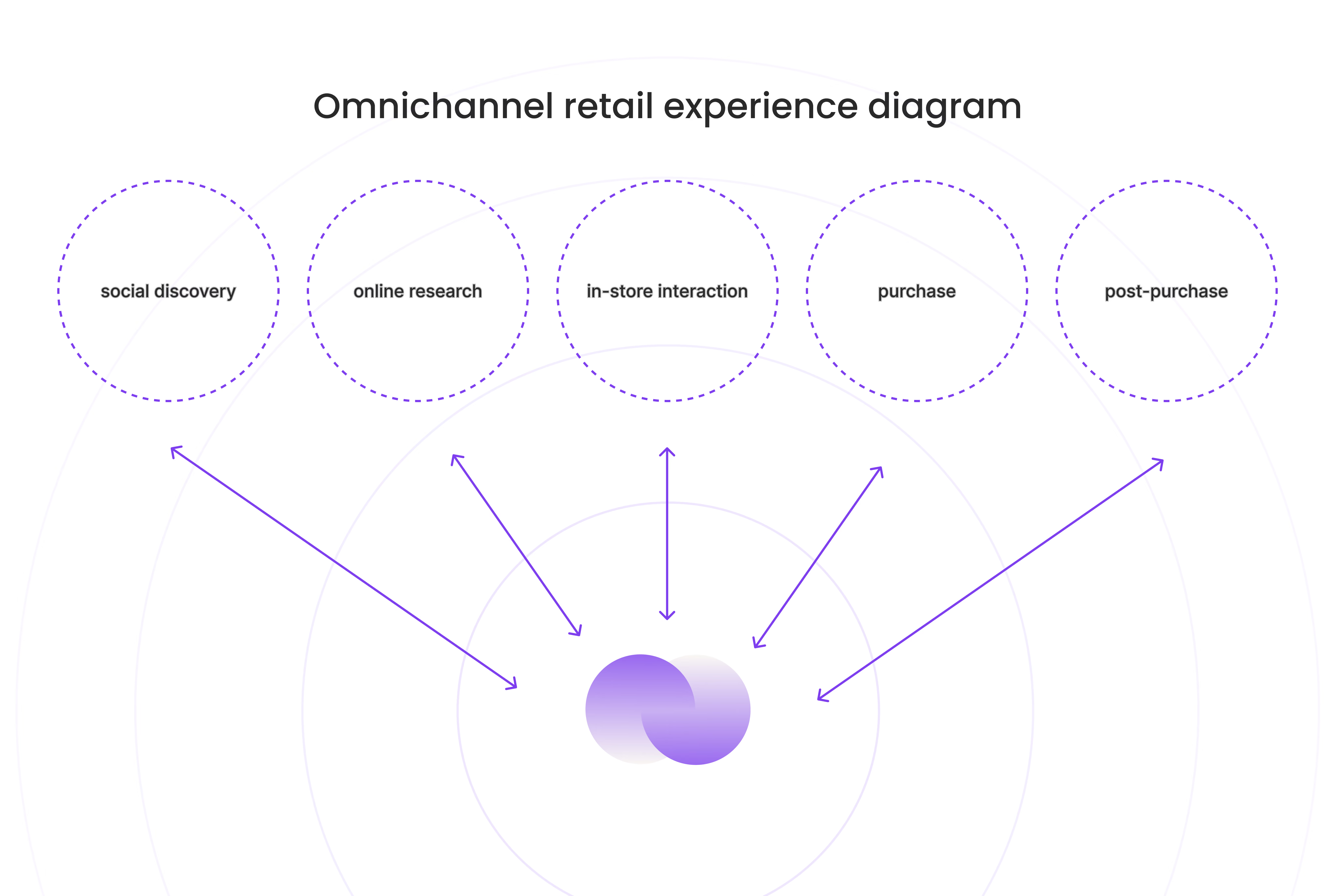
Omnichannel retail experience diagram

Omnichannel retail experience diagram

The diagram above maps the customer across five stages: social discovery, online research, in-store interaction, purchase, and post-purchase. Each stage connects to the channels involved and to the shared data layer that links them: a unified customer profile, order history, loyalty status, and support context. The arrows run in both directions: every channel should be able to read from and write to that central layer in real time.

How to apply the diagram in real business cases

The diagram is not just illustrative. Use it as a working gap audit tool by walking through each connection in your own stack.

Step 1: Map your current state

For each of the five stages, identify which channels are actually involved in your customer journey today. Then rate each channel-to-data-layer connection as one of three states:

  • Fully integrated: the channel reads and updates the shared customer profile in real time
  • Partially integrated: some data syncs, but with delays, manual steps, or missing fields
  • Broken: the channel operates in isolation with no shared context

Step 2: Identify your highest-friction handoffs

The most commonly broken connections are predictable across retail businesses:

  • Social commerce (TikTok Shop, Instagram Shopping) to website cart: cart data rarely carries over
  • In-store POS to online customer profile: staff often cannot see online order history or loyalty points
  • Post-purchase support: agents lack context from the original purchase channel, which is the root cause of the 56% repeat-explanation rate, according to Forrester research.

Step 3: Prioritise by customer impact, not technical complexity

A broken social-to-cart connection affects customers at the top of the funnel, where volume is highest. A broken in-store return flow affects customers who have already converted and are most at risk of churning. Both matter, but the return flow typically has a greater effect on customer lifetime value because it hits customers post-purchase, when loyalty is being formed or destroyed.

Step 4: Use the diagram to brief your tech and support teams

A visual like this is more actionable than a requirements document when briefing engineers, CRM administrators, or a customer support outsourcing partner. It shows the desired end state and makes broken connections visible to stakeholders who may not follow CX metrics closely.

For mid-size retailers, the most practical starting point is almost always the same: unify the customer profile first, then extend visibility to the in-store team, then close the post-purchase loop. The roadmap in a later section of this guide follows exactly that sequence.

Social commerce as a first-class omnichannel channel

TikTok Shop, Instagram Shopping, and Pinterest Checkout are purchase channels now, not discovery channels. Around 74% of shoppers use social media before making an online purchase decision (Electroiq), and a growing share complete that purchase without visiting a brand's website at all. Most brands are present on social channels. Far fewer have connected them into a complete omnichannel retail shopping experience. Three integration layers matter:

Social-to-checkout continuity 

If a customer adds a product via Instagram Shopping but does not complete the purchase, that item should appear in their website cart on return. Without this bridge, every interrupted social session is a lost conversion with no recovery path.
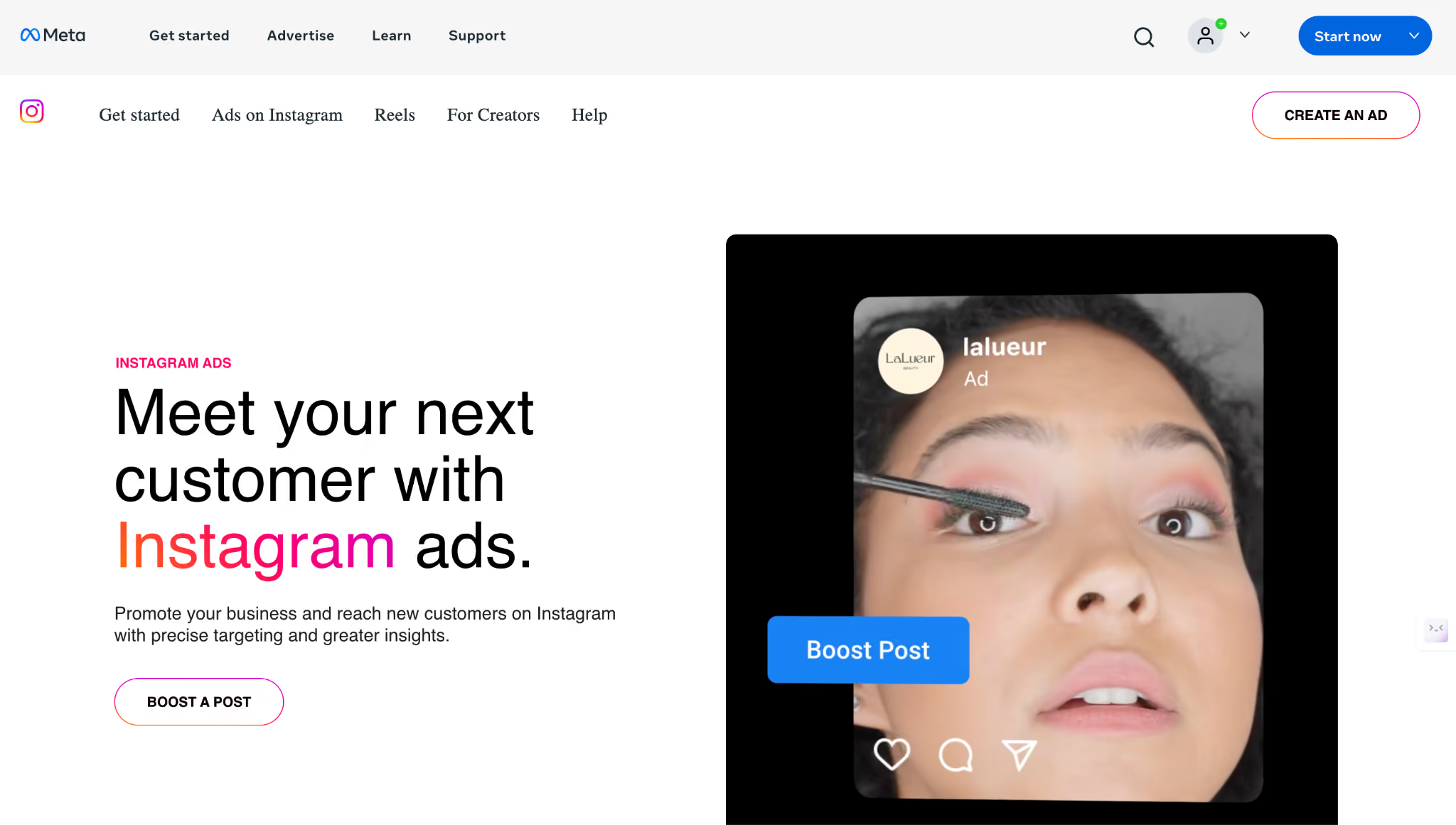
Social-to-checkout continuity instagram

Unified inventory across social and owned channels 

If an item sells out on TikTok Shop, your website and in-store system should reflect that in real time, and vice versa. Without live inventory syncing, customers encounter out-of-stock errors after completing a social checkout, or see products available on your website that disappeared from TikTok an hour ago. Both experiences damaged trust at exactly the moment the intent was highest.
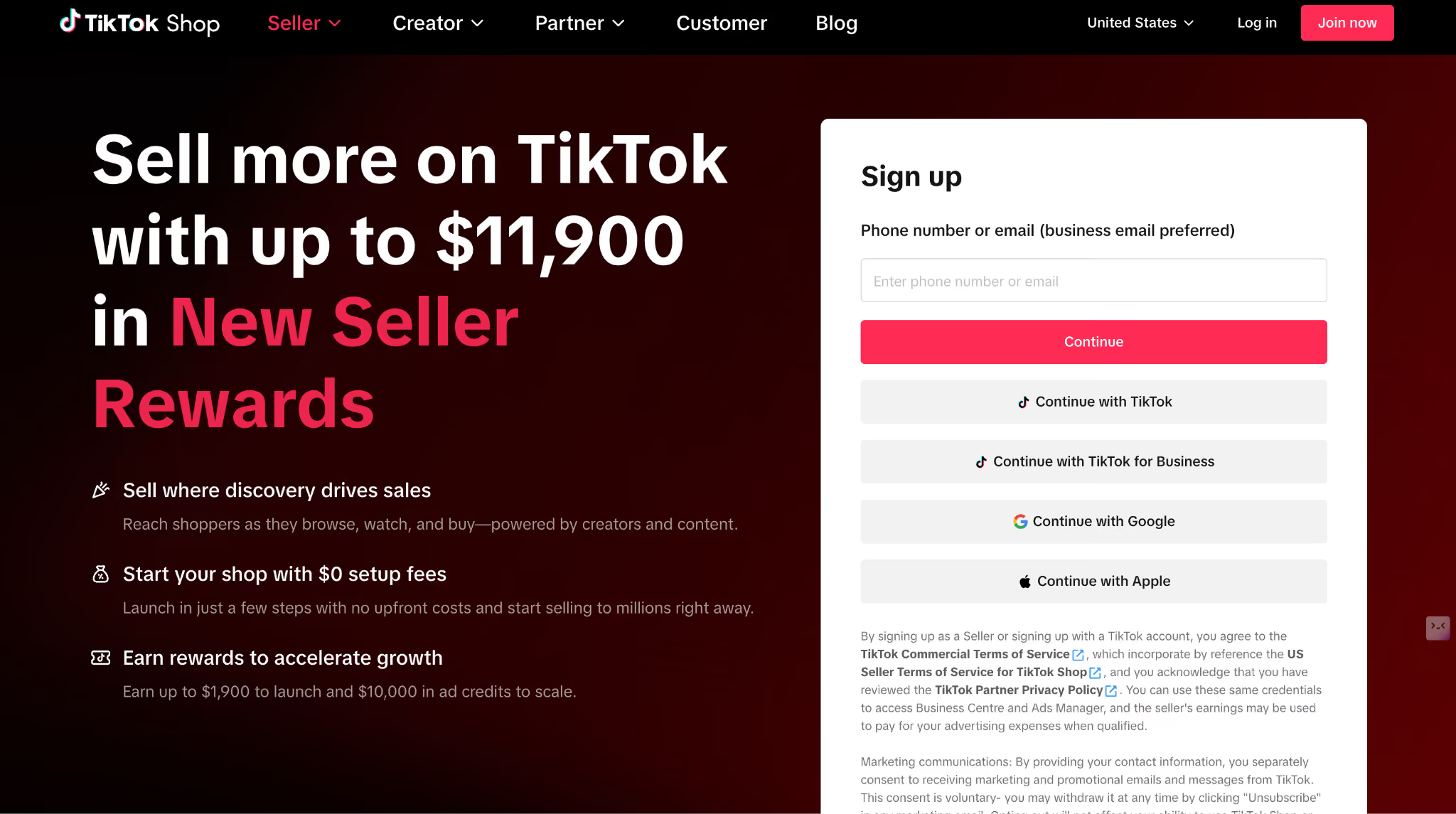
Tiktok Shop Unified inventory omnichannel retail experience

Social-to-store and post-purchase flows 

A TikTok Shop purchase should be returnable in a physical store, with the full order history accessible at the counter. Post-purchase touchpoints: review requests, loyalty invites, replenishment reminders: should follow the customer regardless of where they first bought.

This is one of the most significant gaps in omnichannel retail right now, and it is entirely fixable with the right integration layer between your social storefronts and your central commerce platform.

The post-purchase omnichannel experience

The sale is not the finish line. Most retailers still operate the post-purchase phase as if channels are separate worlds, and that is where customer loyalty and customer lifetime value are either compounded or quietly eroded.

Key gaps to close:

  • Cross-channel returns: The in-store return of an online purchase is consistently one of the most botched moments in retail CX. Fix this first: it is visible to customers and solvable with shared order data.
  • Loyalty program consistency: Points earned online should redeem in-store and via social commerce. Loyalty fragmented by channel teaches customers the program is not worth engaging with.
  • Personalized post-purchase messaging: Communication should reflect how the customer bought. An in-store buyer does not need an app tutorial; an online buyer might benefit from a nudge to visit a local store.
  • Proactive re-engagement: Brands with strong proactive customer service use behavioral signals to trigger outreach before a customer churns. A well-placed self-service option, such as an easy returns portal or a loyalty FAQ, reduces inbound contacts while keeping the experience smooth.

Nike omnichannel retail experience evaluation

Nike's strength is its data layer: the app functions as a loyalty card, purchase history, and personal shopper in one, and the return policy is channel-agnostic. The gap is social-to-store continuity: TikTok and Instagram purchases do not yet sync into the Nike loyalty ecosystem.
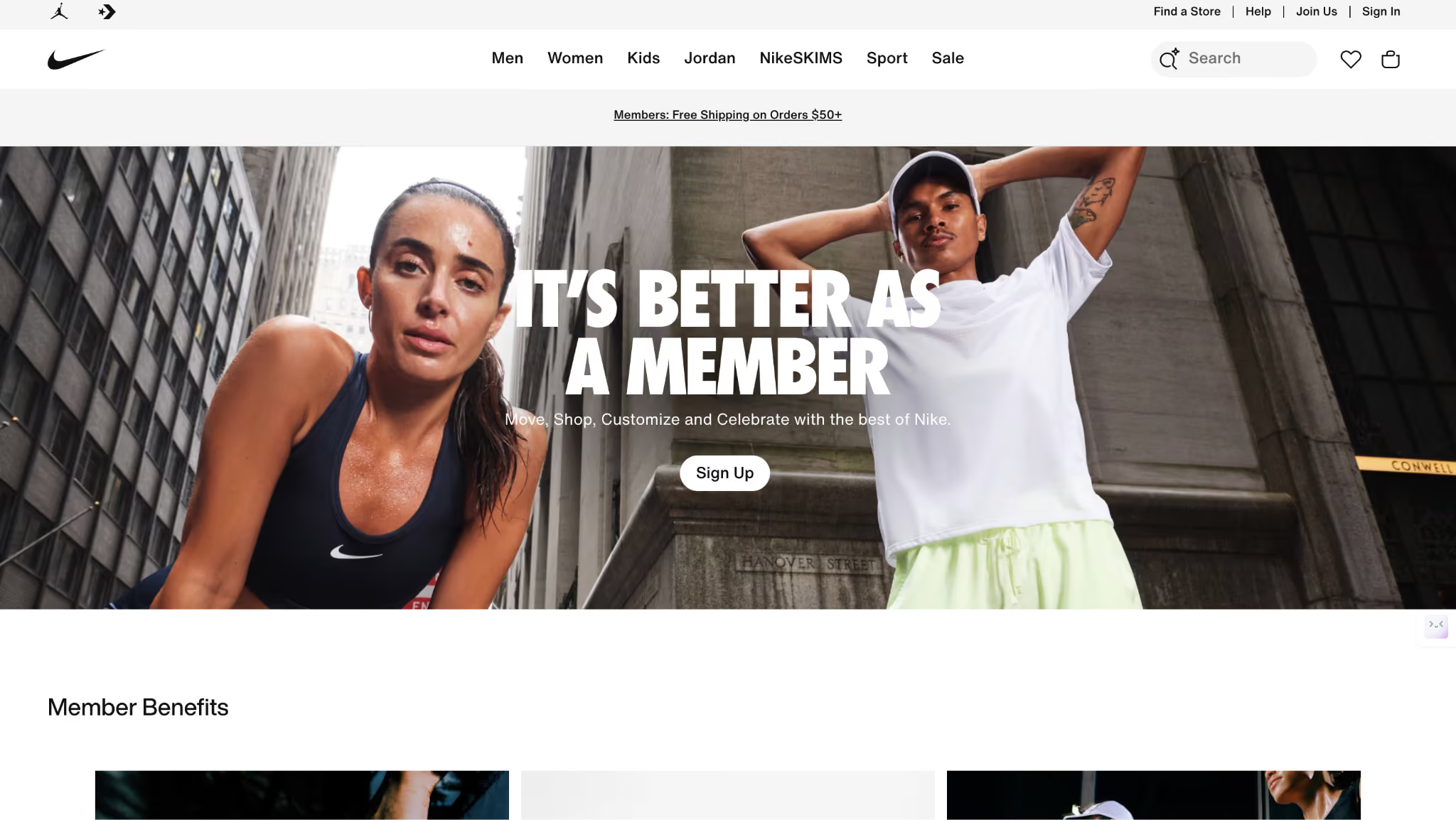
Nike omnichannel retail experience evaluation

Sephora omnichannel retail experience evaluation

Sephora's Beauty Insider points accrue and redeem identically online, in-app, and in-store. The Color IQ system follows customers into physical Beauty Studios, where associates see purchase history before the conversation starts, and virtual try-on bridges the online-to-physical gap before the visit. The result is a digital customer experience that feels designed around the person, not the platform.
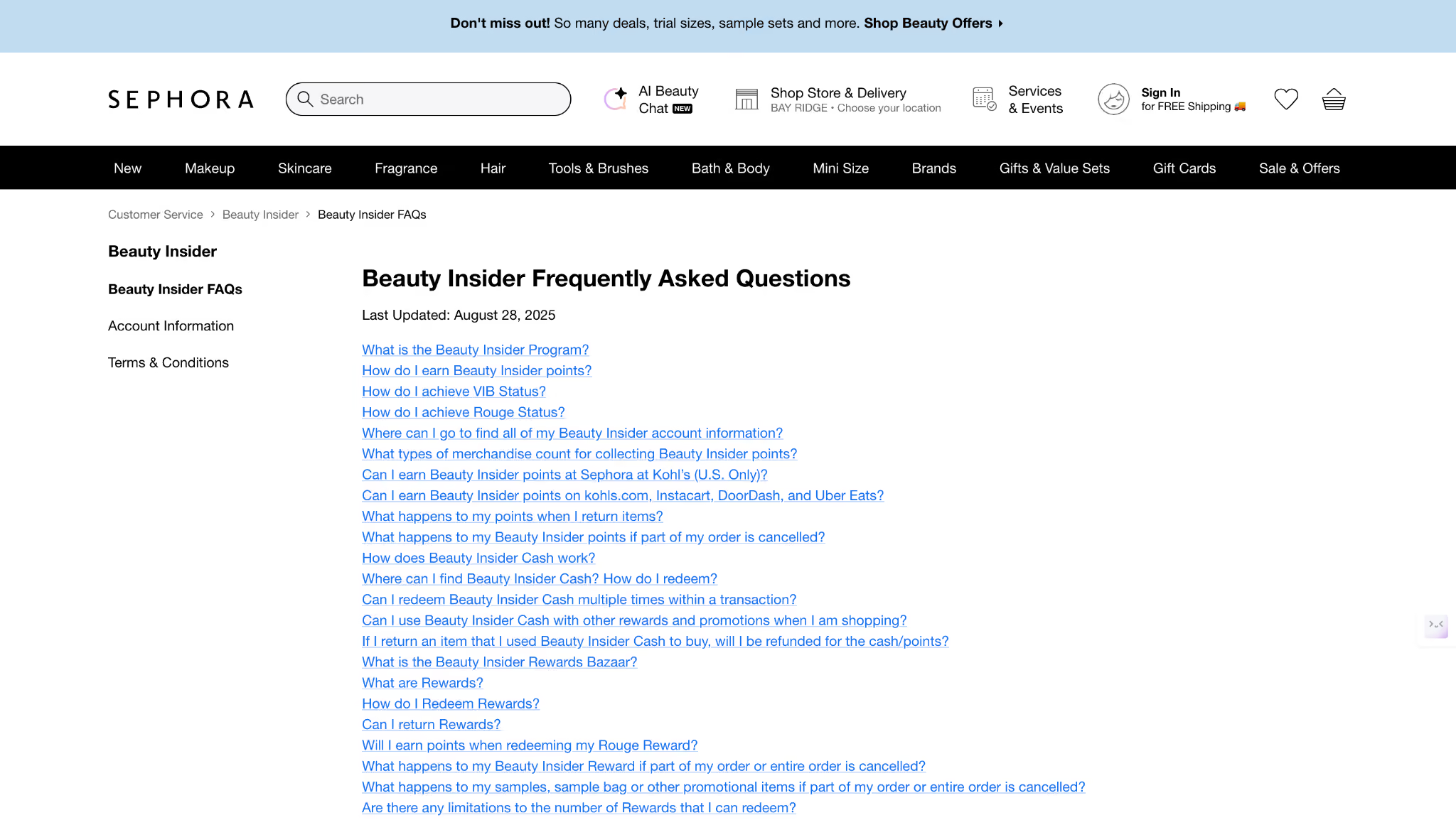
Sephora FAQ omnichannel retail experience

How to improve the omnichannel retail experience

The biggest gains rarely come from adding new channels. They come from fixing the gaps in the ones you already have. Before investing in new technology, run a friction audit across three layers:

  • Data layer: Can every channel read a unified customer profile in real time? If your in-store POS, e-commerce platform, and support tools each hold separate customer records, no amount of training or technology will produce a seamless experience.
  • Channel consistency: Are your pricing, promotions, and return policies identical across every touchpoint? Inconsistencies here are invisible to your teams but immediately visible to customers.
  • Post-purchase loop: Does the experience after the sale (shipping updates, loyalty points, return processing) feel as considered as the experience before it? This is where most retailers still have the largest gaps.

Once you have identified where the friction sits, two areas tend to drive the fastest improvement: how your frontline staff are equipped, and how AI is applied to the support and personalisation layer.

Employee training and frontline alignment

Technology without trained staff is just expensive software nobody uses.

If a store associate cannot look up a customer's online order quickly, the omnichannel promise falls apart at the most human moment. The fix is not just training: it is giving staff the right tools and access before the conversation starts.

Frontline access checklist: what the associate's screen must show

What staff need to see Why it matters
Full purchase history across all channels Enables relevant recommendations and avoids asking customers to repeat themselves
Active loyalty status and current point balance Allows in-store redemption and prevents the loyalty blackout scenario
Pending and recent online orders Essential for click-and-collect, exchange, and return handling
Return eligibility by purchase channel Prevents the "we can't process that here" moment that drives customers to competitors
Loyalty program enrollment status Identifies unenrolled customers and enables in-store sign-up
Open support tickets linked to the customer Avoids the jarring moment where a customer mentions a complaint the associate knows nothing about

Training should include scenario-based exercises: "A customer wants to return a TikTok Shop purchase in-store. What do you do?" Staff who can answer confidently and who know how to use empathy statements when frustration runs high, turn friction points into loyalty moments. Consistent customer onboarding frameworks keep standards from slipping as teams scale.

{{cta}}

How AI improves omnichannel retail experience

AI's most important contribution to omnichannel is invisible infrastructure, creating value in four areas:

  1. Unified customer profiles: Aggregating data from every channel into a single record so every touchpoint has the context it needs.
  2. Predictive personalisation: A customer who browses running shoes online and visits a store without buying is a strong candidate for a personalised push notification with a time-limited offer.
  3. Intelligent support routing: When a customer contacts support, AI pre-loads their channel history so agents already have context, eliminating the "please explain your issue again" experience that Salesforce puts at 56% of all customer interactions.
  4. Post-purchase intelligence: AI-driven customer service analytics flag rising return rates or checkout drop-offs before they become systemic problems.

According to Digital Commerce 360, businesses with strong omnichannel engagement reduce their cost per contact by 7.5% year-over-year, compared to just 0.2% for weaker strategies.

Retail omnichannel experience tools

Most retail brands end up combining several platforms: a commerce layer for unified inventory, a CRM for customer data, a support tool for agent context, and a loyalty or messaging layer for post-purchase engagement. The table below maps the most widely used tools to the gap they solve best.

Tool Best for Key features Pricing model
Salesforce Commerce Cloud Mid-large retailers with complex inventory Unified commerce, AI personalization, BOPIS Enterprise pricing
Klaviyo DTC and e-commerce brands Cross-channel email/SMS flows, behavioural triggers From ~$20/month
Zendesk Customer support unification Omnichannel ticketing, agent workspace, and AI routing From $55/agent/month
Yotpo Loyalty and reviews Cross-channel loyalty, SMS, referrals Custom pricing
Gorgias Shopify-native support teams Order context in tickets, automation, and multi-channel From $10/month
Attentive SMS and post-purchase flows Behavioural SMS, segmentation, revenue attribution Custom pricing

Pricing figures are taken from each vendor's public pricing page and are indicative only. Plans and tiers change regularly: always confirm current rates directly on the vendor's website before making a decision.

How to measure omnichannel success

Most teams track channel-level metrics in silos: website conversion rate here, in-store foot traffic there, support ticket volume somewhere else. None of those tells you how the experience holds up across channels. 

To measure omnichannel performance accurately, you need KPIs that capture cross-channel behaviour: what happens when a customer moves from one touchpoint to another, and whether the experience stays coherent when they do.

Track the framework below alongside your customer satisfaction metrics and VoC programs. The combination of quantitative KPIs and direct customer feedback will surface problems that numbers alone often miss.

Omnichannel KPI framework

Each metric below is designed to catch a specific type of channel gap. Review them quarterly as a set: a drop in one often explains a trend in another.

KPI What it measures Benchmark range
Cross-channel conversion rate % of customers who browse one channel and buy on another 5 to 15% (varies by category)
Cart abandonment by entry channel Abandonment rate segmented by session origin Below 70% overall; below 60% on desktop
Customer effort score (CES) Ease of completing a task across channels Below 3 on a 1 to 7 scale
Contact resolution rate by channel % of issues resolved on first contact, per channel 70 to 85% first contact resolution
CLTV by channel combination Revenue per customer using 2 or more channels vs. single channel Omnichannel CLTV typically 30%+ higher (ITC)
Loyalty redemption rate % of earned points actually redeemed Above 20% signals healthy engagement

Disclaimer: Benchmark ranges are compiled from industry research across Forrester, Baymard Institute, and ContactPigeon's retail CX benchmark report. They reflect typical performance across mid-to-large retail operations and should be used as directional targets, not absolute standards. Your baseline will vary by category, channel mix, and customer segment.

The real cost of omnichannel failure

The upside of omnichannel gets covered constantly. The downside rarely does. Two numbers put the stakes in sharper focus.

The Baymard Institute estimates that cart abandonment costs e-commerce roughly $4 trillion annually. 

That is not a technology problem or a pricing problem: it is predominantly a friction problem. Carts are abandoned when the experience breaks: a price that differs from the ad, a checkout that does not recognise a returning customer, an app session that does not carry over to the desktop. Most of that revenue is recoverable with a connected experience, which is why omnichannel investment should be evaluated against the cost of inaction, not just against the cost of implementation.

The second number is more revealing. Forrester data shows that only 13% of businesses fully carry customer context across support channels. 

That means when a customer contacts support after a frustrating cross-channel experience: a botched return, a missing loyalty credit, a delayed order, 87% of companies ask them to explain the problem from scratch. That moment, repeated across millions of interactions, is what actually drives churn. It is not that customers expect perfection. It is that being made to repeat yourself signals that the brand does not see you as a person, just as a ticket number.

The lesson: Reframe omnichannel investment as risk management. The question is not whether you can afford to build this. It is whether you can afford to keep losing customers to friction you already know exists.

A practical roadmap for mid-size retailers

Most omnichannel content targets enterprise brands with eight-figure budgets. A 10-location retail chain or a DTC brand opening its first physical stores operates differently. Here is a phased approach that is realistic.

Phase 1: Unified customer data (months 1 to 3)

Consolidate customer records across your POS, e-commerce platform, and CRM into a single profile. Every channel reads from and writes to it: purchase history, loyalty balance, open orders. Staff can pull up online orders in-store from day one.

Phase 2: Channel consistency (months 4 to 6)

Standardise pricing across all channels. Implement cross-channel returns and connect loyalty across web, app, and POS. Align your support channels so agents see the same customer history, and use customer feedback to prioritize the highest-friction moments. See real omnichannel support examples for reference.

Phase 3: Personalization and optimisation (months 7 to 12)

Layer AI-driven personalized customer support on top of your unified data layer. Build post-purchase SMS and email flows segmented by channel behaviour. Integrate social commerce into your return flow and extend into multilingual support if you operate across markets.

The three phases are sequential by design. Personalization built on fragmented data produces noise, not relevance. Channel consistency without unified data produces inconsistency at scale. Get the foundation right first, and each subsequent phase compounds in value rather than adding complexity.

How EverHelp supports your omnichannel journey

At EverHelp, we work with retail brands at every phase of this roadmap. We help unify support channels so your agents have the full customer context they need, handle cross-channel ticket routing, and scale 24/7 support coverage without proportional headcount growth. Whether you are in Phase 1, trying to eliminate the support loop, or in Phase 3, building perzonalised post-purchase flows, we provide the people and systems to back it up.

{{cta}}

FAQ

Why does omnichannel matter to retail customers today?

Customers today do not think in channels. They think in needs: browse on their phone, ask a question on Instagram, buy in-store, and return online if needed, without re-explaining who they are at each step.

The numbers reflect this:

  • Shoppers use an average of six touchpoints before completing a purchase, per UniformMarket
  • Omnichannel shoppers have a 30% higher lifetime value than single-channel buyers (ITC)
  • Companies with strong omnichannel engagement see 35% higher customer retention, per Forrester

Meeting customers where they are, consistently, is no longer a differentiator. It is the baseline expectation.

What's the difference between multichannel and omnichannel retail?

Multichannel retail means being present on multiple channels, each running independently. Omnichannel connects those channels into a unified experience where the customer's identity and history are consistent everywhere.

In practice:

  • Multichannel: a website and a store. Omnichannel: return the website purchase at the store.
  • Multichannel: email campaigns. Omnichannel: emails that reference your in-store purchase from last week.
  • Multichannel: a support team that answers tickets. Omnichannel: a support team that already knows your full journey.
How do in-store and online channels work together in omnichannel retail?

In a well-integrated setup, in-store and online are extensions of each other. Key mechanisms include unified inventory visibility so customers know before they travel whether an item is in stock, BOPIS, offered by 77.2% of the top U.S. retail chains according to Capital One Shopping, in-store staff with access to digital purchase history, cross-channel returns, and consistent pricing everywhere. The connective tissue is a shared customer profile that both channels read from and write to in real time. Pair this with 24/7 support so customers can get help whenever a gap emerges.

How does AI improve the omnichannel retail experience?

AI's most important contribution to omnichannel is invisible infrastructure. It aggregates data from every channel into one coherent profile, predicts what a specific customer is likely to need next, routes support contacts intelligently, and surfaces patterns teams can act on before customers notice a problem.

In practice, AI-powered personalization means a customer who browses coats on the app gets a relevant in-store recommendation rather than a generic greeting. Intelligent routing gives agents full context when the conversation starts, improving customer service standards and cutting handle time. AI also scales multilingual support across geographies without proportional headcount growth, and is ultimately what makes excellent customer service at scale possible.

Outsourced customer service
Seamless support across every channel
Outsourced customer service

Table of contents

To Page

Help someone else stay in the know. Hit that share button!
Read also

Chief Commercial Officer Everhelp
Andrew
Chief Commercial Officer
May 27, 2026
14
min read
VP of Customer Support
Valentyna
VP of Customer Support
May 25, 2026
12
min read
Delivery Manager Everhelp
Hlib
Delivery Manager
May 23, 2026
23
min read
VP of Customer Support
Valentyna
VP of Customer Support
May 21, 2026
20
min read
VP of Customer Support
Valentyna
VP of Customer Support
May 12, 2026
16
min read
quality assurance control team lead Everhelp
Victoria
QC Team Lead
May 11, 2026
21
min read
Chief Commercial Officer Everhelp
Andrew
Chief Commercial Officer
May 5, 2026
18
min read
VP of Customer Support
Valentyna
VP of Customer Support
May 4, 2026
22
min read
CEO Everhelp
Nataliia
Chief Executive Officer
Apr 29, 2026
23
min read
Olha
Support Operations Manager
Apr 20, 2026
20
min read
VP of Customer Support
Valentyna
VP of Customer Support
Apr 16, 2026
14
min read
Chief Commercial Officer Everhelp
Andrew
Chief Commercial Officer
Apr 12, 2026
13
min read
Delivery Manager Everhelp
Hlib
Delivery Manager
Apr 9, 2026
23
min read
VP of Customer Support
Valentyna
VP of Customer Support
Apr 7, 2026
23
min read
quality assurance control team lead Everhelp
Victoria
QC Team Lead
Apr 2, 2026
22
min read
Olha
Support Operations Manager
Apr 1, 2026
21
min read
Chief Commercial Officer Everhelp
Andrew
Chief Commercial Officer
Mar 24, 2026
22
min read
customer support delivery manager Daryna Everhelp
Daryna
Delivery Manager
Mar 20, 2026
18
min read
Chief Commercial Officer Everhelp
Andrew
Chief Commercial Officer
Mar 16, 2026
7
min read
VP of Customer Support
Valentyna
VP of Customer Support
Mar 16, 2026
6
min read
Chief Commercial Officer Everhelp
Andrew
Chief Commercial Officer
Mar 16, 2026
7
min read
Delivery Manager Everhelp
Hlib
Delivery Manager
Mar 13, 2026
10
min read
VP of Customer Support
Valentyna
VP of Customer Support
Mar 11, 2026
27
min read
Chief Commercial Officer Everhelp
Andrew
Chief Commercial Officer
Mar 5, 2026
15
min read
Delivery Manager Everhelp
Hlib
Delivery Manager
Feb 18, 2026
22
min read
AI Integrations Lead Everhelp
Oleksandr
AI Integrations Lead
Feb 12, 2026
20
min read
VP of Customer Support
Valentyna
VP of Customer Support
Feb 8, 2026
30
min read
AI Integrations Lead Everhelp
Oleksandr
AI Integrations Lead
Feb 5, 2026
21
min read
CEO Everhelp
Nataliia
Chief Executive Officer
Feb 2, 2026
13
min read
Delivery Manager Everhelp
Hlib
Delivery Manager
Jan 30, 2026
25
min read
VP of Customer Support
Valentyna
VP of Customer Support
Jan 28, 2026
20
min read
AI Integrations Lead Everhelp
Oleksandr
AI Integrations Lead
Jan 27, 2026
18
min read
Olha
Support Operations Manager
Jan 23, 2026
11
min read
customer support delivery manager Daryna Everhelp
Daryna
Delivery Manager
Jan 16, 2026
20
min read
VP of Customer Support
Valentyna
VP of Customer Support
Jan 14, 2026
5
min read
VP of Customer Support
Valentyna
VP of Customer Support
Jan 11, 2026
7
min read
VP of Customer Support
Valentyna
VP of Customer Support
Jan 5, 2026
25
min read
VP of Customer Support
Valentyna
VP of Customer Support
Dec 31, 2025
15
min read
customer support delivery manager Daryna Everhelp
Daryna
Delivery Manager
Dec 30, 2025
15
min read
AI Integrations Lead Everhelp
Oleksandr
AI Integrations Lead
Dec 24, 2025
20
min read
Delivery Manager Everhelp
Hlib
Delivery Manager
Dec 18, 2025
15
min read
Olha
Support Operations Manager
Dec 16, 2025
28
min read
quality assurance control team lead Everhelp
Victoria
QC Team Lead
Dec 15, 2025
14
min read
Olha
Support Operations Manager
Dec 13, 2025
26
min read
VP of Customer Support
Valentyna
VP of Customer Support
Dec 12, 2025
15
min read
Chief Commercial Officer Everhelp
Andrew
Chief Commercial Officer
Dec 11, 2025
12
min read
Delivery Manager Everhelp
Hlib
Delivery Manager
Dec 10, 2025
15
min read
VP of Customer Support
Valentyna
VP of Customer Support
Dec 5, 2025
21
min read
Chief Commercial Officer Everhelp
Andrew
Chief Commercial Officer
Nov 21, 2025
6
min read
CEO Everhelp
Nataliia
Chief Executive Officer
Nov 11, 2025
15
min read
Chief Commercial Officer Everhelp
Andrew
Chief Commercial Officer
Oct 25, 2025
5
min read
VP of Customer Support
Valentyna
VP of Customer Support
Oct 17, 2025
15
min read
Olha
Support Operations Manager
Aug 15, 2025
12
min read
customer support delivery manager Daryna Everhelp
Daryna
Delivery Manager
Aug 5, 2025
10
min read
Chief Commercial Officer Everhelp
Andrew
Chief Commercial Officer
Jun 26, 2025
11
min read
VP of Customer Support
Valentyna
VP of Customer Support
May 30, 2025
5
min read
VP of Customer Support
Valentyna
VP of Customer Support
Apr 2, 2025
4
min read
CEO Everhelp
Nataliia
Chief Executive Officer
Jan 31, 2025
9
min read
Chief Commercial Officer Everhelp
Andrew
Chief Commercial Officer
Aug 13, 2024
7
min read
VP of Customer Support
Valentyna
VP of Customer Support
Jun 3, 2024
8
min read
benefits for live chat support
VP of Customer Support
Valentyna
VP of Customer Support
Jun 27, 2023
5
min read