Growth & Metrics
Published on
14.01.2026
Last updated on
01.09.2026
How to Improve Customer Service Standards and Maintain Them at Scale (A Blueprint)

Valentyna
VP of Customer Support

Valentyna
VP of Customer Support
.avif)
Most companies believe they offer good customer service until they try to scale it.
What worked with five agents starts to fracture at fifty. Answers vary. Tone drifts. Customers receive different experiences depending on who they talk to, when they reach out, or which channel they use. The brand promise stays the same, but the service doesn’t.
This is the silent failure point of customer experience. According to Zendesk’s 2023 CX Trends Report, 70% of customers will spend more with brands that offer consistent, connected experiences across touchpoints. The difference, however, isn’t effort or intent. It’s the absence of clearly defined, operationalized service standards, which oftentimes leads to poor customer service.
Before you decide how to improve customer service standards, you need to understand that it’s not about giving more motivational speeches or creating vague value statements. It’s about defining what “good” looks like in practice, embedding it into repeatable processes, and building systems that allow you to measure, refine, and scale quality as you grow.
This article is a blueprint for doing exactly that.
Customer service standards are the agreed-upon rules that define how your team should respond to customers. They cover:
These standards ensure a customer gets the same clarity on Twitter as they do on the phone, and the same empathy in chat as they do by email. Standards make service predictable for customers and manageable for leaders.
The problem is, standards that work for a five-person team handling 50 tickets a day collapse when you scale to 50 agents managing 5,000 interactions across six channels in multiple time zones. Why? There are 3 most common failure points:
The stakes are rising, not falling. Salesforce finds 82% of service professionals say customer expectations are higher than they used to be. Yet many brands struggle to keep up, suggesting CX performance has somewhat stagnated. And that’s why setting clear expectations in the form of cultural customer service standards is necessary.
Start by identifying your core objectives. Responsiveness means customers hear back quickly. Resolution means their issue gets fixed, not just acknowledged. Accuracy ensures the information you provide is correct the first time. Personalized customer service tailors responses to individual history and context. An empathetic approach allows recognizing customer frustration without dismissing it.
Proactive customer service reaches customers before they reach you. Omnichannel consistency means delivering the same quality whether someone emails, chats, or calls. Accountability means clear ownership and follow-through on every issue.
Each standard needs 1–2 metrics that make it measurable:
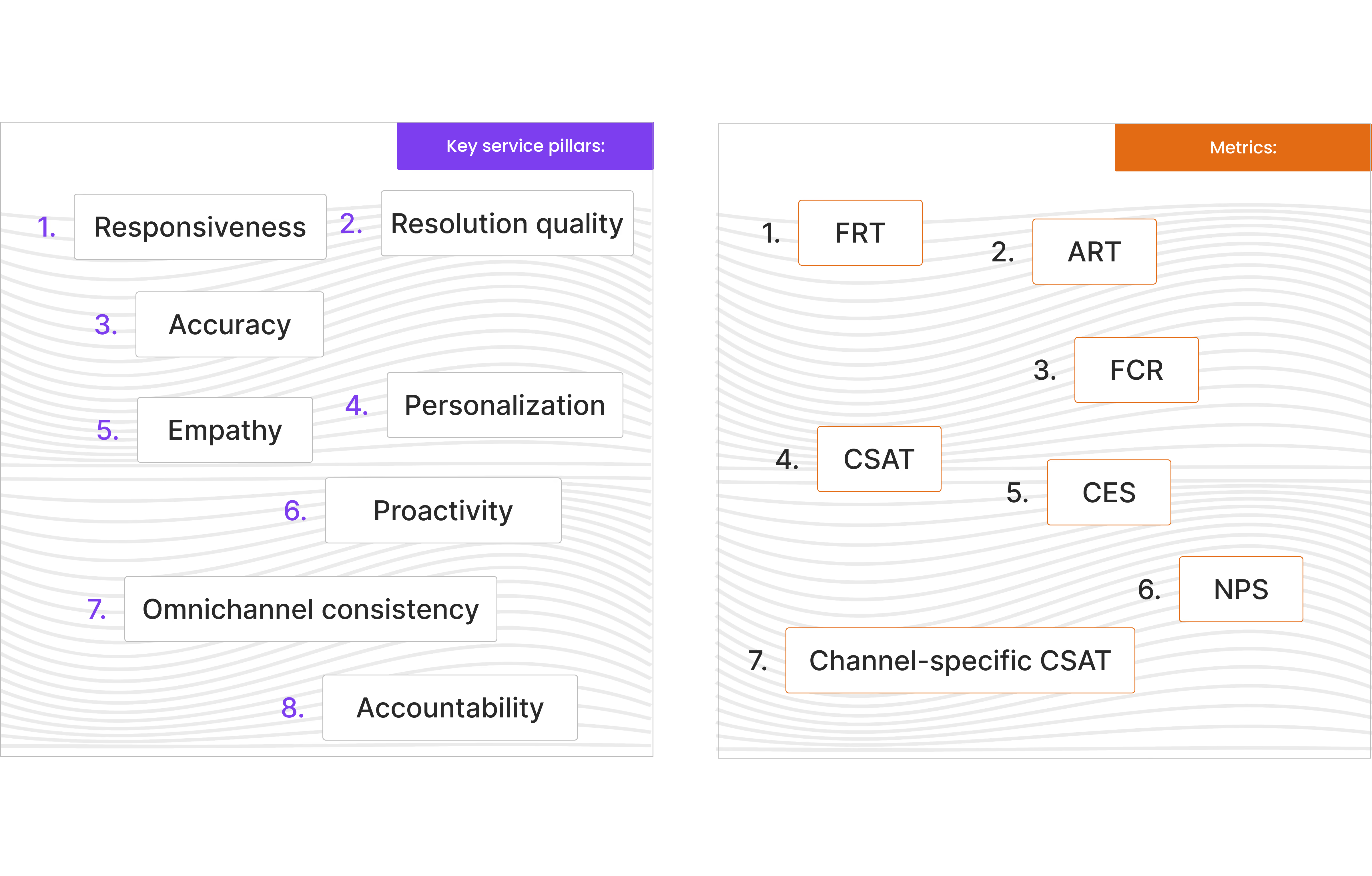
After you’ve established your pillars, set realistic baselines by pulling current performance data and comparing it to industry benchmarks. If your average email FRT is 18 hours and competitors respond in 6, you've identified a gap. If your FCR sits at 65% but top performers hit 80%, you know where to focus. Targets should stretch your team without breaking morale.
For example:
- Email FRT baseline 12h → target 4h;
- Chat pickup baseline 60s → target 20s;
- FCR baseline 58% → target 70%.
Note: Use a balanced scorecard so teams don’t chase speed at the cost of quality.
Standards should express your promise. If your brand sells “radical responsiveness,” you’ll emphasize speed and proactive updates. If you’re a consultative B2B platform, you may accept slower emails for richer, well-sourced answers. Bring Support, Product, Legal, and Ops together to stress-test trade-offs against capacity and risk. If you operate across regions, bake in multilingual customer support and local norms so tone, speed, and policy land correctly in every market. Decide where you won’t compete – perhaps social DMs get courteous triage with clear handoff to email for complex cases – so you avoid overcommitting and underdelivering.
{{cta}}
Abstract standards like "be responsive and empathetic" mean nothing to an agent handling 40 tickets before lunch. Convert each standard into specific, actionable behaviors:
Create scenario-based guides for your top ticket types. Each guide should include:
Also define non-negotiables: refund thresholds, security protocols, and legal language. Keep these SOPs centralized in a shared knowledge base that's searchable, version-controlled, and easy to update.
Organize content by product area, issue type, and channel. Keep answers short, step-by-step, and decision-tree friendly. Integrate the KB with your help desk, chat, and telephony so suggestions surface as agents type. Assign article owners, set review cadences, and update after every significant product change. Forrester-documented cases show that knowledge programs can reduce handle time and deliver measurable gains in resolution accuracy, but only when content is continuously curated.
Onboarding should teach standards, tools, and real-life scenarios, not just product features. Thus, pair classroom time with role-plays using your real ticket. Shadow top performers; then reverse-shadow to practice live under supervision.
Build a QA loop that scores against your standards and feeds targeted coaching. When standards change, run short “delta trainings” instead of re-teaching everything. Keep the practice field active: micro-drills for de-escalation, data privacy, and policy edge cases.
Give agents decision-making authority within clear guardrails. If your standard is "resolve issues in one interaction whenever possible," agents need the power to issue refunds up to a certain amount, expedite shipping, or apply account credits without seeking approval. Empowered agents solve problems faster and feel more ownership over outcomes. For guidelines on empowering customer support teams, see insights from leading customer service books.
Define clear escalation paths for edge cases:
Recognize behaviors that embody standards: clear ownership, proactive updates, and accurate fixes. This builds the culture that sustains quality even when volume spikes.
Centralizing communication into a unified help desk or CRM is non-negotiable once you handle multiple customer support channels. Email, chat, social media, phone calls, and in-app messaging all need to flow through one system, so no interaction gets lost. More importantly, context should travel with the customer. If someone emails on Monday, chats on Wednesday, and calls on Friday, your team should see the entire conversation history without asking them to repeat themselves.
Standardize brand voice and tone guidelines across templates, macros, and AI-assisted replies. Inconsistent tone confuses customers: one agent sounds casual and friendly, another formal and distant. Digital customer service tools that enforce tone guidelines through AI suggestions can be particularly helpful for maintaining brand voice even under pressure.
Deploy self-service options like FAQs, knowledge bases, chatbots, and community forums to handle high-volume, repetitive requests while upholding your customer service standards. A well-designed chatbot can answer "Where's my order?" instantly, freeing human agents to handle more complex, emotionally charged interactions where empathy and judgment matter. Self-service doesn't lower standards when done right. It raises them by letting agents focus on cases that need human expertise. That’s why self-service is showing up as a major priority in customer support trends for 2026.
And don’t forget that you can use AI to support your agents. AI can:
One thing to define, though, is which interactions must stay human:
Build routing rules that escalate these cases to people, not bots. Automation should enhance your standards, not replace the judgment that makes excellent customer service possible.
{{cta}}
Tracking a balanced set of customer satisfaction metrics prevents tunnel vision. Measure what matters and read it by team, channel, and region to spot drift early. Your core dashboard:
Combine numbers with qualitative signals. Customer service data analytics reveals trends, but verbatim usre comments and agent insights explain why those trends exist. Numbers tell you where to look; conversations tell you what to fix.
Implement regular QA reviews of calls, chats, and emails mapped directly to your standards. Each review should score responsiveness, accuracy, empathy, resolution quality, and adherence to tone guidelines. Use findings to update scripts, knowledge base articles, and training materials. If multiple agents struggle with a specific scenario, that's a training gap or a process flaw, not an individual performance issue.
Establish clear customer feedback system and close the loop by communicating changes driven by their feedback. When you fix a recurring pain point, tell them. "Based on your feedback, we've extended our phone support hours" or "We've updated our returns process to be faster and clearer." This transparency reinforces trustand helps build customer loyalty, showing that you're committed to continuous improvement.
Here are some of the customer service standards examples you can adapt to your business:
Set expectations that customers can rely on. If you promise a 1-hour FRT for email, deliver on it at least 95% of the time (if not 100%), or adjust the promise. Accuracy prevents repeat contacts and builds trust. If customers get wrong answers, they'll stop asking questions and start leaving negative review responses.
Here are a few more use-case-focused examples of customer service standards you can follow:
Channel-specific standards matter because customer expectations differ by medium. Chat should be fast and conversational. Email allows more detail and formality. Phone requires real-time problem-solving and strong listening skills. Social media demands public-facing professionalism, since responses are visible to everyone. Applying identical standards across channels ignores these differences, frustrating both customers and agents.
{{cta}}
Here’s how it looks in practice. One of our clients, StreetCrowd, approached EverHelp when they noticed more users joining in the app and the volume of monthly support requests steadily increasing.
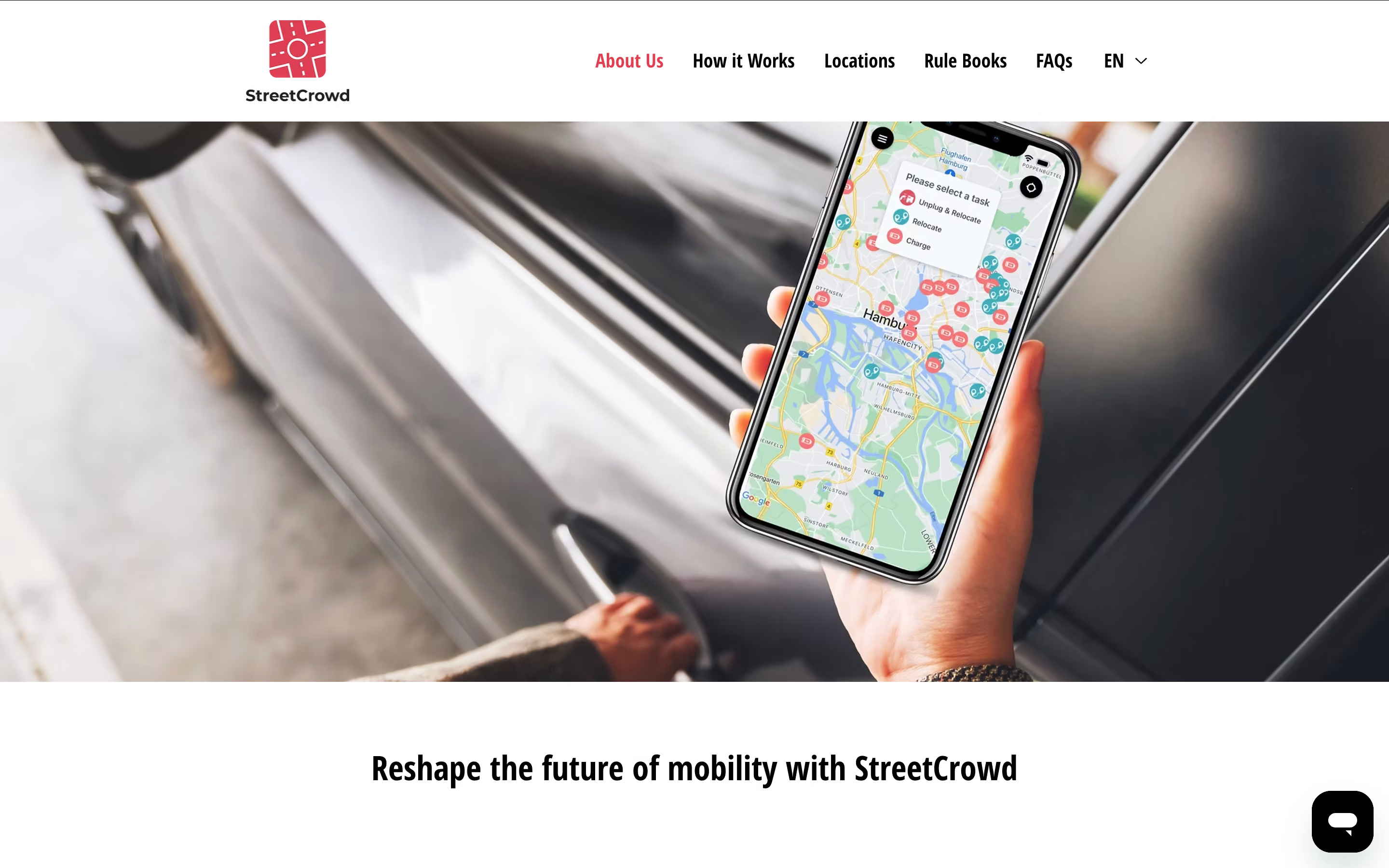
The startup realized such an informal assist-as-you-go approach was failing:
Their team needed general support standards to effectively handle incoming requests and raise user brand awareness. So, we stepped-in to help them scale without sacrificing service quality:
Additionally, we established continuous agent training, which helped improve the consistency of our clients’ omnichannel customer service. Now, agents provide answers aligned with the brand tone and policy, which has helped improve both brand awareness and user satisfaction.
Our work made it clear: well-defined standards, coaching, and workflow automation are the 3 main features helping build efficient support processes.
Improving customer service standards isn't a one-time project. It's a continuous cycle of defining what good looks like, building systems that make it feasible, training teams to deliver it consistently, and measuring whether it's actually working. Companies that treat standards as ever-changing documents see measurable improvements in CSAT, retention, and operational efficiency. Those who ignore this work see their service quality fragment as they grow, along with frustrated customers, burned-out teams, and lost revenue.
If you're looking to raise your service standards but don't have enough capacity to build these systems in-house, outsourcing to specialists who live and breathe customer support can accelerate your progress. EverHelp has partnered with dozens of companies in the consumer services industry to define, implement, and maintain world-class service standards at scale.
Book a meeting with our experts to discuss how we can help you turn good intentions into consistent, measurable results.
Help someone else stay in the know. Hit that share button!


.webp)

.avif)
.avif)