AI & Automation
Published on
13.02.2026
Last updated on
16.09.2026
Multilingual customer support outsourcing: The complete 2026 guide

Valentyna
VP of Customer Support

Valentyna
VP of Customer Support
.avif)
In a world where 75% of consumers are more likely to buy from a brand again if the support is in their native language, multilingual customer support is no longer an "extra"—it is the engine of global growth. Whether you are a startup eyeing European markets or an enterprise expanding into Asia, understanding multilingual customer support and how to deploy it efficiently is critical to your bottom line.
At its core, multilingual customer support is the practice of assisting customers in their native or preferred language across all touchpoints. It goes beyond mere translation, covering also cultural localization and a deep understanding of regional etiquette.
Simply translating your website is not enough. True customer satisfaction comes from being understood during the most critical moments of the customer journey.
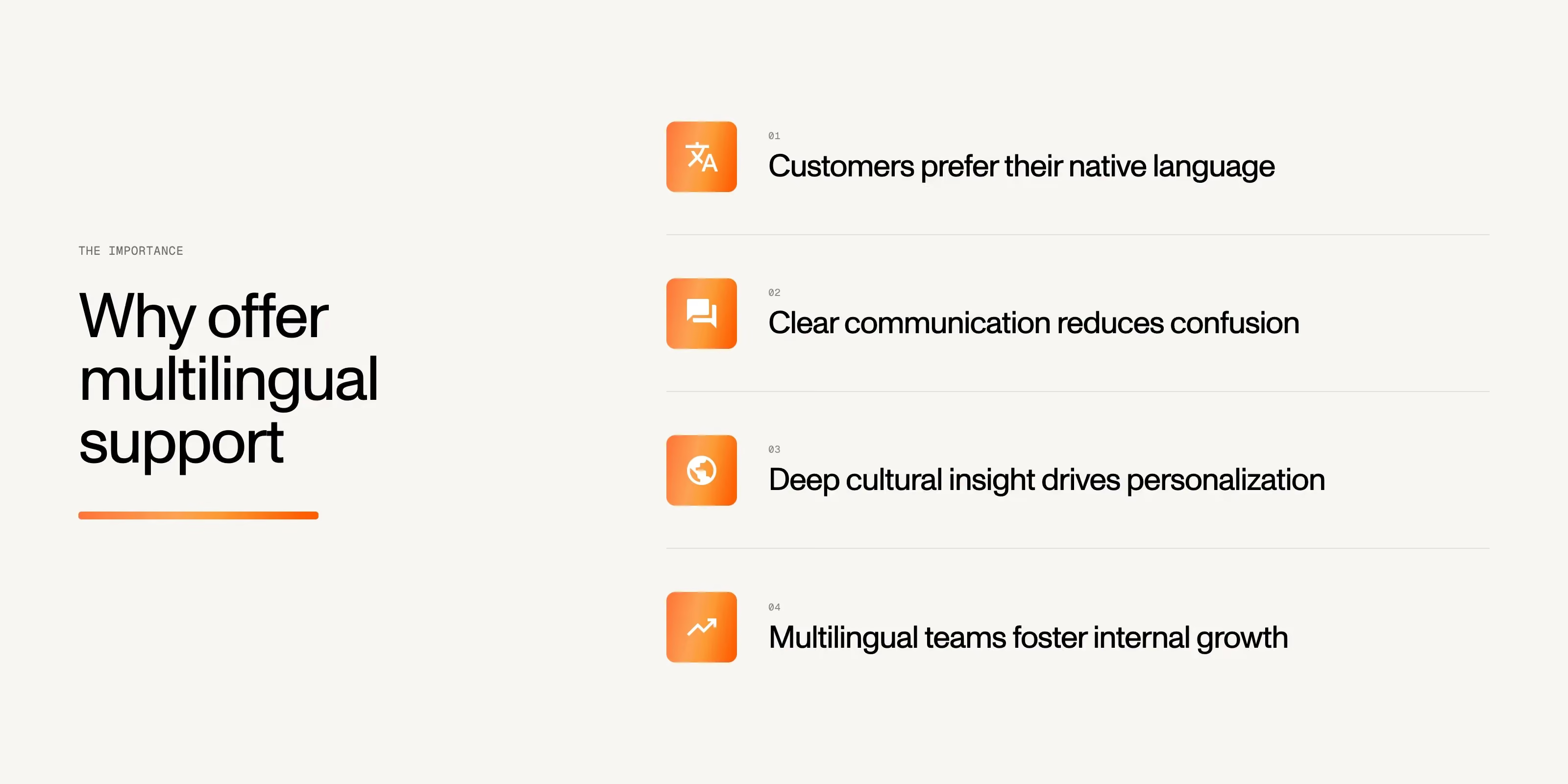
Providing multilingual support is a strategic move that allows businesses to grow in today’s global market. Here’s why.
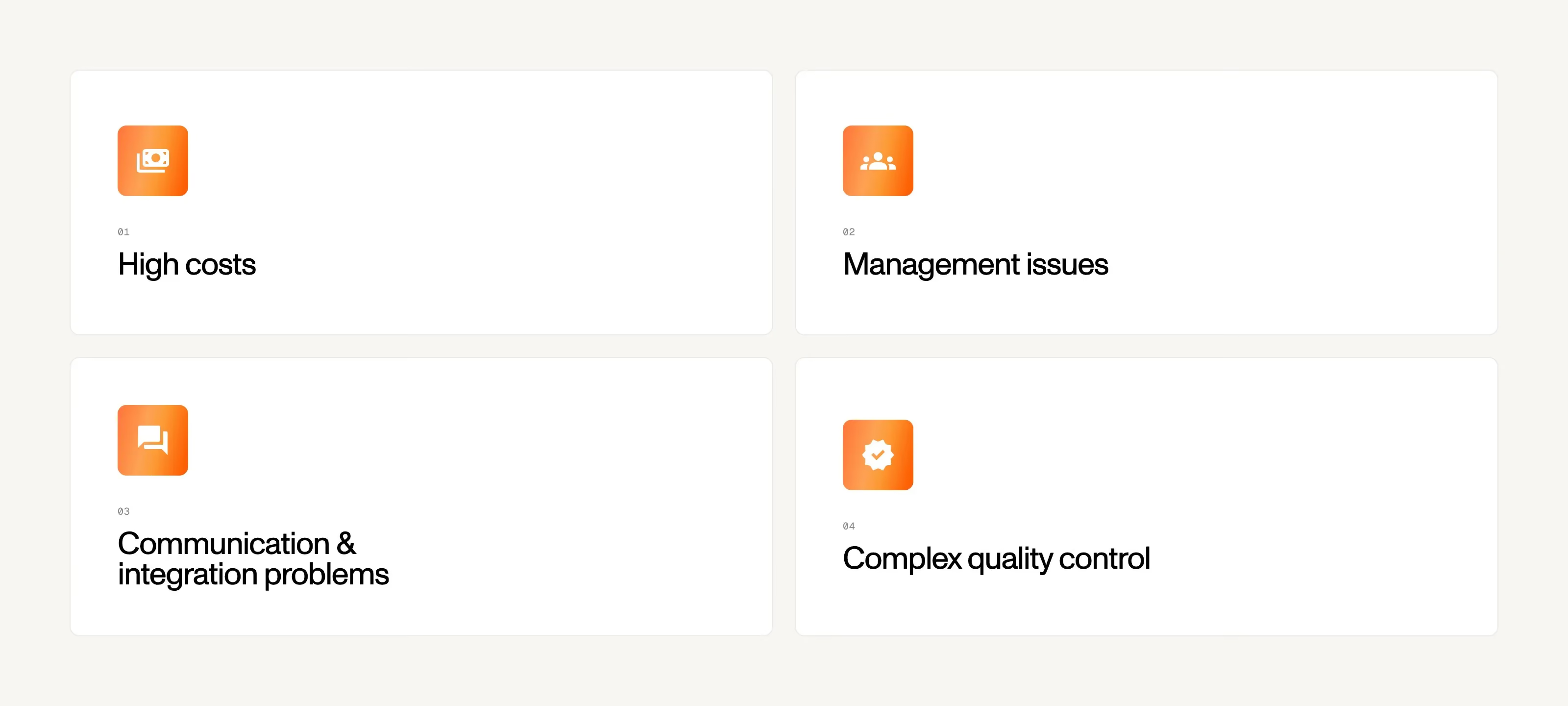
Before we dig into why outsourcing multilingual assistance is a better option, we should take a look at why having an in-house team usually doesn’t meet business expectations.
To build a truly omnichannel customer support experience, you must synchronize your human talent with your digital platforms. Here is how to structure your global delivery:
Rather than a single "channel," your multilingual customer support teams represent the high-empathy layer of your organization. These professionals navigate cultural nuances — such as regional dialects and local etiquette — that AI cannot yet fully replicate.
This is the front line for modern customer satisfaction. A multilingual customer support chat lets global users get answers in seconds, removing the "language barrier" from the immediate purchase path.
For technical troubleshooting or issues that require "paper trails," multilingual customer support emails are the essential backbone of global operations.
One of the most frequent questions from COOs today is: How does AI handle multilingual customer support? In 2026, the answer lies in "Agentic AI"—systems that don't just translate words, but execute tasks across languages.
None of this replaces people outright. The setups that hold up under real ticket volume pair automation with human-in-the-loop AI support, where agents step in for sensitive escalations, edge cases, and anything that calls for real empathy. AI then handles most of the straightforward cases that usually take up their time.
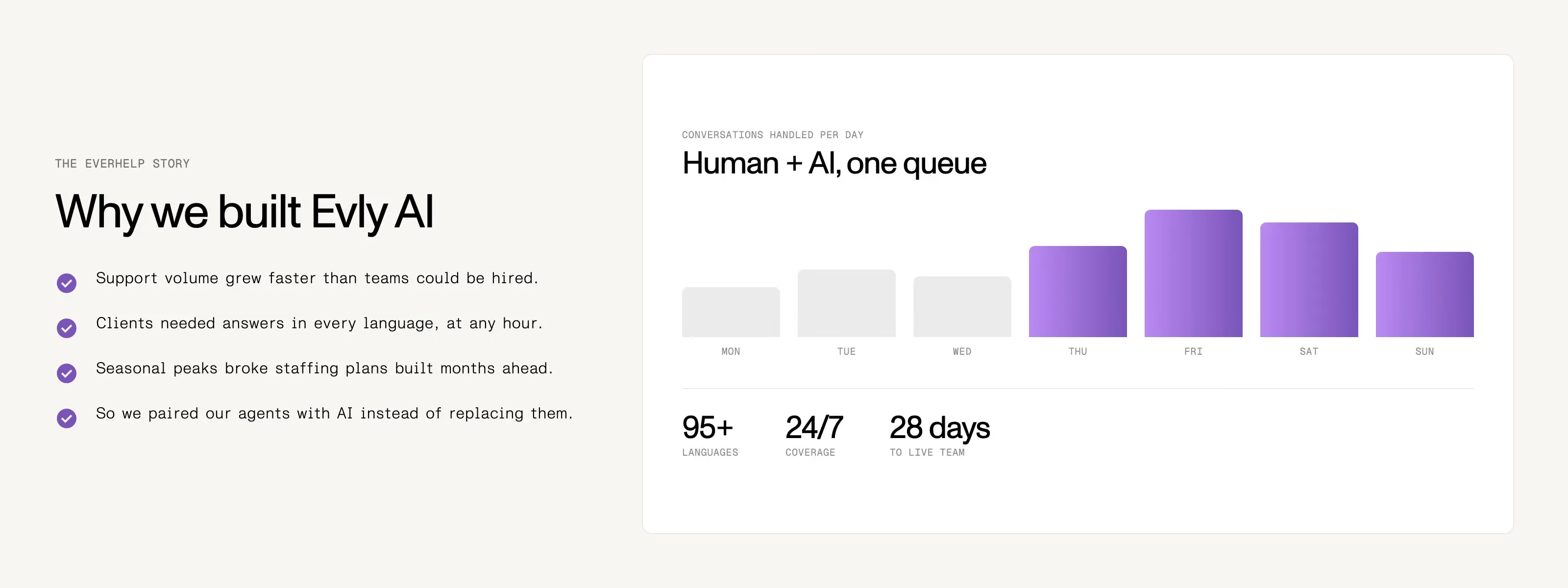
Since 2021, EverHelp has been the multilingual customer support partner for brands scaling across four continents. But as we managed millions of tickets, we noticed a recurring pattern. Our clients kept asking the same question:
"Can we give our human agents a 'superpower' to handle repetitive tasks faster so they can focus on the complex, emotional side of our business?"
We saw our customer support teams bogged down by routine inquiries like "Where is my order?" or "How do I change my password?" in 30 different languages.
We searched for a tool that combined deep neural translation with actual task execution—and when we couldn't find one that met our customer service standards, we built it ourselves.
That is how Evly was born. Built by support experts for support experts, Evly was designed to handle the exact challenges we faced alongside our clients. Today, it serves as the "Agentic" brain that allows our human teams to be more productive and our clients to scale without the linear costs of traditional hiring. Here's how Relatio automated 50% of tickets with Evly and still lifted CSAT to 86%.
With Evly clearing the repetitive volume, we could also expand the services we could offer, growing into the Results-as-a-Service ecosystem we are now. This allows us to provide our clients with the full setup, from human agents to AI agents, integrations, and full operational management.
To provide a truly authoritative guide, we must look at the hard data. In 2026, the gap between companies that provide a native experience and those that rely on "English-only" models has widened into a abyss. For more context on where global CX is trending overall, our roundup of customer service statistics breaks down the numbers shaping the industry this year.
These figures represent the tangible impact that multilingual customer support AI and native multilingual customer support teams have on global business health, particularly regarding customer satisfaction and customer loyalty.
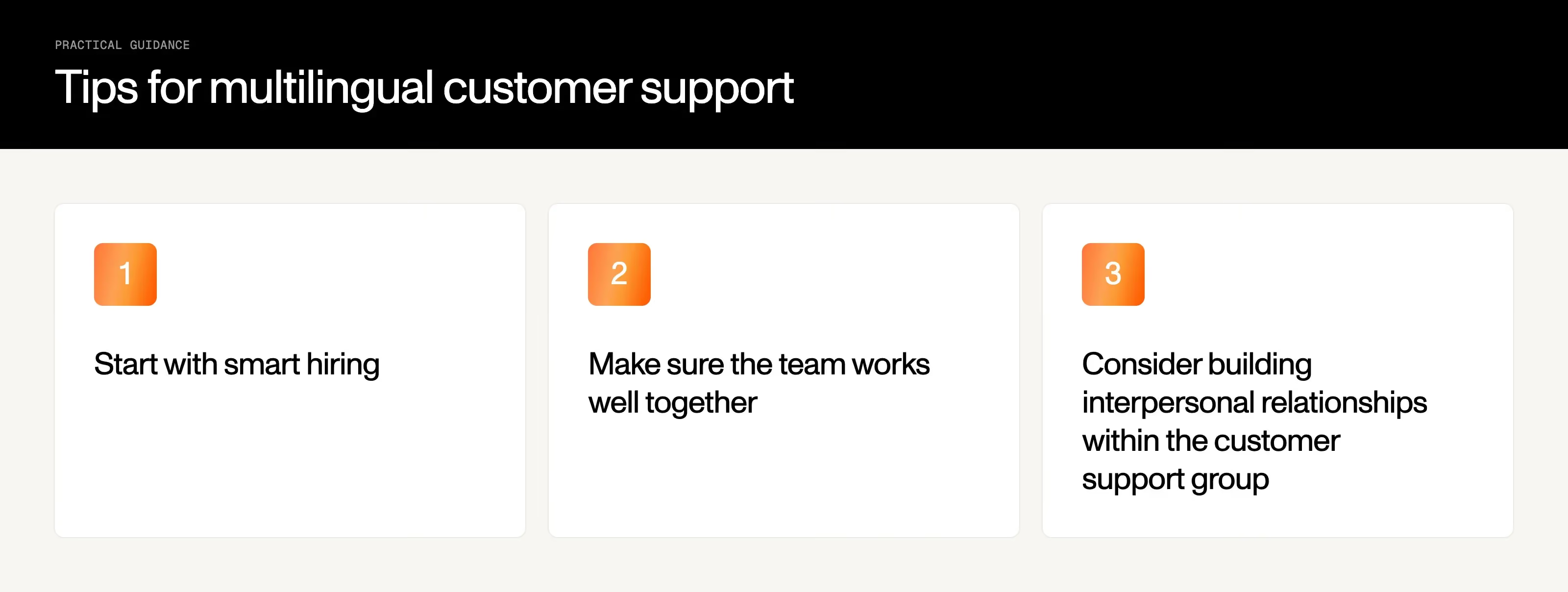
Use these tips to accelerate your multilingual support team:
{{cta}}
Scaling a global team internally is a logistical nightmare. A multilingual call center solves that coverage problem by providing native speakers across chat, email, and voice, without recruiting market by market. It also makes that coverage affordable, since the vendor runs the operations. Here's what else you get from multilingual call center outsourcing:
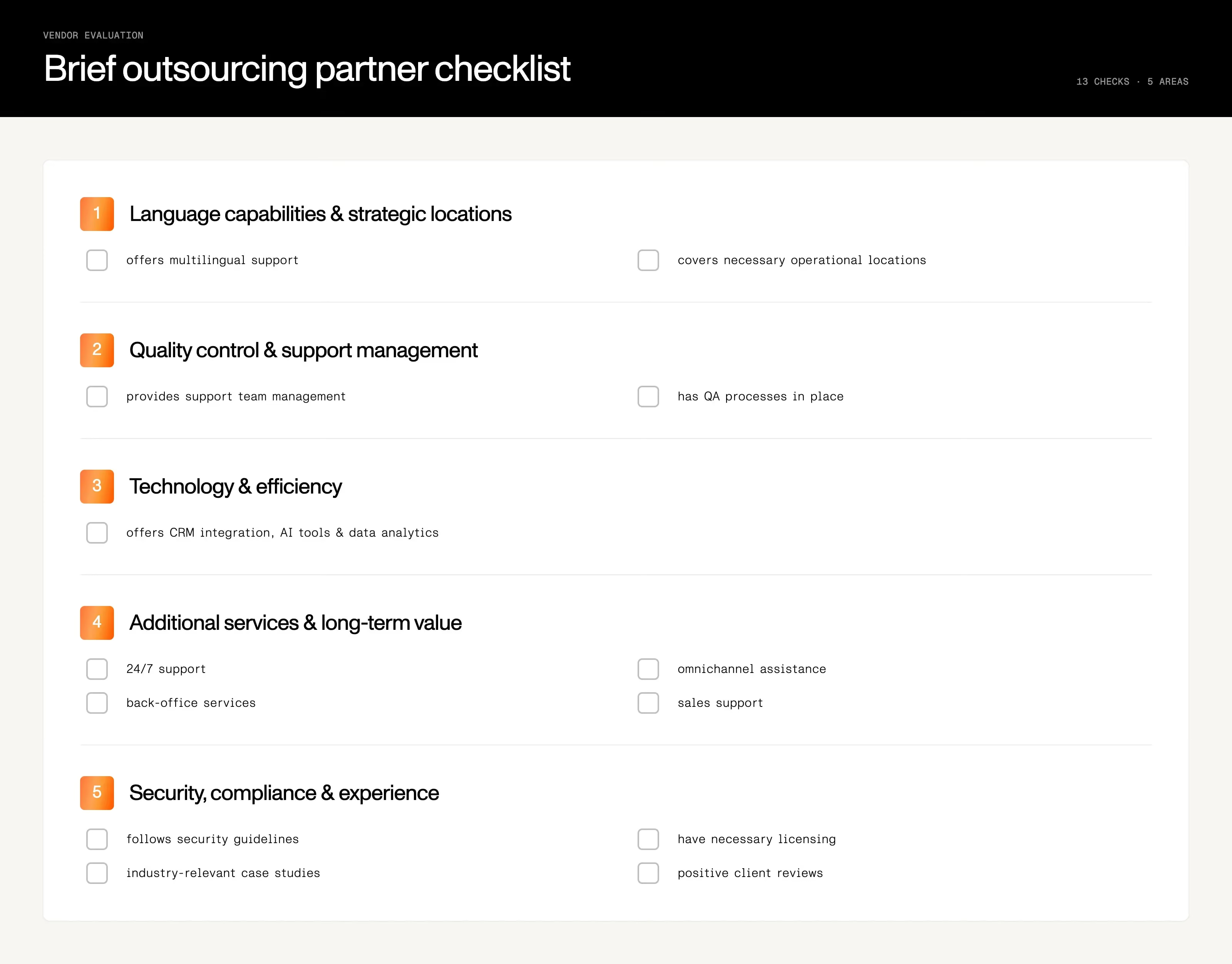
{{cta-lm}}
At EverHelp, we don't just provide support—we provide a competitive advantage. Our journey began when our clients asked for a smarter way to scale, leading us to create Evly, the Agentic AI built by support experts for support experts. Combined with our world-class human teams, we ensure your brand sounds local, anywhere in the world.
{{cta}}
There isn't a single universal answer, as it depends on your ticket volume and channel mix. Look for three things at minimum:
Newer platforms like Evly are usually built around all three and work best with human oversight rather than a fully automated handoff.
Not reliably, no. AI is strong at translation, routing, and handling repetitive requests (e.g., password resets, order status, simple FAQs) across dozens of languages at once. It's weaker at reading emotional context, handling escalations, or making judgment calls on account-sensitive issues. That's why most 2026 deployments are hybrid: AI handles volume, and agents step in for anything nuanced.
Multilingual support means answering customers in their own language. Localized support goes a step further. It accounts for cultural context, regional etiquette, currency and date formats, and the tone customers in a given market actually expect. Translating your FAQ page into German is multilingual. Rewriting it so it reads naturally to a German customer, with the right formality and cultural references, is localization.
Help someone else stay in the know. Hit that share button!
.webp)
.webp)

.avif)
.avif)
.webp)
.webp)