Omnichannel Support
Published on
27.01.2026
Last updated on
01.09.2026
Omnichannel Customer Support: All You Need to Know + Examples

Oleksandr
AI Integrations Lead

Oleksandr
AI Integrations Lead

Today's customers expect more than just good service – they want convenience, flexibility, and the freedom to connect with a business on their own terms. Whether through live chat, social media, email, or a phone call, they want to choose the channel that suits them best and switch between them seamlessly without starting over. This is the essence of omnichannel customer support.
Companies with omnichannel strategies have 23 times higher customer satisfaction rates compared to those with weak or disconnected systems.
In the article ahead, we'll unpack what it takes to deliver truly unified, friction-free support that keeps customers satisfied and loyal.
Omnichannel customer service refers to a support model where all communication channels a business uses (phone, chat, messengers, social media, etc.) are integrated into a single, unified system.
Picture this scenario with a customer named Sarah:
Because the brand uses an omnichannel customer support system, the agent instantly sees Sarah's entire conversation history, from the live chat transcript to her Instagram message, in a unified dashboard. Sarah doesn't have to repeat herself, and the agent can pick up exactly where the last interaction ended.
Some of you may ask: What's the difference between multichannel and omnichannel for customer service? After all, both give customers multiple ways to connect with a brand.
It's true that in a multichannel setup, customers can choose from various communication methods, including customer self-service tools like FAQs, guides, and user forums. The limitation is that these channels operate independently, so information isn't automatically shared between them. This creates gaps and forces customers to repeat themselves if an issue crosses multiple touchpoints – experiences that often lead to poor customer service.
With omnichannel customer service, both customers and agents have access to up-to-date case information, ensuring smooth, consistent interactions no matter where the conversation started.
According to research, 63% of consumers show loyalty by shopping frequently with their favorite brands, and 64% are more likely to spend more when they're part of a loyalty program or subscription.
Additionally, 79% of customers expect consistent interactions across channels, devices, and departments; however, 56% still have to repeat their issues when talking to brands.
These numbers reveal a simple truth: customers value smooth, connected experiences. Delivering on that promise doesn't just keep them happy but gives businesses an edge through stronger relationships, higher customer retention, and numerous other benefits. According to Bain & Company, a 5% increase in retention can drive profit growth of 25 to 95%.
Building a seamless omnichannel customer support journey can transform the way a business operates and earns. By uniting every customer touchpoint into one connected experience, companies gain clearer insights, faster response times, and stronger relationships. Here are the most impactful, revenue-driving perks this approach delivers.
When adopting such a strategy, companies integrate information and connect all communication channels into a single platform. Such a centralized system allows for easy finding and managing customer cases and interactions. This, in turn, lets businesses provide more effective and relevant support.
Another major advantage of a unified omnichannel customer service platform is its ability to deliver a comprehensive view of customer behavior, preferences, and pain points through detailed data analytics. These insights provide businesses with an opportunity to refine operations, enhance support protocols, and anticipate customer needs, ultimately creating a more engaging and personalized customer experience.
In today's reality, there's no place for a business that doesn't offer diverse device compatibility. After all, you never know what exactly a person uses when interacting with your brand: a laptop, desktop computer, mobile phone, or smart device. Having multiple yet connected support channels, companies can ensure their audience will have a smooth support experience no matter the device they use.
Probably the number one benefit that drives customer satisfaction is that omnichannel customer support allows for quick, real-time interaction between a brand and a customer. Providing immediate assistance ensures customers are satisfied and more likely to stay loyal to the business. According to Zendesk, companies utilizing an integrated omnichannel solution experience a 31% reduction in first-resolution times and a 39% decrease in customer wait times compared to those operating in silos.
The formula is simple: integrated support channels + real-time communication + comprehensive data analytics = faster, more effective assistance. With an omnichannel system, agents can instantly view customer queries across all channels and respond without delays. Robust analytics further enhance this process by helping agents anticipate specific customer needs and deliver precise, tailored solutions that resolve issues from the first contact. The result is smoother workflows, reduced resolution times, and a better overall service experience.
With more ways to reach support, greater efficiency, faster response times, and personalized solutions, businesses can ensure customers feel heard, understood, and valued. Satisfied customers are more likely to stay loyal to a brand that consistently listens, responds, and offers flexible communication. Over time, this loyalty translates into higher retention rates, stronger relationships, and increased lifetime value – turning occasional buyers into long-term fans of your brand. Research shows that companies with robust omnichannel customer service strategies retain 89% of their customers, compared to just 33% for companies with weaker omnichannel approaches.
Adding AI to an omnichannel setup raises the complexity significantly – the integrations you need change depending on how much you want to automate. Our AI in customer service handbook maps those thresholds from 43 live deployments.
However, it's not only your business that benefits from having omnichannel policies and solutions. Your clients win big as well.
As mentioned earlier, the omnichannel approach connects all communication touchpoints into one system, allowing agents to seamlessly continue the same conversation with customers, even if they switch channels mid-interaction. This continuity eliminates the frustration of repeating information, ensures that context is never lost, and delivers a smoother, more professional service experience that strengthens customer trust in the brand.
We've already talked about how the data analytics that an omnichannel platform provides give companies a chance to learn more about the behavior and preferences of their audience. Thanks to this knowledge, businesses can tailor their communication, offers, and solutions to match each customer's unique needs. Loyal customers spend 67% more on products and services compared to new customers. Personalization makes every interaction feel more relevant and engaging, and that, in turn, drives loyalty and long-term satisfaction.
We've saved the most obvious customer benefit for last: the flexibility that omnichannel customer service provides. This approach lets customers choose the communication channel they're most comfortable with, whether that's phone, live chat, social media, email, or communication solutions like DialMyCalls for bulk SMS and voice broadcasting. When people can connect on their own terms, they're more likely to reach out for help, engage in meaningful conversations, and remain satisfied with a brand that respects their preferences.
{{cta-lm}}
Learning from industry leaders who have successfully implemented omnichannel approaches can provide valuable insights for your own strategy. Here are some of the successful consumer service companies that have set the benchmark for seamless, integrated customer experiences.
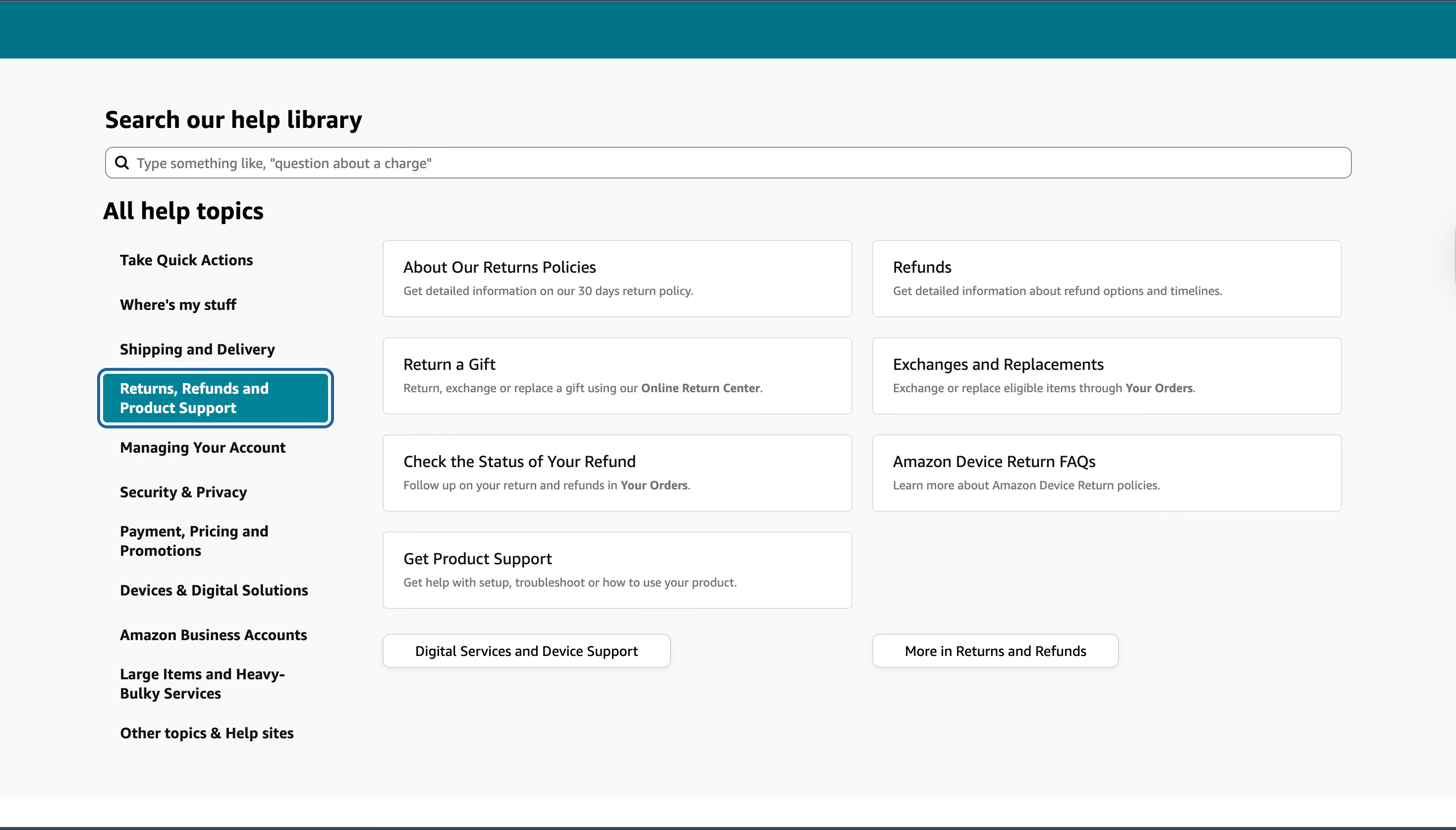
Amazon has become synonymous with excellent customer service, largely due to its sophisticated omnichannel approach. The e-commerce giant allows customers to seamlessly transition between their website, mobile app, and voice assistant Alexa without losing conversation context.
Amazon receives over 5 million customer inquiries per day across all channels, with peak call volume over 400,000 calls daily and more than 60% of contacts coming from mobile devices.
So, to handle such a volume, Amazon relies on multiple channels. What makes their approach particularly effective is their unified customer profile system:
Amazon also excels at proactive customer service, using its omnichannel data to anticipate issues before customers even reach out. If a shipment is delayed, customers automatically receive notifications across their preferred channels, along with solutions or alternatives.
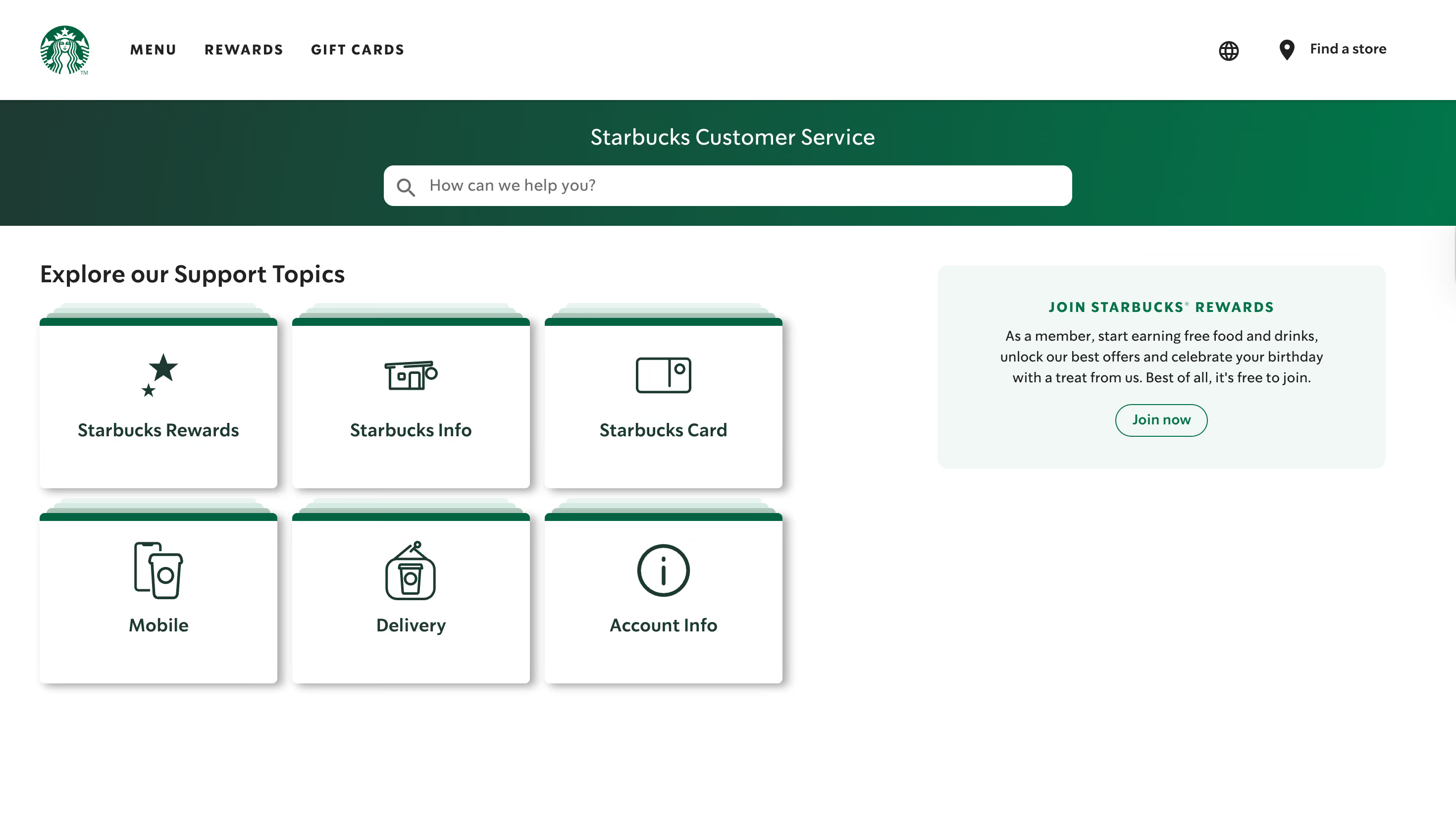
The Starbucks mobile app truly serves as a masterclass in omnichannel customer support execution. The app integrates ordering, payment, rewards, and customer service into a single, seamless experience.
Customers can start an order on the app, modify it through the website, and pick it up in-store without any friction. If an issue arises, support is available through in-app messaging, phone, or in-person at any location – and all channels access the same customer profile and order history.
Starbucks’ mobile app now drives 24% of all U.S. transactions, underscoring how central it is to the brand experience, and how effective omnichannel support helps sustain engagement at that scale.
What distinguishes Starbucks' approach is how they've made the customer's reward status, preferences, and previous orders accessible across every touchpoint. Baristas can see favorite drinks, dietary restrictions, and recent purchases, allowing them to provide personalized service that feels natural rather than intrusive. This exemplifies effective customer loyalty program strategies in action.

Sephora omnichannel customer support service hub
Sephora has mastered the art of connecting online and offline experiences through omnichannel customer service. Their Beauty Insider program integrates seamlessly across the website, mobile app, and physical stores, creating a unified profile that tracks purchases, preferences, and beauty profiles.
Sephora’s loyalty program has around 25 million members, who account for a large share of transactions and sales, underpinned by integrated profiles across the app, web, and in‑store.
Customers can receive virtual consultations via video chat, follow up with questions through live chat or social media, and then visit a store where beauty advisors have access to the entire conversation history. This continuity ensures that personalized product recommendations remain consistent regardless of the channel.
Sephora's approach also demonstrates the power of using data for personalization. Their platform analyzes purchase history and browsing behavior across all channels to suggest relevant products and provide tailored beauty advice, creating an experience that feels curated for each individual customer.

Disney's My Disney Experience platform showcases how going omnichannel can elevate an entire ecosystem. The app allows visitors to manage their entire trip – from booking reservations to accessing park maps and real-time updates – while seamlessly integrating with in-park experiences.
Customer support is woven throughout the experience. Guests can ask questions through the app, website, phone, or in-person at any Disney location, and cast members have access to the complete reservation and interaction history. This enables them to resolve issues quickly and make the experience more magical, often surprising guests with solutions that demonstrate a deep understanding of their preferences and plans.
Disney's integration of omnichannel support extends to their MagicBand system, which connects digital interactions with physical experiences in the parks, creating a truly seamless journey from planning to execution.
Disney’s 1‑billion‑dollar MyMagic+ platform supports experiences for 100 million park visitors a year, using a unified system (MagicBands + app + online) to coordinate reservations, payments, and access across channels.

As a provider of omnichannel customer support software, they naturally implement their own solution to deliver exemplary customer service to their users. Zendesk’s service culture demonstrates how B2B companies can benefit just as much from omnichannel strategies as B2C organizations.
Zendesk offers support through email, live chat, phone, community forums, and social media, with all interactions flowing into a unified system. What makes their implementation particularly effective is the seamless knowledge base integration – customers can often find answers themselves, and when they can't, agents can quickly reference the same articles to provide consistent guidance.
They also excel at using their omnichannel data to improve the customer experience continuously. By analyzing which channels customers prefer for different types of issues and tracking resolution times across touchpoints, they optimize their support strategy to meet evolving customer needs.
Zendesk reports that Spartan Race, using Zendesk plus self-service and chat, achieved a 50+% decrease in inquiry volume (+46% increase in self-service instead) after building a help center that integrated with their omnichannel flows.
{{cta}}
Choosing the right platform is crucial for delivering seamless omnichannel customer support. The software you select becomes the backbone of your customer experience strategy, determining how effectively your team can manage interactions across multiple channels.
A true solution goes beyond simply collecting messages from different channels. It unifies them into a single, chronological conversation timeline that provides complete context to both agents and customers. The best platforms offer several critical capabilities:
Modern omnichannel customer service platforms also leverage AI and automation to enhance efficiency. Customer support automation tools can handle routine inquiries, freeing agents to focus on complex issues that require human empathy and problem-solving skills.
The integration of artificial intelligence has revolutionized how businesses handle customer inquiries. AI-powered platforms can:
One innovative solution in this space is Evly, an AI agent designed specifically to enhance omnichannel support. Evly integrates seamlessly across communication channels, learning from each interaction to provide increasingly accurate and helpful responses. By combining machine learning with natural language processing, Evly can maintain conversation context across channels and escalate complex issues to human agents when necessary – all while maintaining the personalized touch customers expect.
You might like: Freshdesk vs Zendesk: Who Wins in 2026?
When evaluating these platforms, prioritize solutions that align with your specific industry requirements and customer service standards. The software should support your team's workflow, not complicate it, with intuitive interfaces and comprehensive training resources. Don't be swayed solely by feature lists – prioritize solutions that demonstrate proven success in your sector and can scale as your business grows.
Implementing such solutions requires more than just purchasing software. It demands a strategic approach that aligns technology, processes, and people.
The foundation of successful omnichannel customer service lies in creating an infrastructure that supports seamless information flow. This transformation involves several critical components:
Focus on the channels your customers actually use and where they expect to find you. Start by mapping your current customer journey to identify all touchpoints where customers interact with your brand. Then evaluate which channels are most important to your audience.
You might like: How to Improve Customer Service in a Call Center at Every Touchpoint
Successful omnichannel customer support solutions seamlessly integrate with your existing technology stack. Your omnichannel platform should connect with:
This integration ensures that regardless of which channel a customer uses, they receive accurate, up-to-date information. An agent handling a social media inquiry should have the same access to order history, previous conversations, and customer preferences as an agent responding to an email.
Even the best support platform won't deliver results if your team isn't properly prepared to use it. Investment in comprehensive training is essential:
Regular training sessions should reinforce these skills while introducing new features and best practices as your support system evolves.
{{cta}}
When opting for an omnichannel system, companies need to ensure it's efficient and brings maximum value for both the business and the audience. Here are proven actions to help elevate your omnichannel customer experience to its full potential.
The integration of all communication channels must be seamless. Consider these essential factors when evaluating platforms:
The right platform should enable customers and agents to switch between channels effortlessly, without losing important information or experiencing interruptions. Research available solutions well in advance and choose one that best fits your business needs.
One of the key advantages of an omnichannel customer service system is process optimization. Leverage modern tools strategically:
Don't hesitate to use modern tools to automate workflows, reduce manual tasks, and minimize the need for micromanagement. Advanced omnichannel platforms (including CRM systems) enable faster, more efficient, and data-driven customer service.
Remember: automation doesn't mean removing the human touch – it means optimizing where human interaction adds the most value.
You might like: A Step-by-Step Playbook for Customer Support Automation
Your business should project a clear, recognizable identity, and customer service is one of the most direct ways to communicate that brand persona. Implement these consistency measures:
Consistency not only reinforces your brand but also ensures that customers experience the same professionalism and personality no matter where they interact with you.
Implementing omnichannel customer support isn't a one-time project – it's an ongoing commitment to improvement:
Small optimizations can lead to significant improvements in customer satisfaction and operational efficiency over time. If customers frequently abandon one channel and switch to another, investigate why – perhaps response times are too slow, or the channel doesn't support the type of issue they're trying to resolve.
The bottom line is clear: if a company wants to improve customer satisfaction and loyalty, boost revenue, and move toward improving its support and business processes, it needs to go omnichannel. Beyond the numbers, it fundamentally changes how customers perceive your brand. When every interaction is informed by previous conversations and support is available seamlessly across preferred channels, you're building lasting relationships.
However, if you don't have the time to manage the entire integration on your own, you can collaborate with a customer service outsourcing provider. At EverHelp, we handle the entire process end-to-end.
Book a call with us to gain a competitive edge through stellar omnichannel customer support.
Help someone else stay in the know. Hit that share button!





.webp)
.avif)