Growth & Metrics
Published on
10.03.2026
Last updated on
01.09.2026
Customer Service vs Customer Experience: Why Your Business Needs Both

Daryna
Delivery Manager

Daryna
Delivery Manager

Most founders treat customer experience and customer service as two names for the same thing. They're not – and mixing them up quietly costs you retention, revenue, and reviews.
According to Salesforce, 80% of customers say the customer experience a brand provides is just as important as its product. Yet most scaling eCommerce and SaaS businesses invest heavily in one and neglect the other.
Here's the short answer: Customer service vs customer experience is the difference between reactive and proactive. Customer service kicks in when something goes wrong. Customer experience is the architecture of every touchpoint before, during, and after that moment. Nail both, and you don't just solve problems – you prevent them, strengthen sales, and build loyalty that compounds.
Customer service is your company's reactive layer – the direct support you deliver when a customer has a question, hits an obstacle, or needs a resolution.
It's the moment where a brand either keeps or loses a customer, and brand reputation is built one interaction at a time. When service issues arise, and customers feel stuck, how your customer service team responds defines the entire relationship and shapes long-term customer perceptions.
Think of a customer who buys a SaaS subscription, can't find a key feature, and contacts support. That customer interaction will define whether they stay, upgrade, or cancel. Research by Contentful shows 97% of people change their buying behavior after a bad customer experience – and 58% stop purchasing entirely. That single ticket isn't just a ticket – it's a retention decision.
Great customer service rests on three fundamentals:
Customer experience (CX) is the full, proactive customer journey your business provides – every touchpoint a customer has with your company, from the first ad they scroll past to the renewal email they open six months later.
It's the sum of all the interactions, emotions, and perceptions your brand creates, including the ones where no one is asking for help.
Customer experience is the architecture, and customer service is one room inside that building. The entire customer journey – from awareness through purchase to advocacy – is what CX encompasses. Delivering a great customer experience means every step of that journey is deliberate, with pain points actively identified and removed, and aligned with customer expectations.
According to Forrester, companies with superior CX grow revenues five times faster than laggards. For B2B SaaS founders specifically, 86% of buyers will pay a 13–18% price premium for a better experience (PwC). That's pricing power, and it's why CX leaders consistently outperform the competition.
Three forces shape the customer experience at every company:
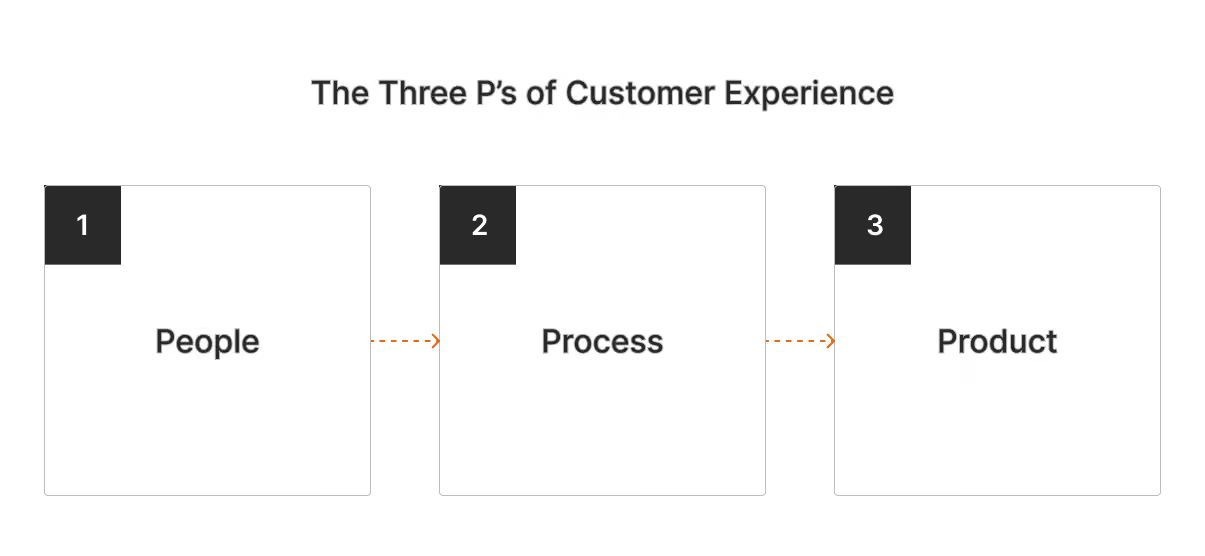
Your support agents, onboarding team, and sales representatives – anyone a customer interacts with is a CX variable. Employees who understand customer needs and are trained to deliver on the brand promise create a positive experience at every turn. Helping customers succeed is ultimately a human responsibility.
How frictionless is checkout? How fast does a refund land? Continuous improvement of these processes is what separates companies that retain customers from those that lose them.
Bugs, UX friction, and missing features are CX failures – even if no ticket is filed. When customers feel the product isn't meeting their expectations, no amount of great customer support fully compensates.
{{cta}}
Proactive CX looks like shipping updates before customers think to ask, a returns flow that doesn't require a support ticket, and personalization across every touchpoint that makes the second purchase feel as smooth as the first.
It’s proven that such personalized shopping experiences can increase conversion rates by up to 15%, with 73% of consumers now expecting brands to anticipate their needs. These are two of the key CX points covered in our eCommerce customer experience trends guide.
Proactive CX is customer onboarding triggered by feature adoption signals, in-app nudges that surface value before users go quiet, and renewal conversations that start 60 days early. A well-designed customer experience strategy means your customers are always moving forward. In today's digital world, they expect every interaction to be seamless, personalized, and low-effort.
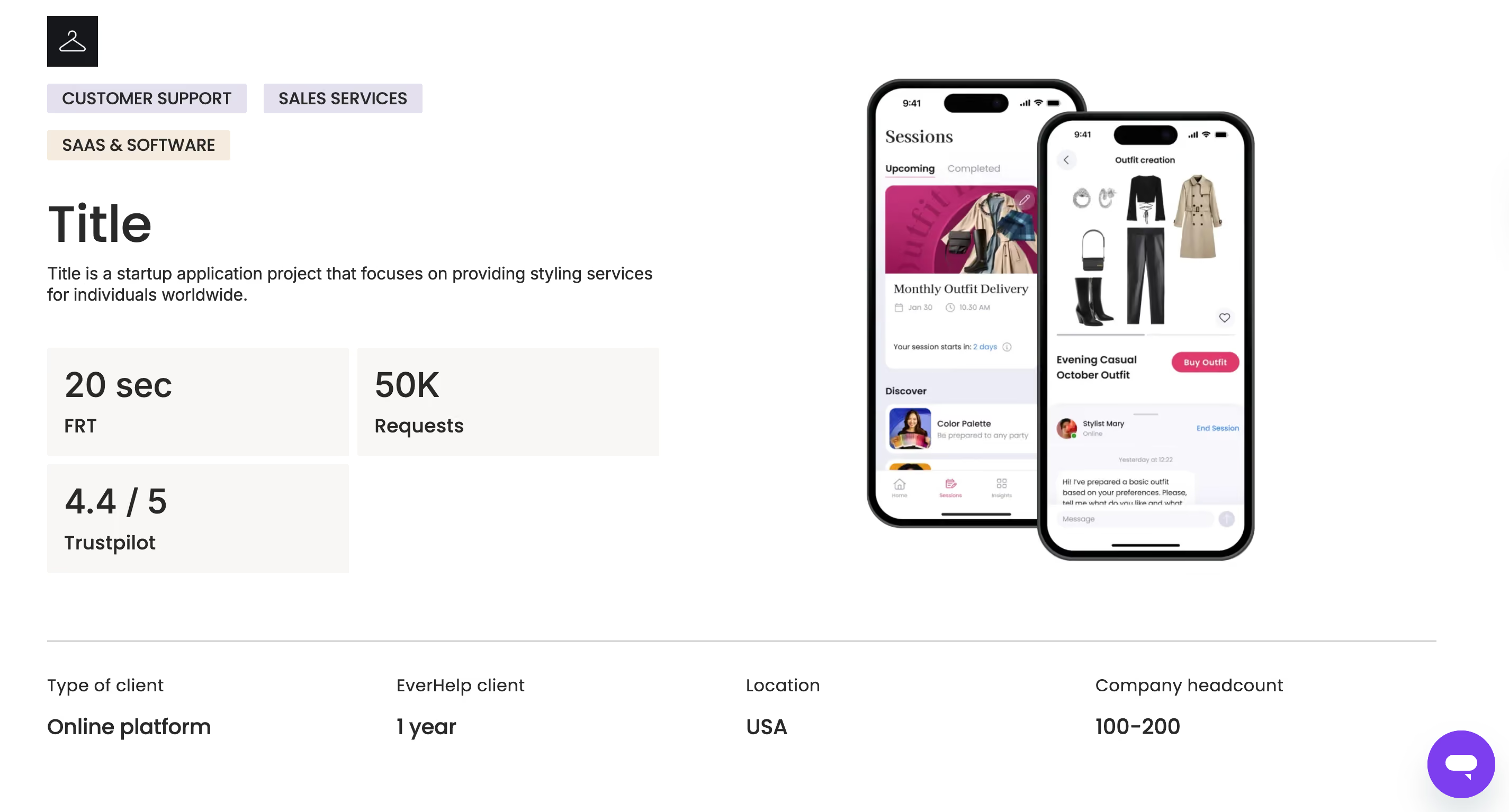
EverHelp's work with Title, a global styling platform, is a strong example: by building a dedicated 20-agent support team, they achieved a 20-second FRT and handled 50K monthly requests. For a deeper playbook, see our SaaS customer support guide.
Pro tip: The most effective CX teams don't run these touchpoints in isolation – they map them against the entire customer journey and assign clear ownership across support, product, and marketing. Shared visibility is what turns good intentions into consistent delivery.
Both functions are essential – businesses that treat them as interchangeable are leaving real business value on the table.
Customer experience and customer service work hand in hand to build brand loyalty; these elements must work hand in hand to ensure consistent, positive interactions. Customer experience directly impacts money, as positive perceptions drive spending, loyalty, and ultimately company profits. It's important to note that customer service has different success metrics compared to customer experience, which includes broader metrics like customer lifetime value and retention rate.
Both columns feed business success. Work to improve customer experience at the journey level, and great customer service gets easier. Improving CX at the service layer and overall customer experience quality lifts in tandem.
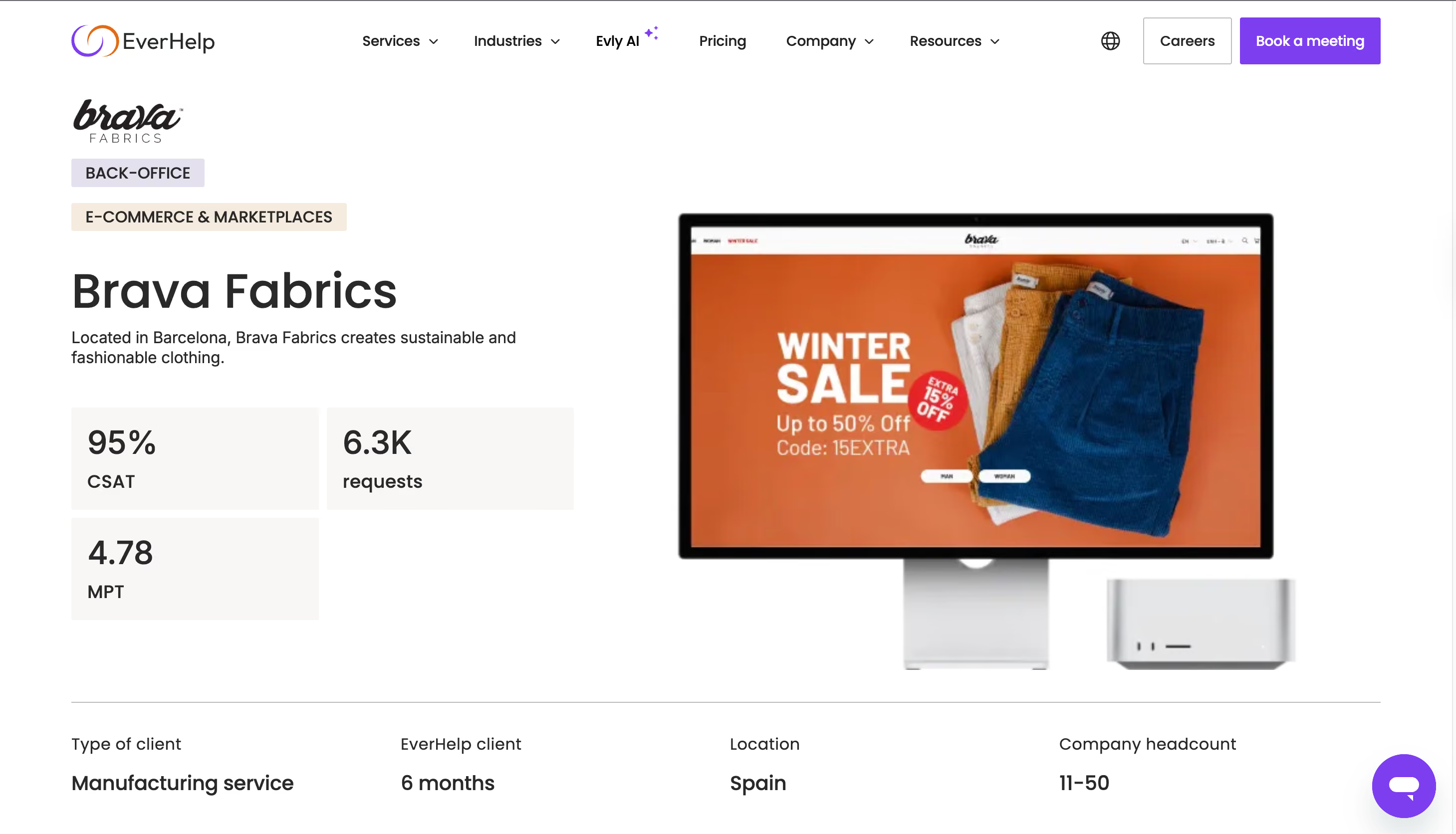
When Barcelona-based sustainable fashion brand Brava Fabrics came to EverHelp, their customer service experience was struggling to keep up with demand. The in-house team lacked the human resources to scale coverage, first reply times were too lengthy, and overall customer satisfaction was suffering. Customer perceptions of the brand were at serious risk – and for a company competing on values and quality, that's a big difference to manage.
Limited headcount, no scalable channel coverage, slipping FRT, all quietly dragging down customer loyalty and the brand's CX reputation.
We have provided 1 dedicated English-speaking agent, fully embedded in Brava Fabrics' workflows, covering email, Facebook Messages, and WhatsApp simultaneously. This approach kept costs efficient while expanding capacity exactly where it was needed.
Just one person was what it took to help the client move the needle and gain traction:
That freed up the brand's employees to concentrate on proactive CX work – product development, marketing, and customer retention strategy. It doesn't stop here; we are striving to shorten response times and boost CSAT even more.
{{cta}}
The customer experience and customer service landscape shifted significantly between 2024 and 2025. Three developments that matter right now:
Our guides on reducing SaaS customer churn and the pros and cons of AI in customer service cover both in detail.
Customer service catches problems. Customer experience prevents them. The brands growing fastest invest in both, and companies with superior CX grow five times faster than those that don't.
Keep an eye on the right customer satisfaction metrics and watch the difference.
EverHelp handles the reactive layer – dedicated, product-trained customer service teams powered by AI, live in under 28 days– so you can focus on the proactive customer experience work that drives retention and growth.
{{cta}}
Customer service is reactive – the direct support a business provides when a customer reaches out with a question or problem. Customer experience is proactive – the full emotional journey a customer has with your brand, from first impression to renewal. Customer service is one input into that journey. CX is the sum of all of them. No company excels long-term by mastering only one.
Three trends are defining CX in 2025:
EverHelp provides outsourced support teams embedded in a client's product and brand – handling the reactive layer with a dedicated customer service team built for speed, empathy, and consistency, so founders can focus on CX strategy, sales growth, and product development. Clients like Brava Fabrics and Headway have hit 95% and 79% of customer satisfaction (CSAT), respectively. Explore how EverHelp's customer service outsourcing process works.
AI handles volume: FAQs, routing, order status, and first-line triage. Human support handles nuance: escalations, churn risk, and anything where empathy determines the outcome. Support agents augmented by AI handle 13.8% more inquiries per hour (Nielsen Norman Group), but human touch still drives loyalty. EverHelp pairs intelligent customer service automation with dedicated agents to improve CX simultaneously.
For most scaling eCommerce and SaaS companies, outsourcing wins on scalability, 24/7 coverage, multilingual capability, and cost-per-ticket. EverHelp bridges the knowledge gap through dedicated team pods embedded in your workflows, delivering consistent customer care and customer service quality that matches or exceeds in-house teams. This is the key to each positive experience we provide. See our full outsourcing customer service pros and cons guide.
Help someone else stay in the know. Hit that share button!

.png)


.avif)
.png)
.png)