Growth & Metrics
Published on
10.02.2026
Last updated on
01.09.2026
Guide to Improving First Call Resolution (FCR) Rate Smartly

Valentyna
VP of Customer Support

Valentyna
VP of Customer Support
%2520Rate%2520Smartly.avif)
Let's be real – problems and misunderstandings with customers are an inevitable part of any business. However, they're not a dead end if managed properly. And you have only one chance to make it right.
Did you know? 48% of customers believe the first interaction with a business is crucial to earning their loyalty. And a staggering 73% fall in love with a brand, mainly due to its exceptional customer service.
So, you can quickly turn problem-solving situations into loyalty-building opportunities by focusing on one of the most important customer satisfaction metrics – first call resolution (FCR).
Achieving a high first call resolution rate results in happier customers, reduced costs, and enhanced productivity. But how can you tackle the challenges, measure success, and pick the right strategies? Get ready to discover the tricky nuances of mastering first contact resolution!
The first call resolution definition: FCR is a metric that assesses a support team's ability to resolve customer interactions during the first touchpoint with clients, reducing the need for follow-ups or escalations. It's one of the most closely followed customer service metrics, if not the most essential.
From a customer journey standpoint, FCR ideally means no more calls or contacts are necessary after the first interaction – the customer's issue is fully resolved.
The proportion of customers who had their issue resolved on the first interaction is referred to as the first call resolution rate. Here's the formula:
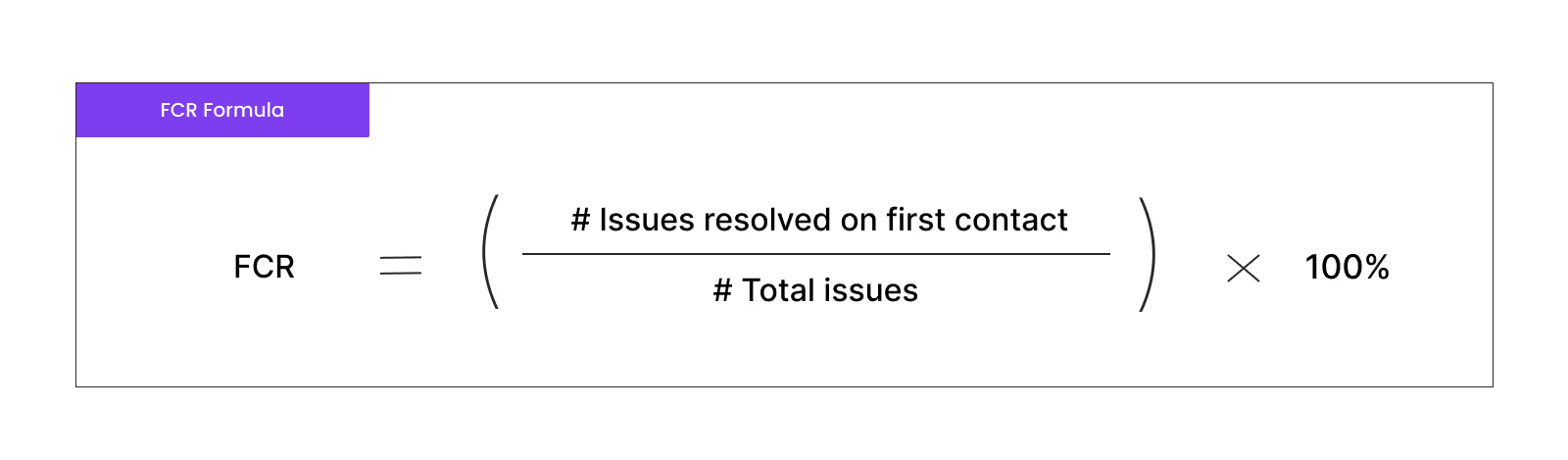
Example calculation: Over a month, your customer service team handles 140 issues from customers for the first time. Out of those, 110 are resolved successfully at first contact.
Formula: (110/140) × 100 = 78.5% FCR rate
First call resolution isn't just a feel-good metric – it directly impacts your bottom line. And that’s why smart email, chat & call center guide CX strategies prioritize FCR above almost everything else.
Source: SQM Group: Article 1, Article 2, Article 3; Forrester.
Think about this: for a call center performing at the industry average of 70% FCR, potentially 30% of customers have to call back because their issue wasn't resolved the first time. That represents repeat calls costing 23% of the average contact center's operating budget. Every callback is money burned – and customer loyalty eroded.
Even more compelling? Per SQM Group research mentioned above, for every 1% improvement in FCR, there's a 1% improvement in customer satisfaction. It's one of the few metrics where efficiency and experience move in perfect lockstep.
Many businesses believe FCR should be no lower than 65-75%. However, the benchmark varies greatly across industries. Whether you're above or below that range doesn't automatically indicate excellent or terrible performance – context matters.
Source: SQM Group FCR Benchmark.
Key insight: The overall first call resolution call center industry range is 46% to 88%, with 69–70% being the benchmark average. Only a small subset of contact centers reach world-class FCR levels of 80% or higher. Technical product businesses may have a tougher difficulty addressing concerns on initial contact than eCommerce companies – this should always be taken into account!
{{cta}}
Now for the practical part. These approaches come from years of industry research and real-world application. They include agent training, AI & automation, focus on feedback, knowledge base creation, and more.
Training shouldn't stop after onboarding. Regular product knowledge refreshers, role-playing exercises for common scenarios, and real-call reviews build confidence that translates directly to higher FCR.
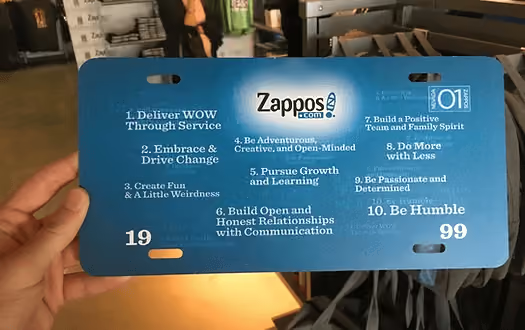
Zappos requires all new hires, regardless of role, to complete a four-week Customer Loyalty Team training program that includes two weeks of answering actual customer calls. This investment is a key reason they maintain FCR rates above 75%.
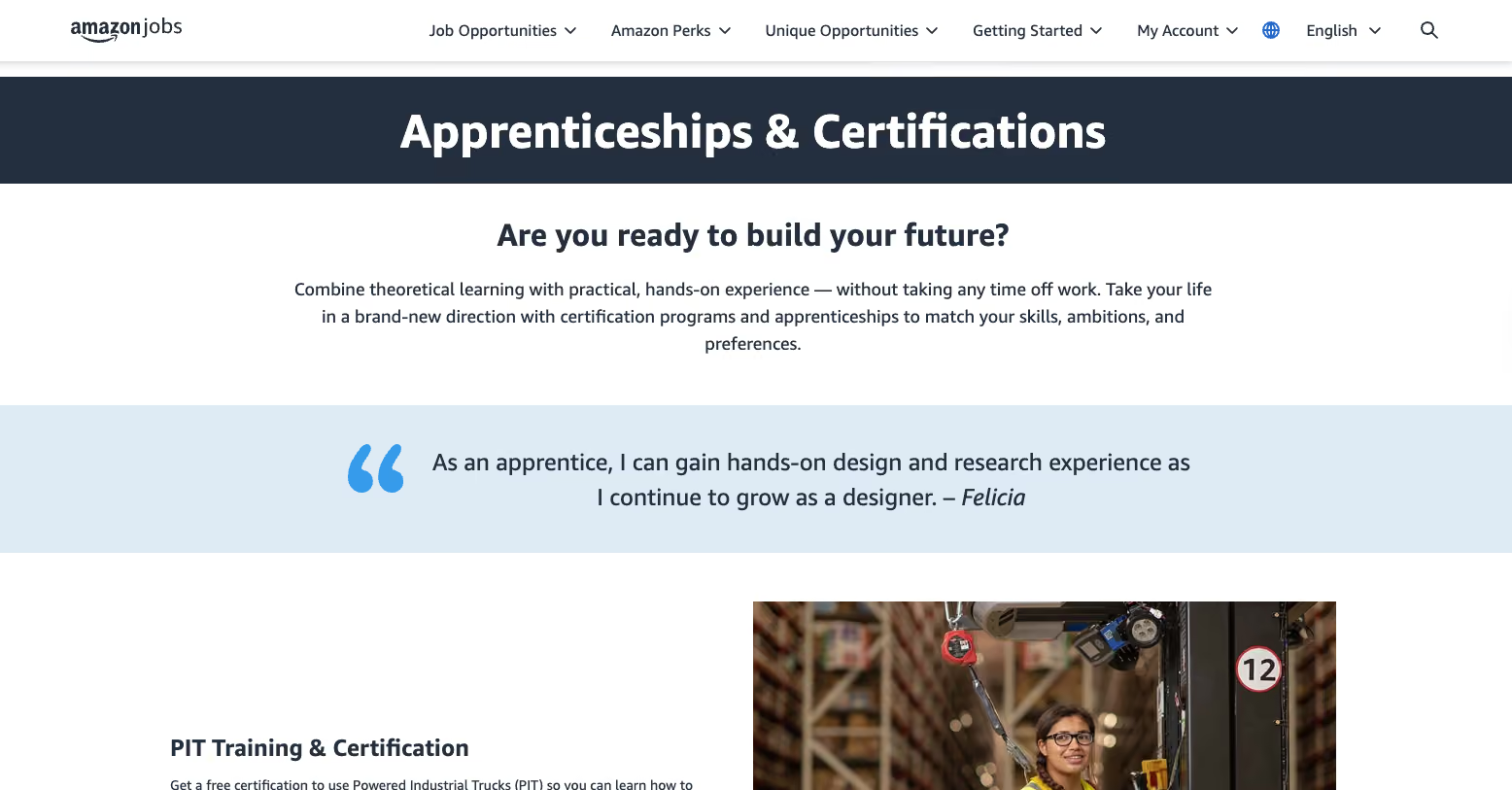
Amazon takes it further with simulation-based training environments where support representatives practice resolving complex customer scenarios in risk-free settings before handling live interactions. These interactive practice systems build agent confidence and refine problem-solving skills without the pressure of real customer contact.
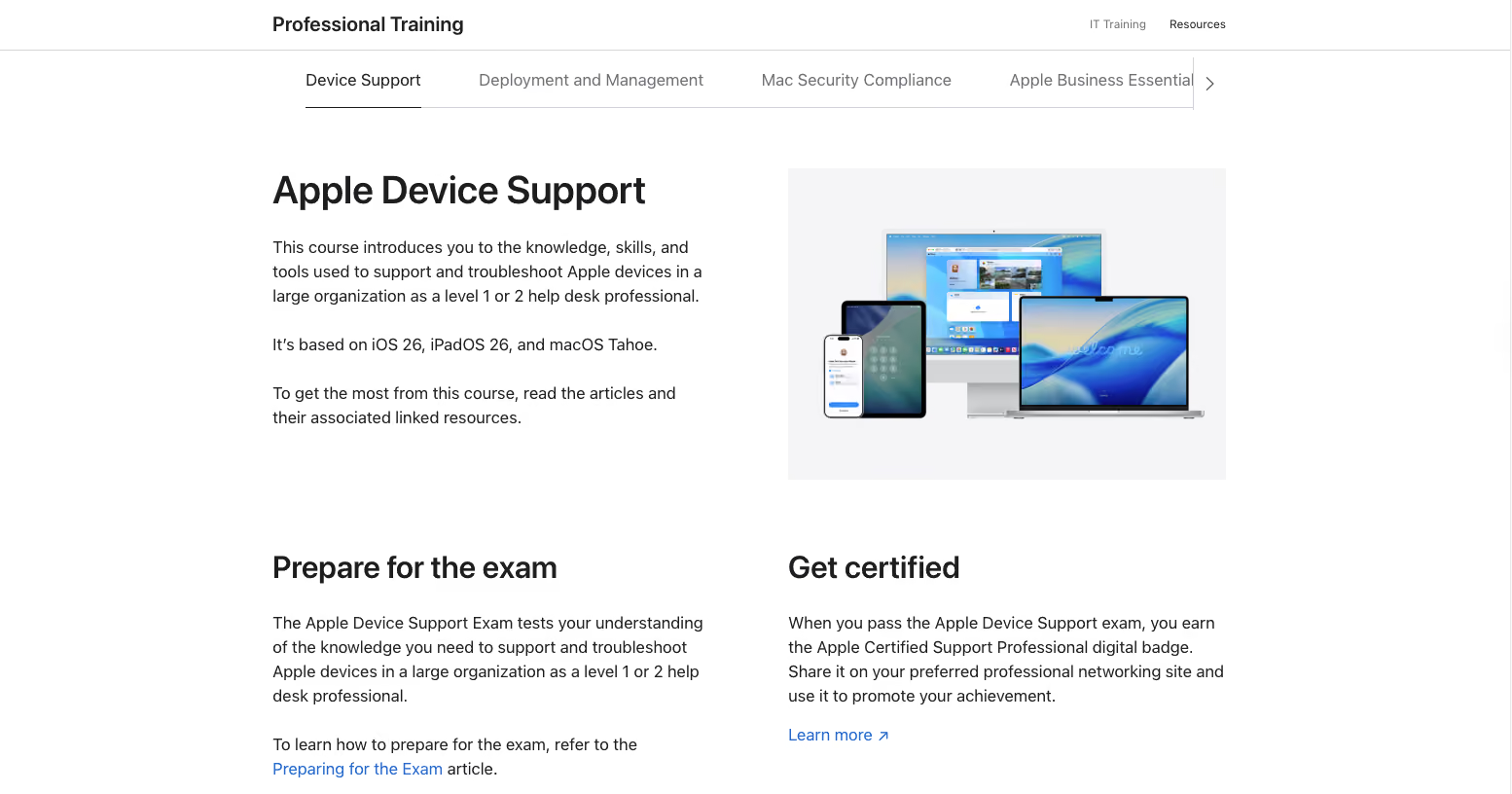
Apple's technical support specialists undergo intensive hands-on product training, spending significant time personally using, exploring, and troubleshooting devices before assisting customers. Historically, Genius Bar training included two weeks of coursework covering diagnostics, repair procedures, and customer empathy skills to ensure authentic product expertise.
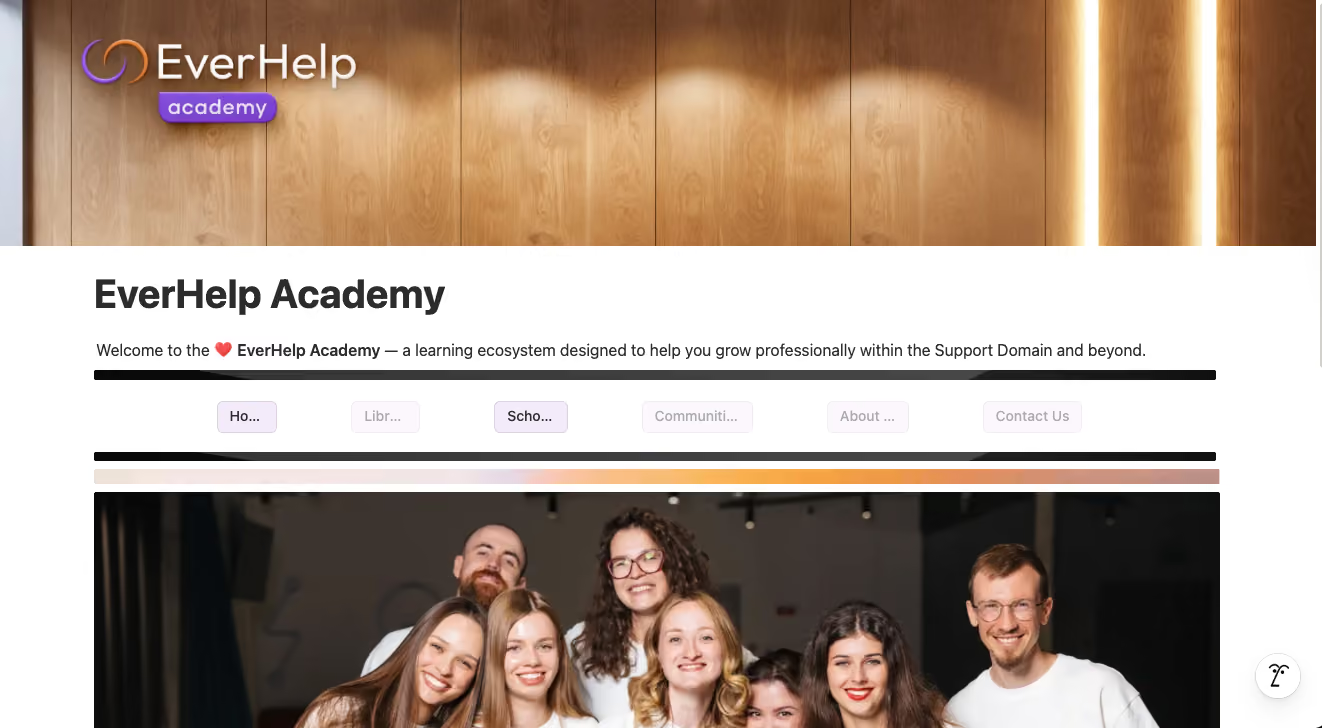
EverHelp approaches support training as an operational system, not onboarding. Through EverHelp Academy, teams train on real customer scenarios, live performance metrics, and decision-making frameworks tailored to agents, team leads, and managers. This role-based, hands-on model helps support teams scale consistently while maintaining service quality as volume and complexity grow.
Your agents need instant access to accurate information. Essential elements include:
SQM Group research confirms that process improvement initiatives deliver 1-10% FCR gains – knowledge management is a core component of that improvement.
Connect customers with the right agent from the start through skills-based routing that matches issue type to agent expertise. Modern intelligent routing systems analyze incoming requests and direct them to the most qualified available agent based on factors like technical knowledge, language proficiency, product specialization, and customer value.
Key components of effective ticket routing:
After implementing intelligent routing, Xenial (a restaurant technology company) increased their FCR by 17x – connecting customers to the right agent at the right time.
Not limited to first call resolution alone, EverHelp built its own AI agent, Evly, to optimize ticket routing across key support and business metrics. Evly automates triage, enables context-rich handoffs, classifies tickets by language, and tracks routing accuracy (95%) in real time to continuously improve agent assignment.
When resolution requires manager approval for routine decisions (refunds, credits, billing adjustments), FCR suffers. Set clear guidelines for what agents can approve independently.
Ritz-Carlton empowers every employee to spend up to $2,000 to resolve a guest issue without manager approval. This autonomy contributes to their industry-leading FCR rate of over 80%.
Use technology to handle routine inquiries and support agents – this is where the transformation happens. AI isn't replacing human agents; it's amplifying their capabilities.
How AI Improves FCR:
Source: Evly AI, Plivo, AIRPM, People Matters, Peak Support.
EverHelp’s AI customer support agent:
Their styling service app client reported that Evly AI "has taken a 64% load off our support team by cutting down on repetitive requests" while maintaining 92% quality score and a CSAT higher than a human side of the team.
For a deeper dive into practical AI implementation and more details about this case, download the free AI in customer service handbook.
Agents need the full picture. CRM integration showing purchase history, previous contacts, account status – plus a unified view across all channels – eliminates the "let me transfer you" nightmare that kills first call resolution rates. According to Forrester, customers' inability to get seamless experiences across channels is a key driver of declining CX quality.
When transferring inquiries to the support team, EverHelp’s AI provides detailed AI-generated summaries. It ensures continuity and eliminates the need for customers to repeat themselves.
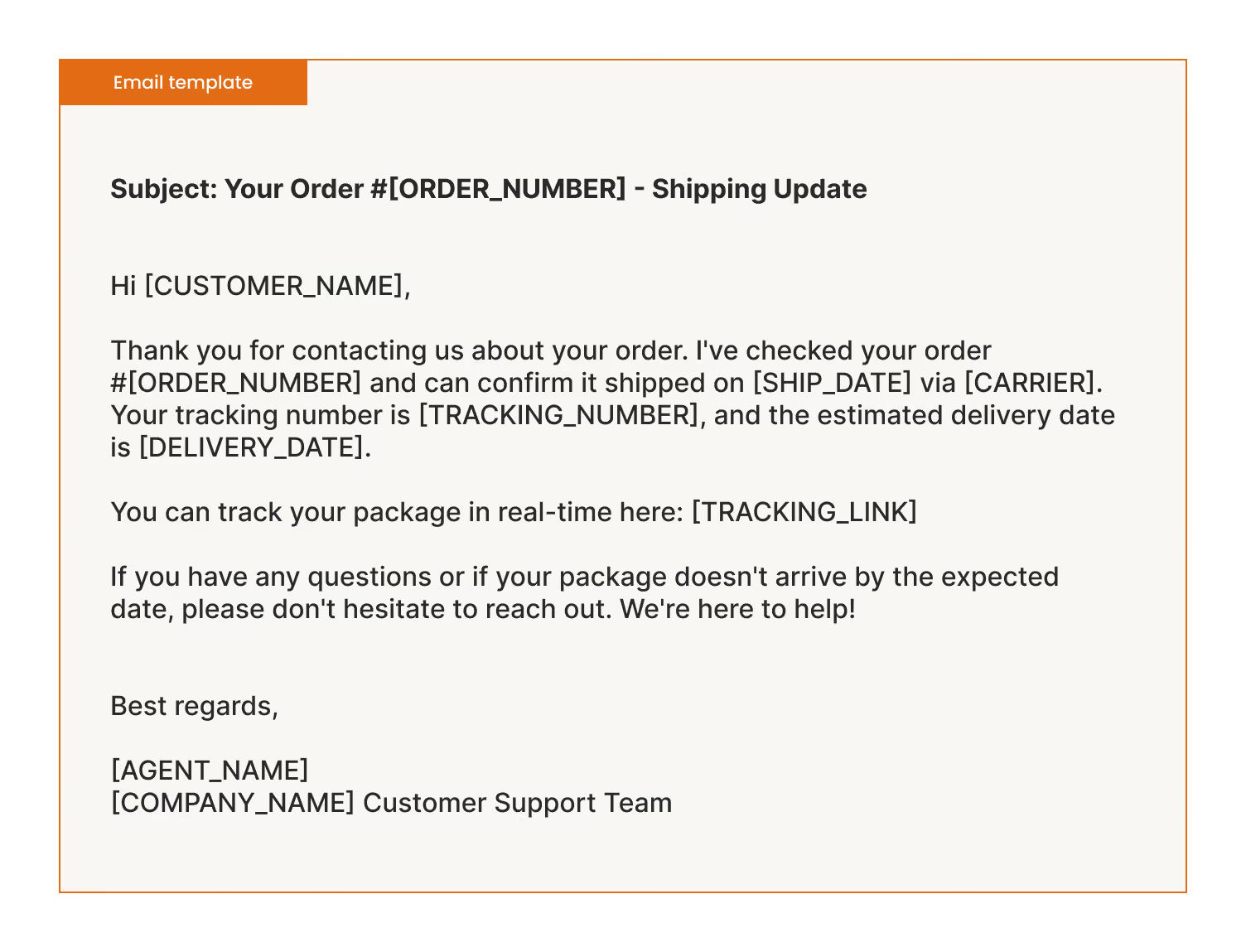
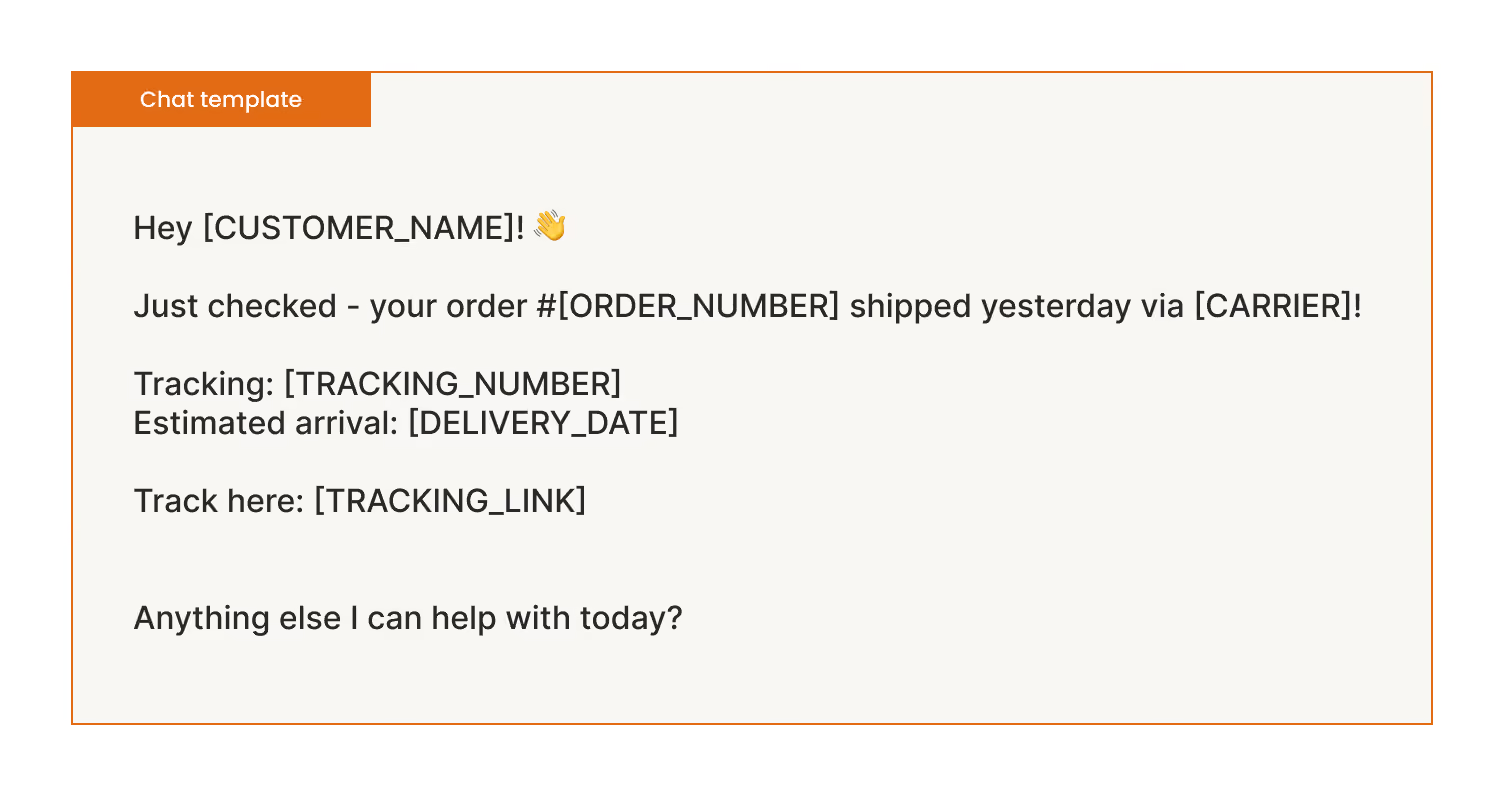
Standardize responses while maintaining flexibility. Pre-written templates for common issues save time, while personalization tokens auto-fill customer data. Keep guidelines for tone and length per channel – email requires structure, chat emphasizes speed, social media focuses on brevity.
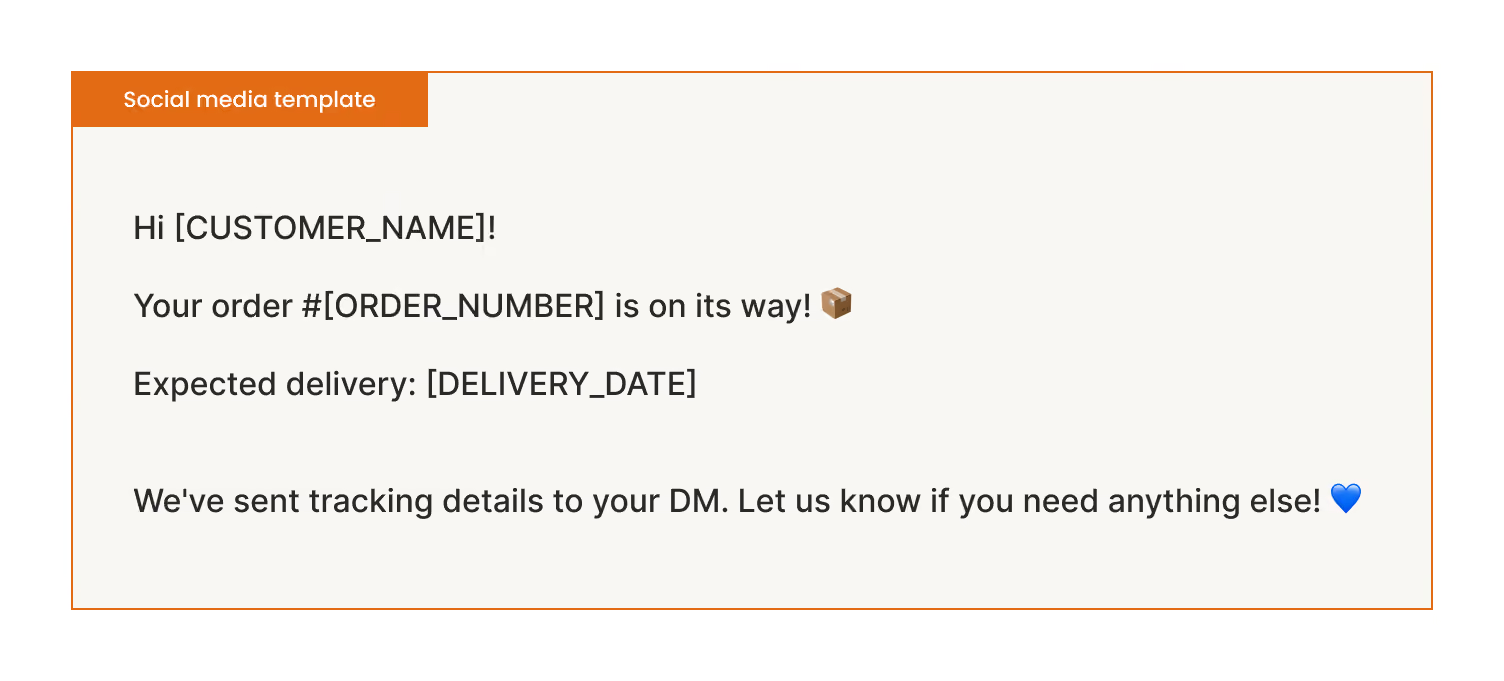
Use data to drive ongoing improvement with post-interaction surveys and regular analysis of repeat contact reasons.
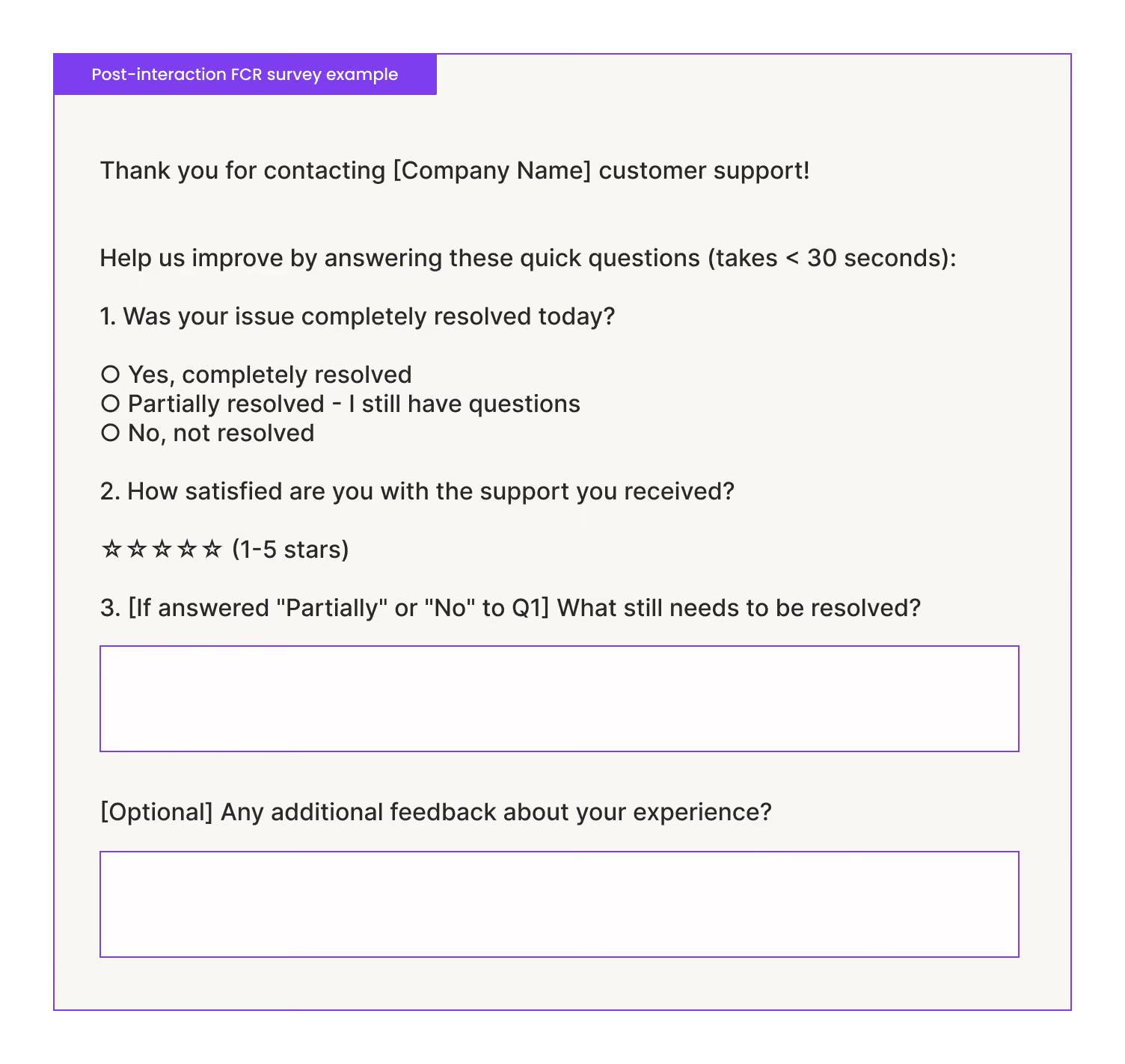
Now the question is, where and how to collect this data?
Canadian Tire Financial Services uses real-time FCR data for continuous agent development – the result: 70% of agents improved their resolution rate, with five consecutive years of first call resolution and customer satisfaction improvement.
Remove unnecessary friction by auditing current workflows for redundant steps, creating SOPs for common issues, and reducing approval layers. SQM research shows process improvement initiatives deliver significant FCR gains (1-10%), though they can take time to implement.
FCR isn't just about closing tickets fast. Ensure resolutions are complete, track "next issue avoidance" to predict what customers might need next, and monitor CSAT alongside FCR. Never rush agents or create perverse incentives that sacrifice call center customer experience for speed.
Theory is nice, but results matter. Here's how real companies transformed their FCR – and what call center quality assurance practices they used.
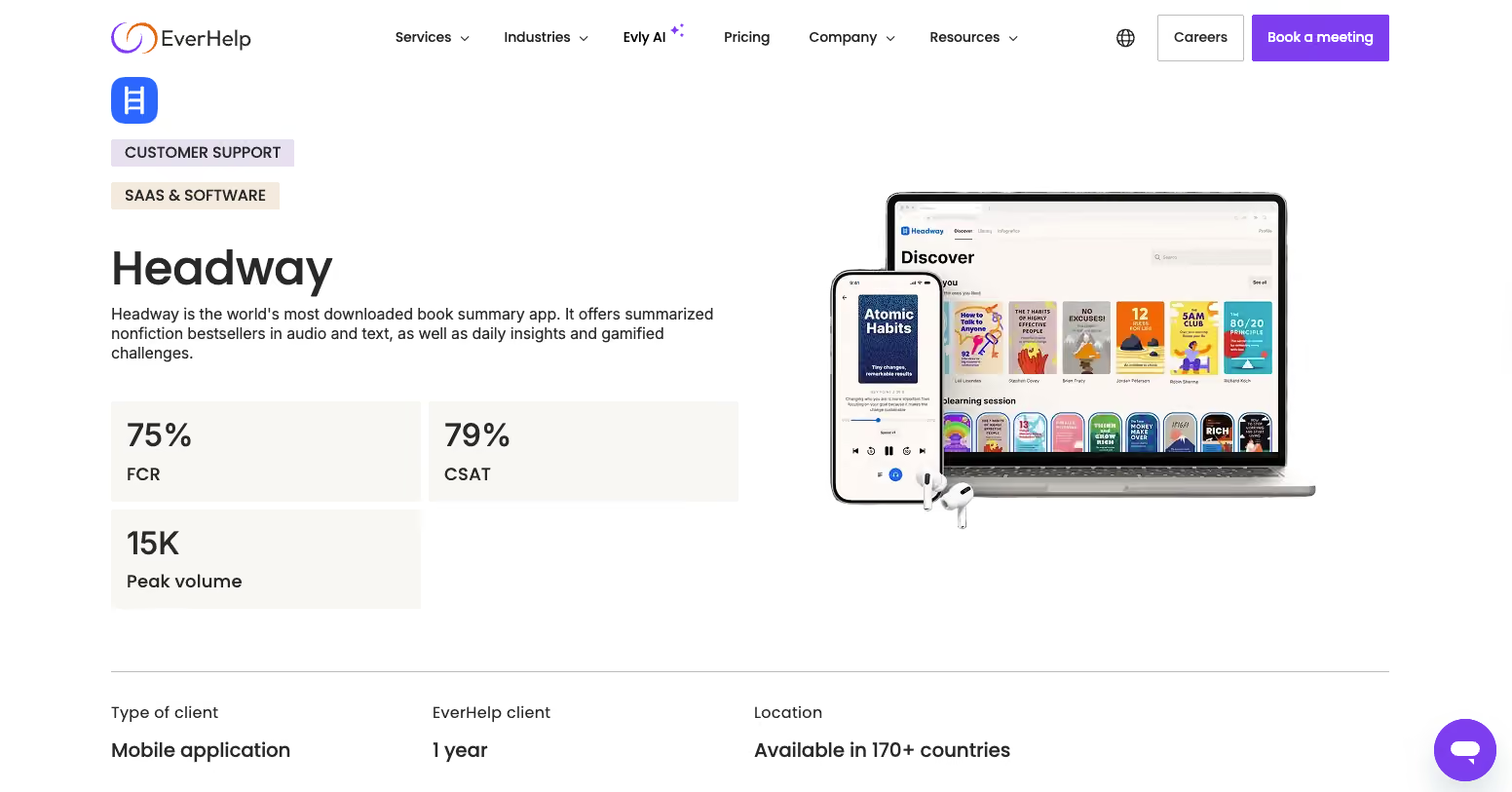
Challenge: Headway, the world's most downloaded book summary app, needed to scale their support team to handle peak-season volume spikes while maintaining high customer satisfaction. Their in-house team was overwhelmed by ticket influx and lacked the bandwidth to manage up to 15,000 requests during busy periods.
Solution: EverHelp deployed 6 dedicated support agents and 1 QC agent. The team integrated seamlessly with Headway's existing workflows to provide scalable, quality-focused customer support across all channels.
Results: Achieved 75% FCR and >79% CSAT during peak seasons, handling 15K+ requests. And the numbers keep growing! The dedicated team reduced pressure on in-house staff while maintaining consistent service quality and resolution speed.
{{cta}}
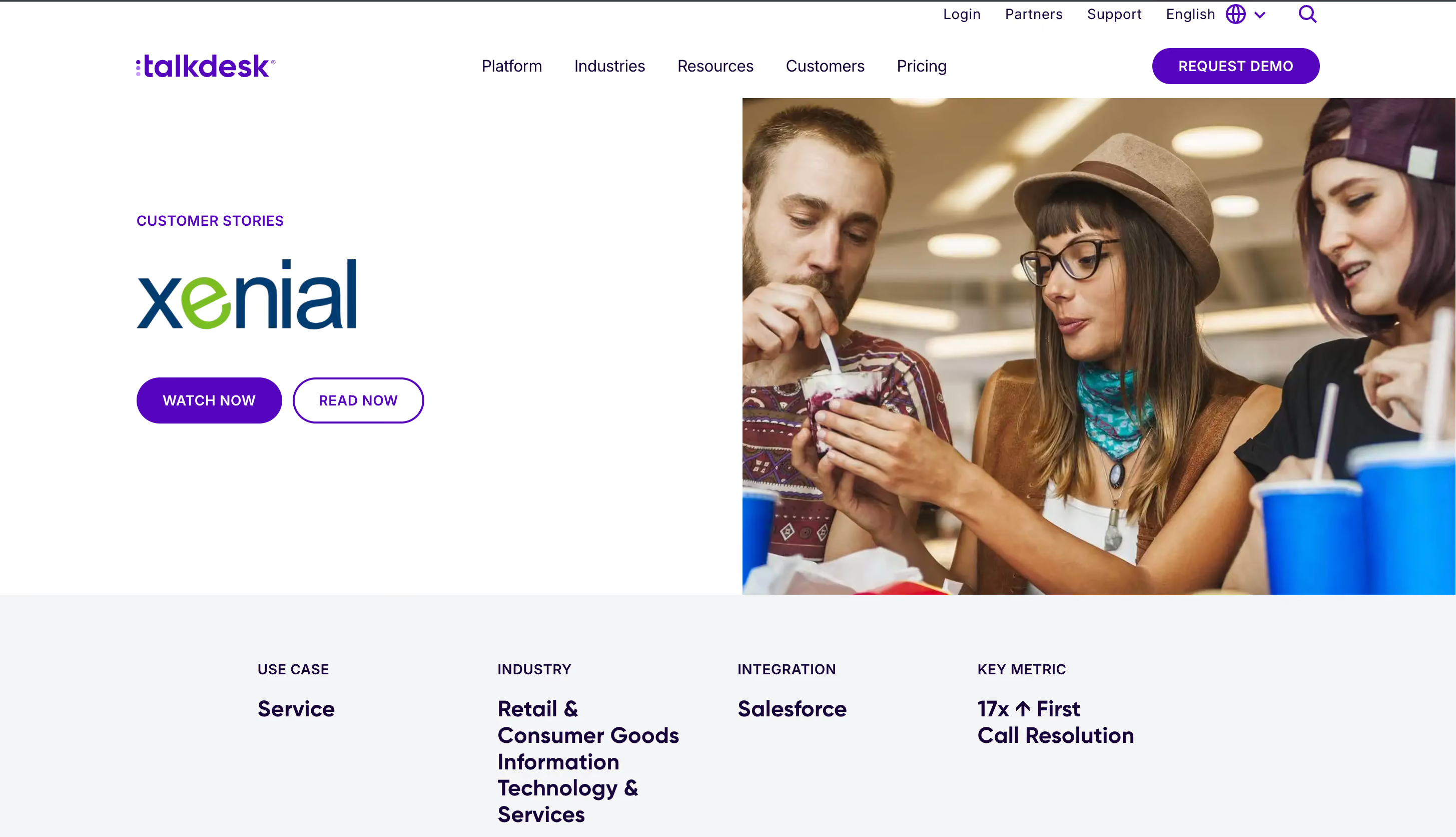
Challenge: Xenial, a restaurant technology provider, struggled with disjointed customer experiences and chronically low first call resolution rates (FCR). Their contact center lacked access to call recordings, relied on an outgrown ticketing system, and scattered data, limiting visibility and decision-making.
Solution: Xenial implemented the Talkdesk cloud contact center with Salesforce CRM integration, an AI-powered knowledge base, and omnichannel support. The cloud-native setup enabled mobile-first work and delivered real-time performance dashboards across the organization.
Results: FCR increased by 17x, with customers routed to the right agents based on expertise and availability. CSAT improved significantly, while enhanced reporting and analytics gave leadership clearer insight into staffing and business decisions, resulting in more efficient service experiences.
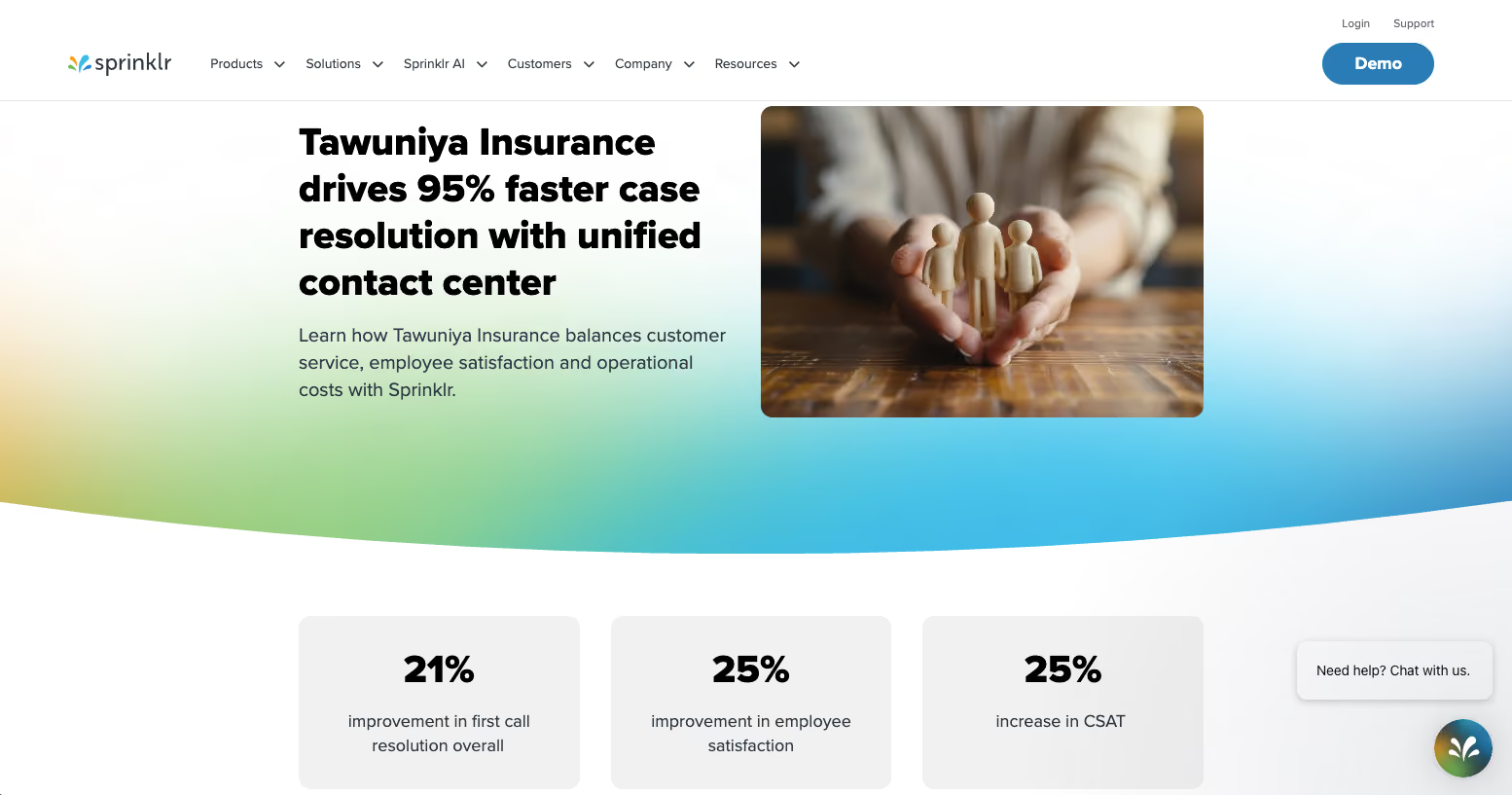
Challenge: Tawuniya Insurance, an insurance provider, struggled with fragmented systems requiring nearly 9 clicks to resolve an average case. Average wait times reached 45 minutes, and reporting took up to 8 hours, creating both customer frustration and employee burnout.
Solution: Implemented Sprinklr Service and Sprinklr Insights to unify all channels (X, Instagram, Facebook, TikTok, LinkedIn, WhatsApp, Google Reviews) on one platform. Deployed AI-powered routing and automated queue management to streamline operations.
Results: FCR jumped from 31% to 80% in the first 90 days. Average wait time plummeted from 45 minutes to 56 seconds, and CSAT increased from 51% to 83%.
Many companies measure first call resolution rates incorrectly, leading to misleading data and wasted improvement efforts. So, here are some highlighted pitfalls you should avoid:
Before getting too excited about improving your FCR, there are some essential things and common myths you should know about this tricky rate.
Not always the case. A high FCR might simply signify that you aren't doing enough to fix root issues, enhance documentation, or provide self-service options for your customers.
For instance, your company's self-service system may prevent simple calls since consumers can obtain answers elsewhere. This arrangement lowers FCR. Another firm without this self-service system would have a higher FCR – but that doesn't mean they're delivering better service.
Balancing FCR with other metrics is critical – it's all about the balance. The problem is that first call resolution doesn't account for how long it takes to send an initial reply. It's no good spending days crafting the perfect one-touch reply if your customer is left waiting.
Metrics from the table: FCR (First Call Resolution), FRT (First Response Time), CSAT (Customer Satisfaction Score), CES (Customer Effort Score).
Research from SQM Group shows a 15% drop in customer satisfaction (top box response) every time a customer calls back to resolve their initial call. Ideally, maintain both high FCR and low first response time while tracking customer service standards across the board.
Ready to transform your FCR? Start with one or two strategies, measure religiously, and build from there. Every percentage point improvement means happier customers, lower costs, and agents who feel empowered rather than overwhelmed.
Don't let missed calls and repeat contacts drain your resources. Whether through better training, smarter AI deployment, or process optimization, the path to first call resolution rate excellence is clearer than ever.
Need expert help? EverHelp specializes in building support operations that hit targets from day one – including FCR rates that consistently exceed industry benchmarks. Our teams achieve 70%+ first contact resolution across 5+ industries while maintaining customer retention metrics that speak for themselves.
{{cta}}
Help someone else stay in the know. Hit that share button!
.webp)
.webp)

.avif)
.avif)
.webp)
.webp)