Growth & Metrics
Published on
13.01.2026
Last updated on
01.09.2026
How to Improve Customer Service in Call Center at Every Touchpoint

Valentyna
VP of Customer Support

Valentyna
VP of Customer Support

Call centers are no longer pure cost centers – they're battlegrounds for customer loyalty, and we aren’t exaggerating.
Research shows that consumers are 2.6 times more likely to purchase more when wait times are satisfactory, and 3 times more likely to recommend your brand. Yet 53% of bad experiences result in customers cutting their spending entirely. The difference between these outcomes hinges on one question: how to improve customer experience in a call center so every touchpoint, from the first ring to post-call follow-up, reinforces trust instead of eroding it.
The challenge intensifies at scale. Salesforce finds that 82% of service professionals say customer expectations are higher than they used to be, and most customers reach their limit at just two minutes on hold before hanging up. Add in disconnected channels where customers have to repeat themselves, and there you have it – a system primed for friction.
This guide addresses this friction head-on, providing a blueprint for making your call center customer service a loyalty-building hub across every interaction.
It's not about politeness alone. Great service resolves issues efficiently, treats customers as individuals rather than ticket numbers, and leaves people feeling heard. A good First Call Resolution (FCR) rate falls between 70% and 79%, with only 5% of call centers reaching a world-class FCR of 80% or higher.
Excellence also means reducing effort. Customers who feel their issues required minimal effort are more loyal, even if the outcome wasn't perfect. The customer satisfaction score (CSAT) benchmark has risen to 85% or higher, signaling that mediocre service no longer cuts it. So, companies must meet or exceed these standards consistently to retain customers in competitive markets.
Key performance indicators for a good call center customer service:
The customer experience starts before anyone picks up the phone. Your Interactive Voice Response (IVR) systems should be intuitive, not labyrinthine.
Here are five pre-call optimization strategies that worked for us:
Research shows that 67% of customers prefer self-service over speaking to a representative, and well-designed portals can deflect 40–60% of incoming queries. So, if the customer resolved their issue through self-service, it lessens the risk of request overload for your agents.
The key is ensuring these tools actually answer questions instead of creating new frustration and even more inquiries routed to support reps.
When AI is one of those pre-call tools, the setup decisions matter enormously: what goes in the knowledge base, how escalation triggers, and how it hands off without losing context. Our AI in customer service handbook documents what we learned across 43 deployments, including a ready-to-use escalation framework.
Industry standards aim to answer 80% of calls within 20 seconds, though leading centers now target 90% within 15 seconds. Skills-based routing ensures customers reach the agent best equipped to solve their problem on the first try, boosting FCR rates and cutting transfers. Intelligent call distribution (ACD) systems analyze caller intent, history, and urgency to make these routing decisions in real time.
Reducing wait times requires more than speed. Optimize staffing based on historical call volume data, cross-train agents to handle multiple issue types, and use workforce management tools to predict demand surges.
Even small reductions in hold time yield measurable satisfaction gains, as 60% of callers hang up after two minutes or less.
Agent empowerment is a critical (and often overlooked) lever for improving customer service call center outcomes. Nearly half of contact center leaders rank empowerment as one of their top three factors for improving agent performance, with 18% placing it first – ahead of improved training, unified desktops, and higher pay.
This autonomy directly impacts FCR. When agents must escalate even minor issues, resolution times stretch and frustration builds. Thus, give agents clear decision-making frameworks, comprehensive training on products and policies, and access to customer data that enables personalized customer service. Frameworks like decision trees, knowledge bases, and real-time chat with senior staff provide safety nets without bottlenecking every call.
Personalization is no longer optional. Research shows that 71% of consumers expect personalized interactions, and 76% get frustrated when companies fail to deliver that. Moreover, 80% of consumers are more likely to buy from companies offering personalized experiences.
CRM integration makes this possible at scale. Agents should see full customer histories, previous calls, open cases, purchase records, communication preferences, within seconds of answering. This context eliminates the need for customers to repeat themselves and allows agents to proactively address related issues.
The interaction doesn't end when the call disconnects. So, how do you provide excellent customer service in call center after the customer hangs up?
Follow these post-call best practices:
Proactive outreach demonstrates accountability and reduces inbound volume. It includes notifying customers about shipment delays, policy changes, or resolved issues before they call. This proactive customer service approach builds trust and positions the call center as a partner, not a reactive last resort.
{{cta}}
Training is not a one-time onboarding event. Customer service call center agent training typically lasts six weeks initially, covering product knowledge, systems, and soft skills. However, continuous coaching is what separates high-performing customer support teams from average ones.
Focus training on active listening, empathy, and problem-solving. Active listening exercises teach agents to identify emotional cues, summarize customer concerns accurately, and ask clarifying questions without interrupting. Empathy training is equally critical. Research demonstrates that for every 1% improvement in first-call resolution, there's a corresponding 1% increase in customer satisfaction, and empathetic agents naturally achieve higher FCR by understanding underlying needs. Specific empathy statements customer service training help agents validate emotions, reduce escalations, and turn tense interactions into positive outcomes.
Ongoing training components:
Training delivery methods:
You cannot improve what you don't measure. Hence, establish a balanced scorecard that tracks operational efficiency, customer satisfaction, and business impact.
Supplement quantitative metrics with qualitative insights. Speech analytics tools use natural language processing (NLP) to analyze customer sentiment, detect frustration keywords, and flag compliance risks. This makes your negative review responses more meaningful because they’re based on what customers are actually feeling and experiencing.
Only 45.7% of contact centers currently track customer emotion, leaving valuable insights on the table.
Real-time sentiment analysis allows supervisors to coach agents during live calls or escalate issues before they spiral. Use customer service data analytics to close feedback loops. Weekly reviews during initial rollouts and monthly reviews once processes stabilize help teams spot trends, update scripts, and refine escalation protocols. Transparency matters too – share performance data with agents and involve them in problem-solving, because they are on the front lines and often have the best ideas for process improvements.
Modern customers expect seamless experiences across phone, email, chat, social media, and self-service portals. Yet only 13% of businesses fully carry customer context across channels, forcing 56% of customers to repeat themselves during support interactions.
Omnichannel vs. disconnected multichannel performance:
Implementing omnichannel customer support requires unified platforms that consolidate communication channels into a single interface. When a customer starts a conversation via chat and follows up by phone, the agent should see the full history instantly.
By the way, going with omnichannel customer support doesn’t necessarily mean spending your entire budget to connect all customer support channels. You can start with phone and chat if that’s where most of your audience is, and expand to social media later if your needs evolve.
You might like: Best Call Center Quality Assurance Software
The essential go-to rule here is that technology should empower agents, not eliminate them. At EverHelp, for example, we use AI-driven tools to handle routine tasks, freeing agents to focus on complex, high-value interactions that require empathy and judgment. And this approach actually bears fruit. Contact centers using AI see a 14% increase in issues resolved per hour and a 9% reduction in average handling time.
Here are some examples of high-volume, low complexity tasks you can delegate to AI chatbots, virtual assistants, and automated workflows:
This deflection strategy reduces agent workload and provides 24/7 support without expanding headcount, which, in turn, increases spending. For example, we saved 54% of support costs for our client, a styling service app, with automation alone.
Keep in mind that your automation must include clear escalation paths. Customers should always have access to human agents for complex or emotionally charged issues.
Agent-assist technologies provide:
Our AI customer service agent, Evly, does that. It automates routine inquiries with natural-language understanding, responds in seconds, and escalates complex or sensitive cases to human agents without breaking the flow.
And the results of such AI automation speak for themselves: 30%+ operational cost reduction (we can go up to 54% and more, as proven by our project), up to 85% request automation, and last but not least – CSAT that doesn’t drop; it is kept above 80% at all times.
{{cta}}
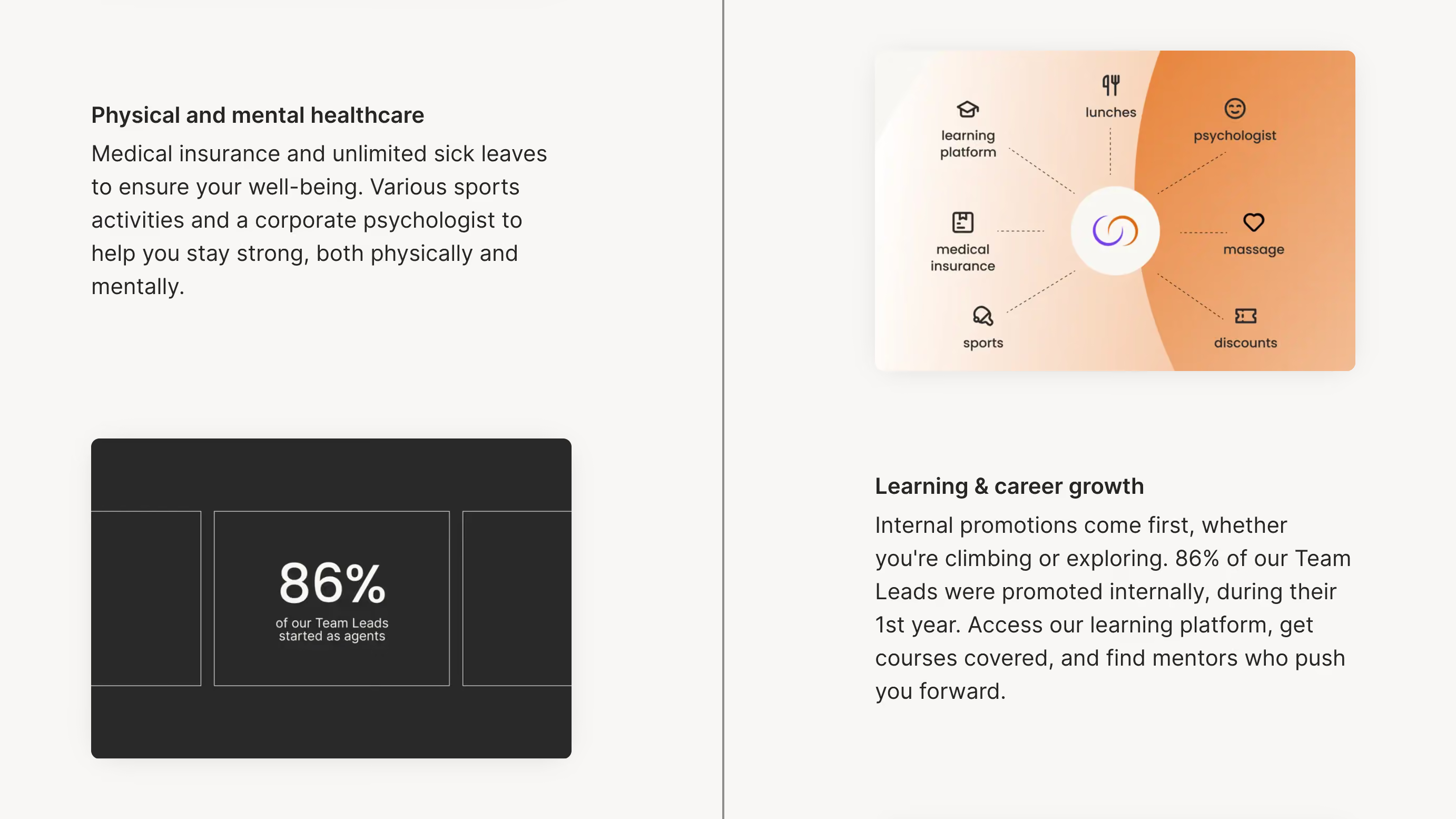
Agent satisfaction directly impacts customer satisfaction.
In the demanding customer service call center niche, high call volumes, emotionally charged interactions, and repetitive tasks contribute to stress and burnout. Engaged and satisfied contact center employees are 3.3 times more likely to feel highly empowered to resolve customer issues. Yet call center turnover remains high, driven by burnout, rigid scripts, and a lack of growth opportunities.
So, incentivize outcomes that matter: first contact resolution, customer satisfaction, empathy, and problem-solving – not just speed metrics.
Recognition program elements you can borrow:
Recognition should be timely and specific. Generic praise ("great job this month") carries less weight than immediate feedback tied to observable behaviors ("the way you de-escalated that frustrated customer was excellent – you validated their emotions and offered a clear solution").
What’s more, promoting agents’ suggestions and insights reinforces their value to the organization and encourages ongoing participation. For example, your team can share feedback via regular feedback forms, one-to-one with managers, or as a part of committees that evaluate process improvements. We also recommend building a robust customer feedback system that captures quantitative and qualitative data to make product, process, and support decisions with real customer signals, not just internal opinions.
As for the wellness and flexibility initiatives:
EverHelp’s agents receive bonuses for good performance. If the agent meets and exceeds a defined benchmark in quality score and quantitative metrics (e.g., CSAT, FRT, X of public replies per hour, ART, etc.), they receive a fixed USD reward.
Our culture is pro-people. It means that we prioritize career ambitions as well as our team’s mental and physical health. So, in addition to regular day-offs, we provide mental care days, premium healthcare insurance, a corporate psychologist, and various sports activities. As for the career side, we always define clear career paths, set comprehensive objectives, and offer diverse internal and external mentorship programs and courses.
The result? We maintain a stable 90% employee retention rate, which is very rare in the call center industry.
Even well-intentioned call centers stumble. Awareness of these pitfalls helps teams avoid them.
Critical mistakes to avoid:
Understanding the distinction between inbound calls vs outbound calls also shapes strategy. Inbound support requires empathy, rapid response, and issue resolution, while outbound efforts (follow-ups, satisfaction checks, retention calls) benefit from proactive scripting and relationship-building approaches.
A good answering service guide or virtual receptionist solution can provide overflow support during peak times or after hours, maintaining continuity without expanding full-time headcount.
The sprawl of digital customer service tools undermines efficiency. Agents toggling between six different dashboards waste time and miss critical context. Invest in platforms that integrate ticketing, CRM, knowledge management, and communication channels into a unified workspace. Cloud-based solutions offer flexibility for remote teams, reduce infrastructure costs, and enable rapid scaling during demand surges.
Speech analytics, call recording, and quality monitoring tools should feed into a centralized dashboard accessible to agents, supervisors, and leadership. Real-time dashboards displaying queue times, agent performance, and customer satisfaction metrics allow customer service call center managers to adjust staffing or coaching interventions on the fly.
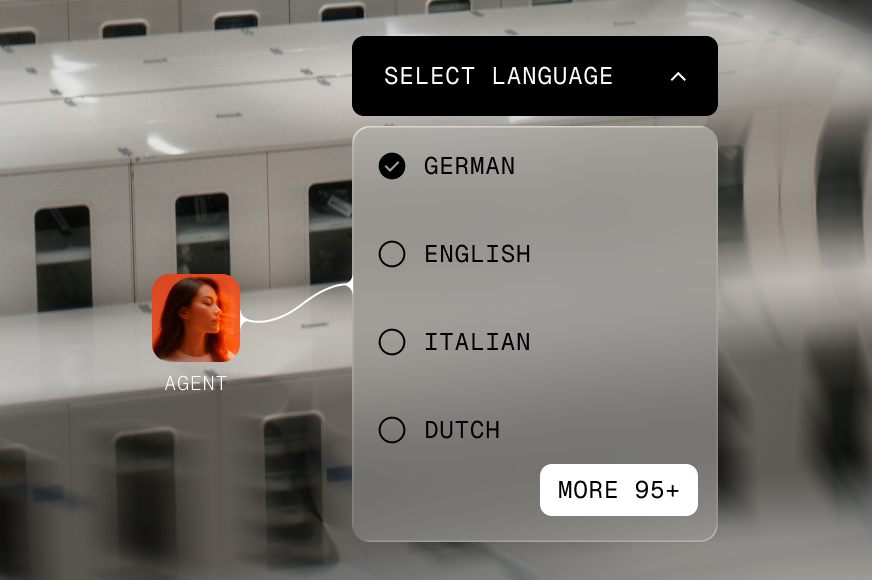
Growth often outpaces internal hiring capacity. Strategic outsourcing provides 24/7 coverage, multilingual customer support, and specialized expertise without the overhead of building in-house teams. However, not all call center outsourcing companies deliver equal value.
What to look for in outsourcing partners:
Hybrid models, combining internal teams for complex, high-value accounts with outsourced support for volume management and after-hours coverage, offer flexibility and cost efficiency. Evaluate partners based on FCR rates, CSAT scores, and their ability to maintain consistency with your brand voice.
The consumer services industry is shifting from transactional support to relationship-building. Call centers that embrace this shift transform from cost centers into strategic assets that drive customer loyalty and revenue growth. When executed well, these strategies create differentiation in crowded markets, turn customers into advocates, and reduce poor customer service complaints while building sustainable growth.
The question is not whether to invest in call center customer service, but how quickly you can implement these changes before competitors do.
{{cta}}
Providing excellent call center service means empowering agents to resolve issues on first contact instead of just logging tickets. This requires giving agents decision-making authority, full customer context through CRM systems, and strong product training. Personalized interactions matter too: using customer names, referencing past purchases, and respecting communication preferences can make a big difference. Reducing friction through intelligent routing and callback options further enhances the experience. Continuous coaching on empathy, active listening, and problem-solving ensures quality doesn't drop.
Key actions for agents:
Call center skills improve through ongoing practice, feedback, and exposure to real scenarios. Role-playing difficult calls and analyzing recordings helps agents refine their responses. Core skills like active listening, empathy, and confident communication are essential in this case. Cross-training on multiple issue types builds versatility, reduces escalations, and ensures consistent service. Mentorship, microlearning, and one-on-one coaching reinforce development, while tracking progress keeps improvement visible.
Skill-building strategies:
Help someone else stay in the know. Hit that share button!


.webp)

.avif)
.avif)