Omnichannel Support
Published on
28.01.2026
Last updated on
01.09.2026
How to Respond to Negative Reviews: Real-Life Examples

Valentyna
VP of Customer Support

Valentyna
VP of Customer Support

This may sound controversial, but negative reviews can strengthen your brand's reputation. That’s if you know how to respond strategically, of course.
Since 93% of customers read reviews before making a purchase, and 62% don’t support brands that practice comment censorship, businesses must learn how to respond to negative reviews effectively.
In the article below, we have collected a series of examples of how your support agents can handle backlash in a way that won’t hurt your reputation.
The answer is simple: to make more money. Let’s be honest – the goal of every business is to get more sales. And customer complaint management plays a direct role in that.
To understand the benefits of online reputation management, just put yourself in the customers’ shoes. If you see a negative review while considering a new product, you’d probably want to know how the seller handled that previous experience. Otherwise, it would seem that either:
How you respond to customer frustration and issues shows whether the customer is truly your priority. And research on customer‑centric culture shows firms that take key customer‑centricity factors seriously, as well as integrate customers as partners in creating value, average 15% higher profitability than peers.
As such, your profitability, customer loyalty, and business success become deeply affected by what your clients say about you online.
You might also like: Building Relationships: Customer Retention Strategy Examples
Before we jump straight to reviewing best responses to bad reviews examples, let’s establish a few basic rules you should follow to make sure your customers feel respected, seen, and heard.
Now, since we’ve got the major rules out of the way, let’s look at some of the most popular ways you can compose your responses to facilitate your customer retention strategy.
“Hi [Client’s Name]!
You’re absolutely right, and we appreciate you calling this out. We made a mistake in handling your order, and that’s on us.
This isn’t the experience we aim to provide, and we’re already reviewing what went wrong to make sure it doesn’t happen again. We’d love the opportunity to make it up to you. Please email our support team so we can figure out the most appropriate solution for your case.
Thank you again for bringing this to our attention.”
Analysis: This response directly takes responsibility, with the sincere confession, “We made a mistake.” Customers are more likely to trust a brand that apologizes for mistakes, and average consumers will accept three mistakes from a brand before losing trust (if the brand is honest and takes responsibility).
“Hi [Client’s Name]!
Thank you for sharing your experience. We understand how frustrating [the situation] must have been, and we’re sorry it left you disappointed.
Your feedback helps us see where we can improve, and we truly appreciate you taking the time to let us know.
It would mean the world to us if you’d let us regain your trust. Let us know where we can contact you to make it up to you.”
Analysis: We all love to be right, and it’s especially true for angry customers. For sure, you shouldn’t go the extra mile and offer refunds if, after investigating the issue, you discover it wasn’t your fault. But don’t try to prove the customer is wrong, either – that’s just poor customer service. Acknowledge that you see where they are coming from and maybe offer a small bonus. This approach is key to improving first contact resolution, as it gives customers the feeling that you prioritize their satisfaction and experience (yes, even if you may think they are wrong).
❗️The phrase "the customer is always right" is not about customers getting their way no matter what, but about businesses taking responsibility to enhance the customer experience. It encourages companies to listen actively to their customers and consider their feedback as opportunities for improvement.
“Hello [Client’s name]!
Our records show that your request was processed on March 12 and delivered on March 15, which aligns with our stated delivery timeline. That said, we regret that the outcome didn’t meet your expectations and are happy to review this further if you’d like to contact our support team.
Please contact us at [your support team’s email].”
Analysis: The rule “Never (ever!) take anything personally” applies to reviews as well. Even if some reviews are unjustified, never get defensive. After you have checked the facts, acknowledge the customer’s poor experience using proven empathy statements and tell them exactly what you’ve established to be true. It’s also a plus if you reassure them of your commitment to providing excellent customer service and experience.
❗️ When you get defensive, it looks like you did something wrong indeed. So, every time you want to take it personally, think of yourself more as a judge, and your business and client as two sides in the court. Your part in this play is to establish what happened exactly.
“Greetings [Client’s name]!
We’re sorry you experienced [the issue] and want to assure you that we’re taking it seriously. Our team is already looking into what happened [describe what exactly you are doing ], and we’ll follow up directly to make sure this is resolved properly.
Thank you for bringing this to our attention.”
Analysis: Most clients don’t just want an apology. They want to see something actually done. Saying “we’re sorry” helps, but it doesn’t mean much if nothing changes afterward. At the same time, promising more than you can deliver can quickly damage trust and plunge customer satisfaction metrics. The key is to be clear about what you’re going to do and then make sure you follow through. When actions match words, customers are far more likely to trust you and stay loyal, even after a bad experience.
“Greetings [Client’s name],
We’re sorry for the inconvenience this caused. We’d like the opportunity to make this right by offering a replacement or a refund, whichever works best for you.
Please reach out to us directly at [respective email] so we can resolve this as quickly as possible.”
Analysis: Focus on specific solutions and improvements implemented to prevent future recurrences and avoid repetitive apologies. Consumers value customer service qualities such as genuineness and action-orientedness, so provide responses that fix their issues over repeated apologies that may come across as insincere or as a lack of commitment to resolving the problem.
❗️The best responses don’t argue, overexplain, or get emotional. They acknowledge, clarify when needed, and clearly show what happens next.
{{cta}}
We've provided you with a few general examples of how to respond to negative reviews to communicate that:
You might also like: Zendesk's Service Culture: The Customer Service Books Behind Success
In the paragraphs below, we will dig deeper into the examples of how you can respond to customer issues and negative feedback on various review platforms and in different scenarios.
There are various reasons for negative Google reviews, most of which can be revealed by customer service data analytics. But the first one we feel like is not addressed enough are very vague comments usually left by bots. This has become an especially widespread issue since AI-generated experiences have gained traction.
When researching the topic, we've come across a Reddit thread from r/smallbusiness that started with a post:
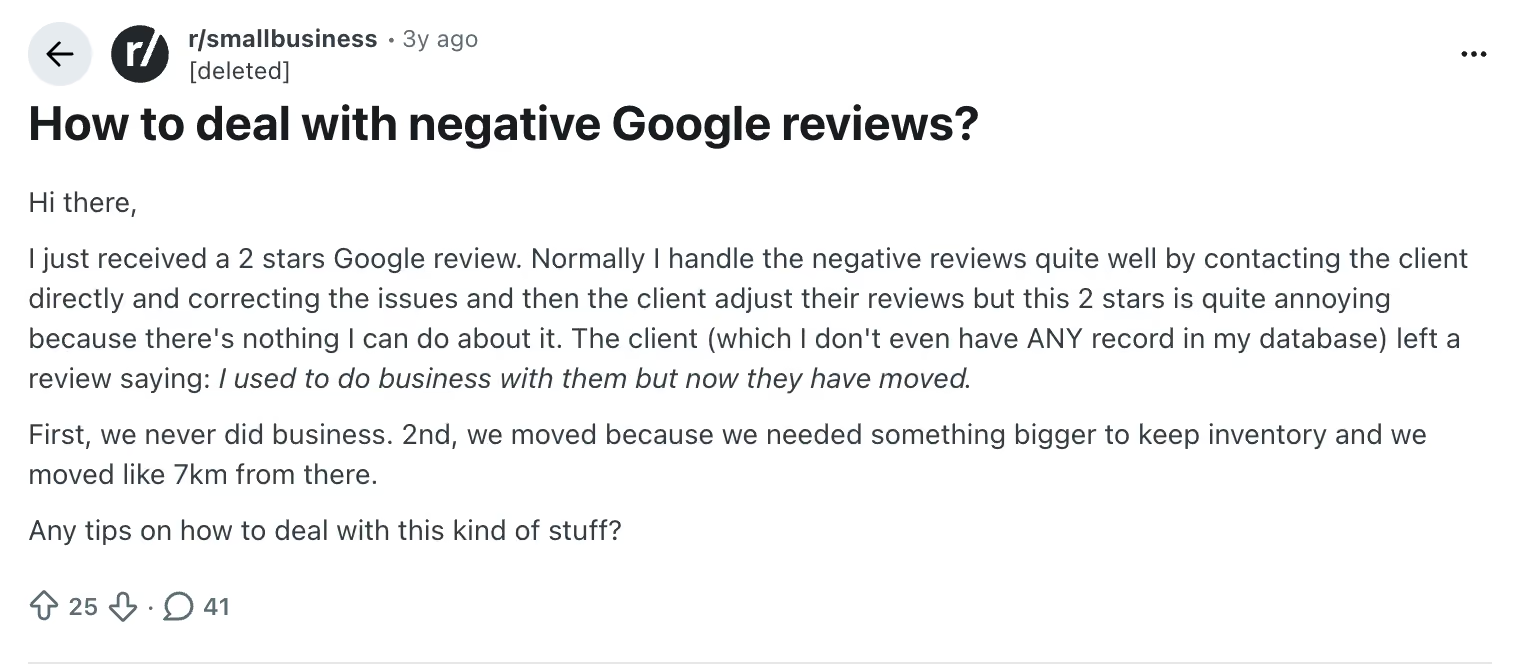
Considering that the facts provided by the OP and the alleged client's comment didn't really align, we immediately thought this prompt review could easily have been left by a bot. So, how did the Reddit user base propose dealing with it? Surprisingly, in a very organic manner, which we feel every business should use when dealing with negative reviews.
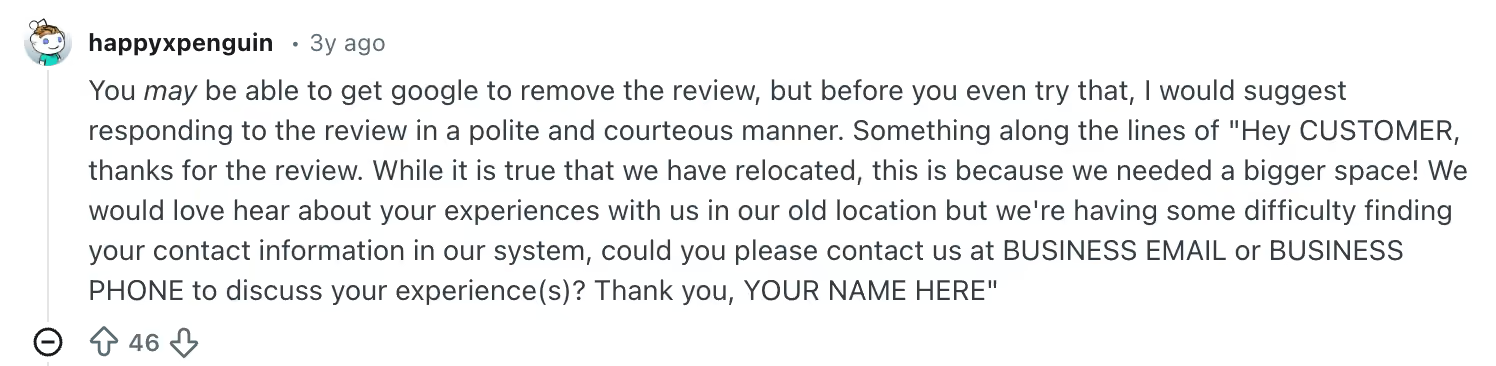
This approach brings together all the recommendations mentioned above and shows how a business can uphold high customer service standards and reassure potential customers that it's still worth working with, even when some reviews suggest otherwise.
Google reviews are public, but many issues shouldn't be resolved so openly. So, to keep your success and customer service metrics afloat, you need to know how to balance between transparency and restraint in your replies. Here's how this might look:
"Thank you for sharing this, Maria. This isn't the experience we want for anyone, and I'd like to understand more about what happened. Could you email me directly at [address]? I'll personally look into this.'"
Google reviews stick around indefinitely, shaping first impressions for years. But it doesn't mean that old negative reviews have to stay liabilities. To inform your previous, as well as potential customers, that you've become better and implemented specific changes (like multilingual support, for example), you can write:
"You're right – last spring our wait times were a real problem. Since then, we've added two staff members speaking Dutch and redesigned our queue system. We'd love to show you the difference if you're willing to give us another try."
You don't have to accept false claims, but how you push back matters. When reviews contain inaccuracies, you can correct the record without attacking:
"We appreciate you taking the time to share your experience. Our records show the refund was processed on March 3rd – if it hasn't arrived, please contact us at [contact info] so we can trace it together."
Just as your business offers an omnichannel customer support, customers have multiple review platforms where they can leave feedback. Aside from Google, another popular platform for clients to vent on is Yelp.
Yelp is an online review platform where people can leave their feedback about the experience with local businesses. The website's main premise is that it's all geared up for personal reviews, and its members are the ones who run it when it comes to sharing, communicating, and commenting.
Yelp users are rather skeptical, detail-oriented, and highly influenced by how brands respond to them. They read replies closely and are quick to spot defensiveness or corporate language. That's why, if you are relying on this website as a part of your customer feedback system and want to manage client frustration there, it'sof high importance that you follow certain guidelines when structuring your replies.
Long explanations about policies or procedures read as excuses on Yelp, even when you're technically correct. Keep responses brief, warm, and human. Skip the legal language entirely, and never (even subtly) suggest the reviewer is misremembering or exaggerating.
A simple "I'm sorry your visit didn't reflect the experience we aim for. I'd love the chance to make it right – please reach out directly at [respective support channels]" lands far better than a paragraph defending your team's actions.
Even mild defensiveness triggers the "argumentative business owner" stereotype Yelp readers expect. Neutral, gracious language protects your credibility more than any explanation could. It's also a generally good practice that you can transfer to your communication in on-site chats and customer service emails.
Instead of detailing what went wrong operationally, show what you value:
"Thank you for taking the time to leave this feedback. We've shared your feedback with our team and are using it to guide how we train and support our staff moving forward. While we can't change what happened, we do take your comments seriously and use them to shape the experience we want for every guest. If you're open to it, we'd appreciate the chance to follow up directly and learn more."
This signals growth and care without admitting fault or making promises you can't keep.
{{cta}}
App store reviews differ from those on other platforms. Users scroll quickly, scanning for patterns:
Your replies need to match that mindset.
While heartfelt apologies work on Yelp, app users want answers.
"Thanks for flagging this. The crash you're experiencing was resolved in version 4.2.1 – updating should fix it. Let us know if it persists."
Direct, helpful, and personalized customer service will get things done. You've acknowledged the frustration of the specific user without burying the solution in pleasantries.
Version numbers matter here. If a bug is known, say so:
"Our team identified this sync issue, and it's scheduled for our next release."
If there's a temporary fix, share it. Users forgive problems faster when they see active development.
Use follow‑ups that naturally encourage review updates without explicitly asking. Otherwise, it reads as desperation. Instead say:
“We'd love to hear if the latest update improved things for you."
Keep real troubleshooting in support channels: link to your help center or email, and never request sensitive info publicly. When someone shares account details or complex issues, simply say:
"This needs a closer look – reach out at [support@email.com], and we'll sort it out."
Many one-star reviews reference problems solved months ago. A quick message like the one below reassures prospective users without dismissing the original frustration.
“This was addressed in our March update – the experience today is much smoother.”
Remember, the key is to be empathetic, objective, and action-oriented. Real-life examples show that by recognizing the psychological factors at play and responding with genuine empathy, businesses can turn negative reviews and customer feedback into opportunities for growth, an improved online reputation, and stronger customer relationships. You can check out our insightful article on non-intuitive customer support tips for more insightful data.
If you do not have many resources (either time or money) to enhance customer service, outsourcing to a specialized service like EverHelp can be a strategic move. With an outsourced customer support team, businesses can ensure that their customer service is handled by professionals trained to listen, understand, and effectively address customer needs and concerns, embodying the principle of empathy in every interaction. Book a call to see how we can improve your customer service.
Help someone else stay in the know. Hit that share button!



.webp)

.avif)