Support Ops & Teams
Published on
13.03.2026
Last updated on
01.09.2026
SLA Customer Service: Free Template + Response Time Standards (Download Now)

Hlib
Delivery Manager

Hlib
Delivery Manager
.avif)
Picture this: a customer sends in a support request, waits two hours, then sends a follow-up. Nobody owns the ticket. The agent who picks it up has no escalation path. By the time it's resolved, the customer has already left a one-star review.
No bad intentions. No lazy team. Just a lack of structure that jeopardizes quality.
Did you know? 80% of customers report having already switched brands due to poor customer experience.
That's exactly what a well-defined SLA customer service framework is built to prevent. It draws a clear line between "we'll try our best" and "here's exactly what you can expect from us – and when." In this guide, you'll find what a customer service SLA must cover, standard benchmarks across channels, a link to an agreement template, and a free, ready-to-download SLA targets addendum you can put to use today.
SLA in customer service refers to a formal, documented agreement that defines measurable service delivery commitments between a support provider and a customer, or between an outsourced team and the business they serve.
Think of it as the ground rules: how fast you'll respond, how fast you'll resolve, and what happens when things slip.
SLA's meaning in customer service boils down to accountability. As Zendesk puts it, an SLA is essentially a written service performance guarantee – the support version of "your pizza in 30 minutes, or it's free." Minus the pizza.
A solid customer service SLA typically defines:
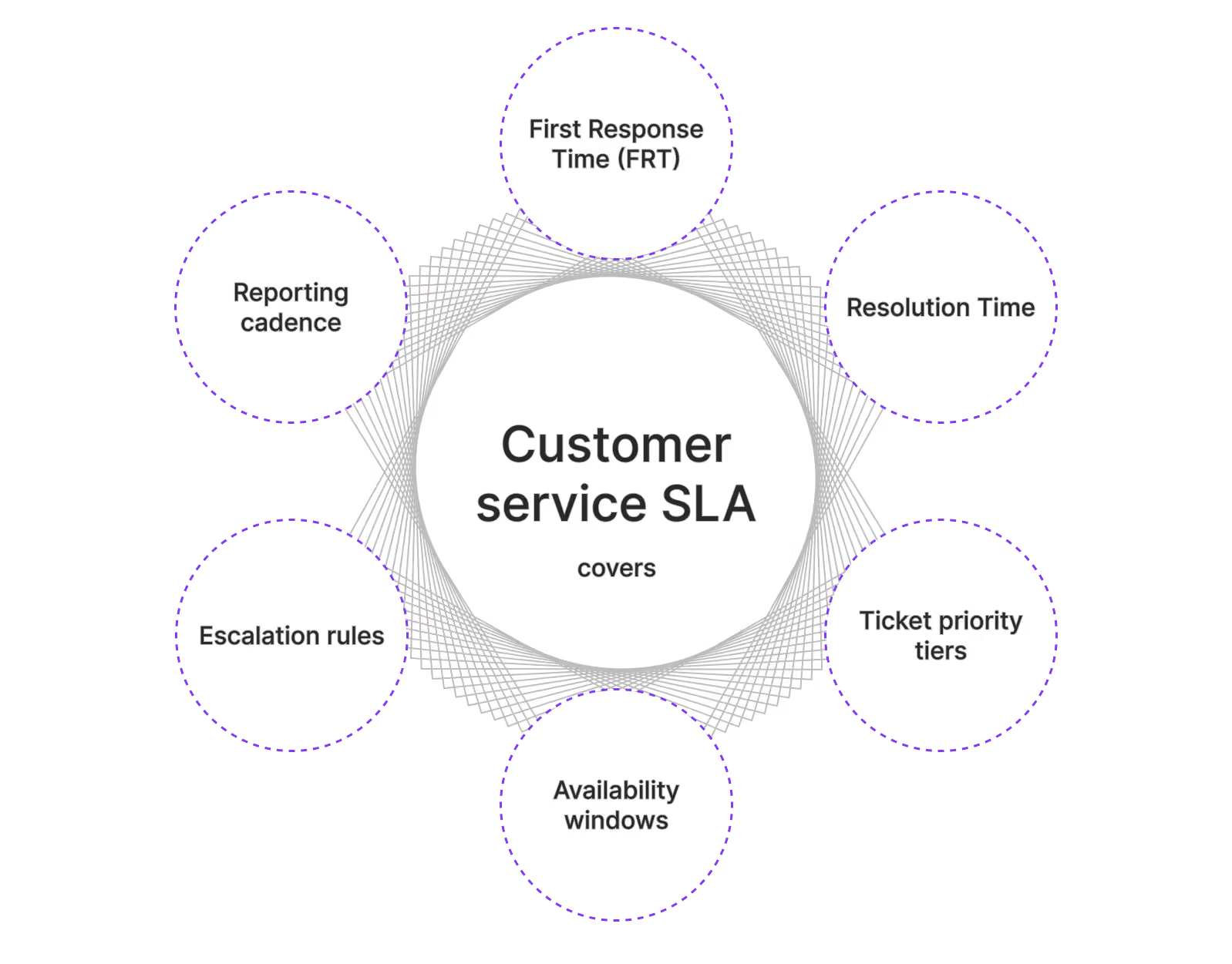
Without these elements written down and agreed upon, accountability becomes a grey zone. Your team operates on assumptions; customers get inconsistent experiences; no one can point to a root cause when things go wrong.
Most growing businesses start with a service-based SLA and graduate to multilevel once their customer support channels and customer base diversify.
Not all channels carry the same urgency. A missed live chat after 90 seconds means something very different from an email that takes four hours. Here are widely accepted baseline targets to anchor your SLA for customer service.
These are starting points. According to Zendesk research, customers typically define "timely" differently depending on industry and channel – which is why customizing your SLA to your audience matters more than copying a generic benchmark.
What EverHelp's 100+ client operations actually deliver: a 45-second average FRT across all channels, processing over 850,000 tickets per month. Those numbers come from combining trained customer service agents with AI-assisted triage – not from stretching a small team thin.
{{cta}}
Most SLA templates you'll find online bundle the performance targets together with the legal boilerplate – party definitions, governing law, credit request procedures – into one unwieldy document. That works fine for lawyers. It's less useful for a support team lead who just needs to know what "good" looks like this month.
The better approach: Keep the legal framework in one place, and the performance targets as a clean, standalone addendum. That way, targets can be reviewed and updated quarterly without reopening the entire contract.
For the full legal SLA contract framework, we recommend using PandaDoc's Service Level Agreement template – a widely adopted, attorney-reviewed foundation that covers all contractual elements. Adapt it to your business, then attach the performance targets below as an addendum.
The addendum covers three things, and only those three things:
This is the part of the SLA your support team will actually live by. Pull out the targets table at your next team meeting, put it on the wall next to the queue, and suddenly, "Are we hitting SLA?" has a real answer.
Keep in mind: The benchmarks in the addendum are a solid baseline, but what "acceptable" looks like shifts significantly depending on your niche. Before locking in your targets, sense-check them against your industry norm.
A great SLA is inert without measurement. These are the leading customer service platforms with SLA tracking built into their core workflows.
The right platform depends on where your volume lives. A Freshdesk vs Zendesk comparison is worth doing before committing – the pricing and SLA configuration flexibility differ significantly at scale.
By the way: EverHelp integrates natively with all five platforms above, plus Salesforce, Intercom, Zapier, Twilio, Kaizo, and LiveChat. That means SLA customer service targets agreed contractually with a client are tracked automatically inside their existing stack – no manual reporting, no data gaps.
When companies outsource to a BPO, SLA commitments are often buried in a contract and reviewed once a quarter – if at all. EverHelp's approach is different: the SLA isn't a document you sign and shelve. It's an operational framework built during onboarding and actively managed from day one.
Here's how the process runs:
Most service providers agree to SLA targets on paper and then surface results in a monthly PDF. EverHelp builds a Service Level Agreement (SLA) adherence into the daily operating model:
The onboarding runs in four clearly defined phases:
What does that look like in practice?
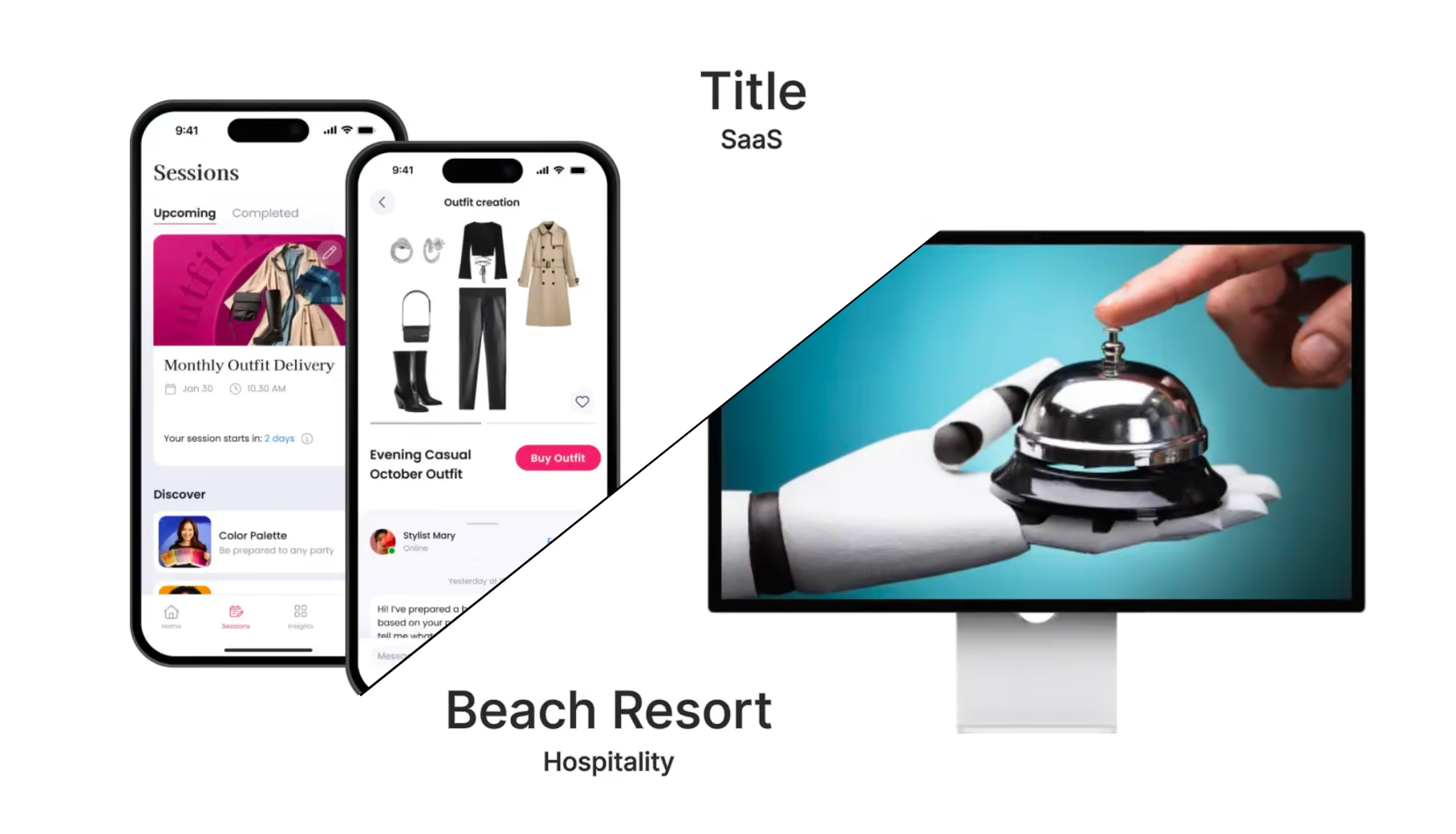
Title (Styling app, SaaS) – 20-second FRT across 50,000 monthly requests.
These outcomes happen because SLA management at EverHelp isn't a reporting exercise – it's built into how customer service outsourcing is structured and delivered.
If you're evaluating what quality customer service standards look like in an outsourced context, or exploring how customer service analytics can be used to track SLA health over time, those are good starting points before building your own framework.
{{cta}}
EverHelp integrates Evly, its purpose-built AI agent, to automatically resolve 85% of routine inquiries in under 15 seconds. Evly handles first-touch responses, smart routing, and ticket classification – freeing human agents for complex or sensitive cases and keeping FRT consistent even during volume spikes.
For the best customer experience, EverHelp maintains a 45-second average First Response Time (FRT) across all channels and processes over 850,000 tickets per month. Exact targets are agreed upon per client during Week 1 of onboarding and tailored to their channel mix and business model
SLA stands for Service Level Agreement. In customer support, it defines the specific response and resolution time commitments a customer service team makes to customers, along with escalation procedures and performance reporting obligations.
The leading options most customer service providers use are:
Each offers configurable SLA policies, automated breach alerts, and reporting dashboards. The right choice depends on your support volume, channels, and whether you need CRM integration.
Full onboarding takes 28 days. SLA metrics targets, escalation workflows, and priority tier definitions are locked in during Week 1 and go live with the team launch in Week 4. For companies that need to move faster, the timeline can be compressed. Reach out to get a personalized quote and timeframes for your own rapid support launch!
Yes. EverHelp delivers regular performance reports covering SLA customer service adherence rates, FRT trends, customer satisfaction (CSAT) scores, and other analyses, often AI-powered for more data. Dedicated team clients receive detailed KPI dashboards aligned to their agreed targets and reviewed on a set cadence.
Help someone else stay in the know. Hit that share button!




.webp)

.avif)