Growth & Metrics
Published on
19.03.2026
Last updated on
01.09.2026
The Complete Guide to Voice of the Customer Programs

Valentyna
VP of Customer Support

Valentyna
VP of Customer Support
Voice of the customer programs have been around long enough to become a buzzword – and that's precisely the problem. Most companies claim to "listen to customers." Far fewer actually do anything meaningful with what they hear.
66% of customers expect companies to understand their needs, yet over half feel like they're talking to a wall.
Organizations with mature VoC programs achieve customer satisfaction scores up to 55% higher than competitors who treat feedback as a checkbox exercise.
The gap isn't customer data collection – it's execution. This guide is built for CX managers who are done collecting feedback into a spreadsheet that nobody reads. If you want to turn customer signals into operational decisions that actually stick, you're in the right place.
A voice of the customer program, VoC for short, is a structured process for capturing, analyzing, and acting on customer expectations, preferences, and pain points across every touchpoint in their journey.
Example:
NO: Tossing a post-purchase survey into an email sequence is NOT a VoC program.
NO: Collecting NPS scores once a quarter is not a VoC program either.
YES: A real VoC initiative connects raw customer input to business decisions, product roadmaps, and service improvements in a closed loop.
Think of it as the difference between a suggestion box on the wall and a standing meeting where suggestions are read aloud, debated, and assigned to owners. Same raw material – radically different outcomes.
VoC programs capture both internal and external customer signals: what buyers tell you directly through surveys and interviews, and what they reveal indirectly through behavior, support tickets, churn events, and online reviews.
Gartner's research consistently frames VoC not as a CX project but as a business intelligence function. Their assessments identify vendors and methodologies based on completeness of vision and ability to execute, and the pattern is clear: companies that integrate voice of the customer data into cross-functional workflows outperform those that keep it siloed in the CX team.
One particularly relevant Gartner finding: in a couple of years, organizations that establish customer feedback loops as a formal business process are projected to outperform peers in retention by a significant margin.
Gartner also highlights the growing role of AI-driven text analytics in processing unstructured feedback at scale. This shift makes enterprise-grade VoC programs more accessible to mid-market companies than ever before.
More on this topic: Contact Center AI News: What's Changing in 2026
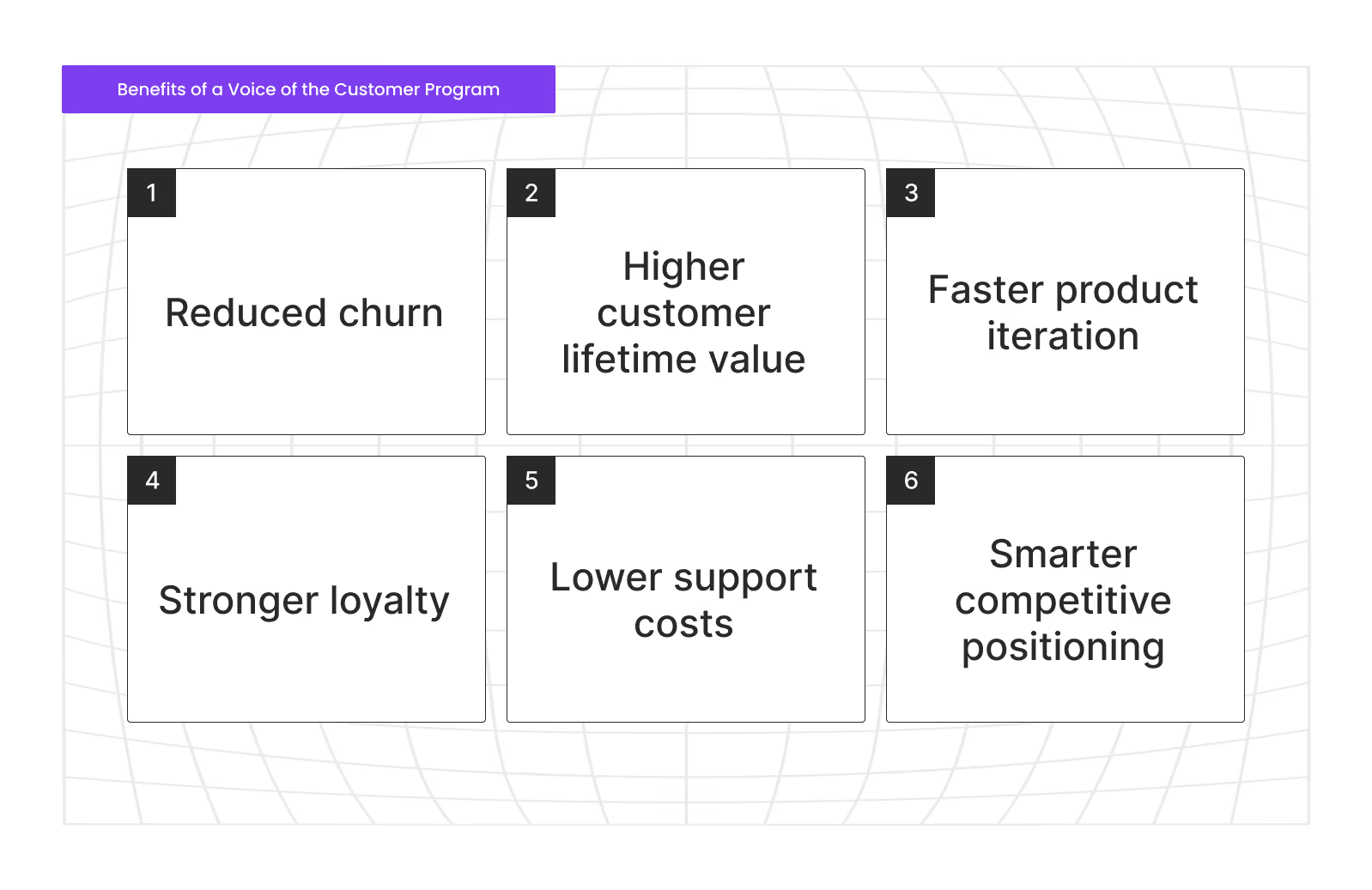
Done well, a VoC program does more than improve survey scores. It changes how your organization makes decisions. In short: a mature VoC program reduces churn, strengthens loyalty, lowers support costs, and gives every team, from product to marketing, the evidence they need to act with confidence.
Here's what companies consistently report after building mature VoC programs:
Amazon is the canonical example. Their obsessive use of customer data, from reviews to return patterns to support contacts, directly shapes product selection, fulfillment decisions, and even supplier negotiations. VoC, at scale, becomes a strategic asset.
Building a voice of the customer program goes beyond deploying a new tool. It requires a structured system. Here’s how to build one.
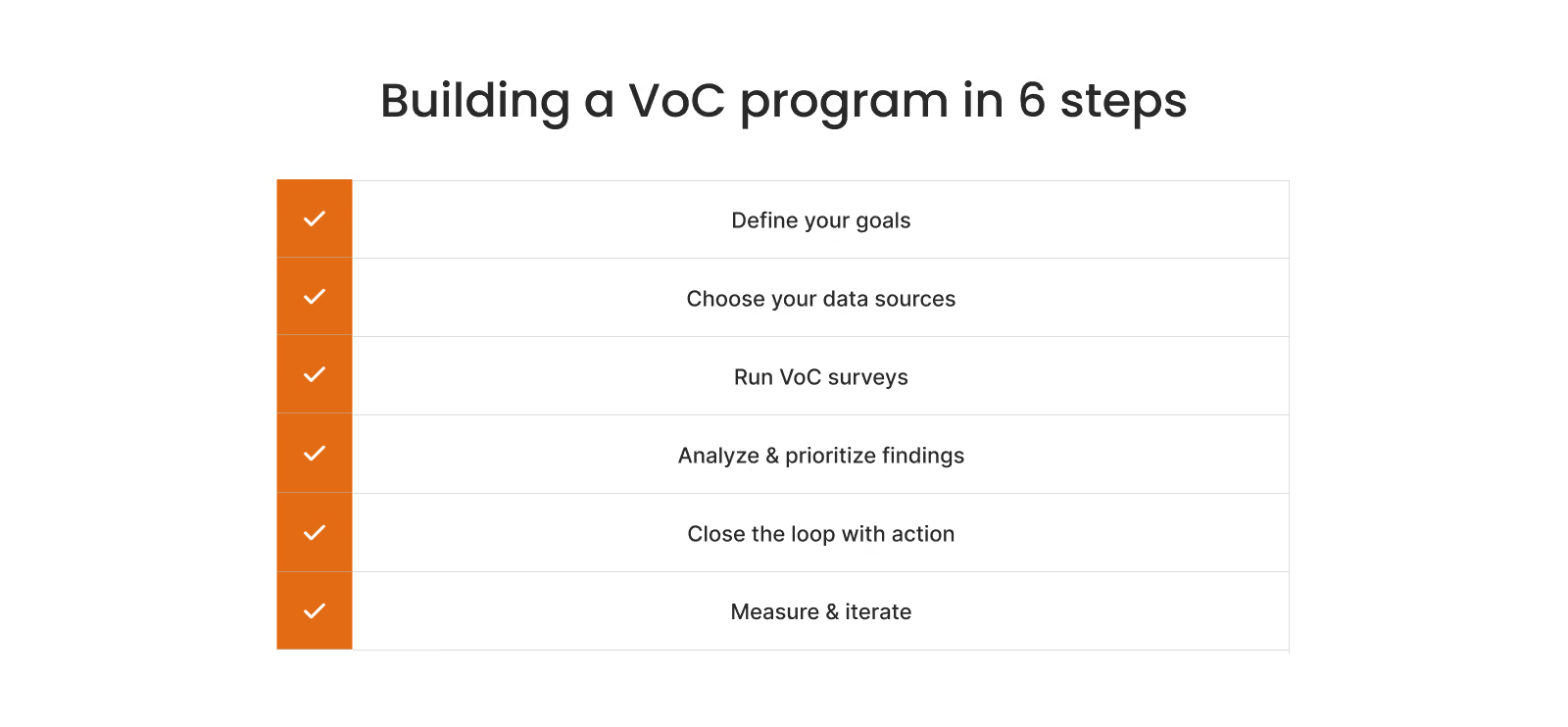
Before you collect a single data point, get specific about what you're trying to learn.
NO: "Improve customer experience" is not a goal.
YES: "Identify the top three friction points in our onboarding flow" is.
Tie each VoC initiative to a business outcome: retention rate, ticket volume reduction, and NPS improvement, so you can measure whether it's working.
Voice of the customer data comes from more places than most teams realize:
A robust program triangulates across all three. Leaning only on surveys is like reading a book with every third page torn out. Your customer service analytics platform is often the richest untapped source of indirect voice of the customer data.
Voice of the customer surveys are the most direct channel you have. Keep them short, keep them timed (triggered by a specific event, not sent randomly), and keep them specific. A well-placed 3-question survey sent 24 hours after onboarding will outperform a 20-question "annual customer satisfaction study" sent to your entire database.
If you're starting from scratch, SurveyMonkey's VoC survey templates are a practical jumping-off point – pre-structured, customizable, and ready to deploy quickly.
Track the 7 essential customer satisfaction metrics that actually tell you something: CSAT, NPS, CES, and their breakdowns by segment, channel, and customer journey stage.
Raw customer data is noise. Analysis turns it into a signal. Use tagging, customer sentiment analysis, or thematic clustering to group feedback into actionable categories. Then prioritize ruthlessly: not every insight deserves a sprint. Focus on issues that appear frequently, affect high-value segments, and are within your control to fix.
Call center quality assurance reviews are a goldmine here. They surface recurring friction patterns that surveys rarely capture.
This is where most voice of the customer programs die. Insights get compiled into a quarterly report, the report gets filed, and nothing changes. Closing the loop means two things: internally assigning every insight to an owner with a deadline, and externally communicating back to customers that their feedback was heard.
Proactive customer service teams take this further: they reach out to customers who flagged issues before those customers escalate or leave.
A voice of the customer program is never finished. After implementing changes, resurvey the same cohorts.
Did the friction point improve? Did customer satisfaction scores move?
Use first call resolution rates as a lagging indicator – if VoC-driven changes are working, FCR should trend upward as root causes get addressed.
{{cta}}
Most guides stop at the framework. Here's where the real differentiation happens, as an example from the brands we all know and love.
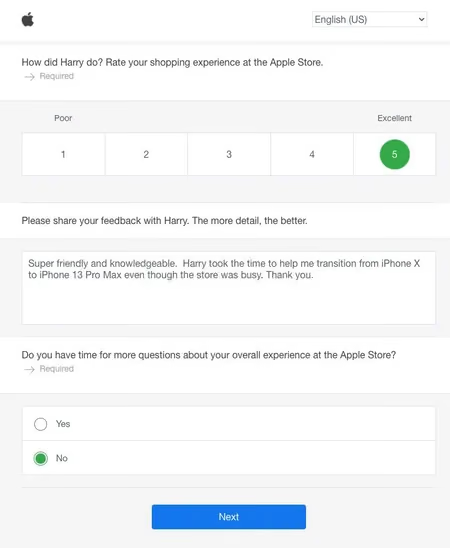
Apple doesn't just run post-purchase surveys – they embed customer feedback mechanisms into the entire customer journey, from retail interactions to AppleCare calls. Their NPS program is famous for its speed: customers receive a survey within 24 hours of a support interaction, and store managers see results the same day. That immediacy means issues get addressed while they're still fresh.
Read also: Empathy Statements for Customer Service

Zappos built its entire culture around listening to customers. Their support team is explicitly encouraged to have long, unscripted calls – not to resolve tickets faster, but to understand why customers are calling. That qualitative data feeds directly into product and policy decisions. It's VoC as a cultural practice, not a measurement tool.
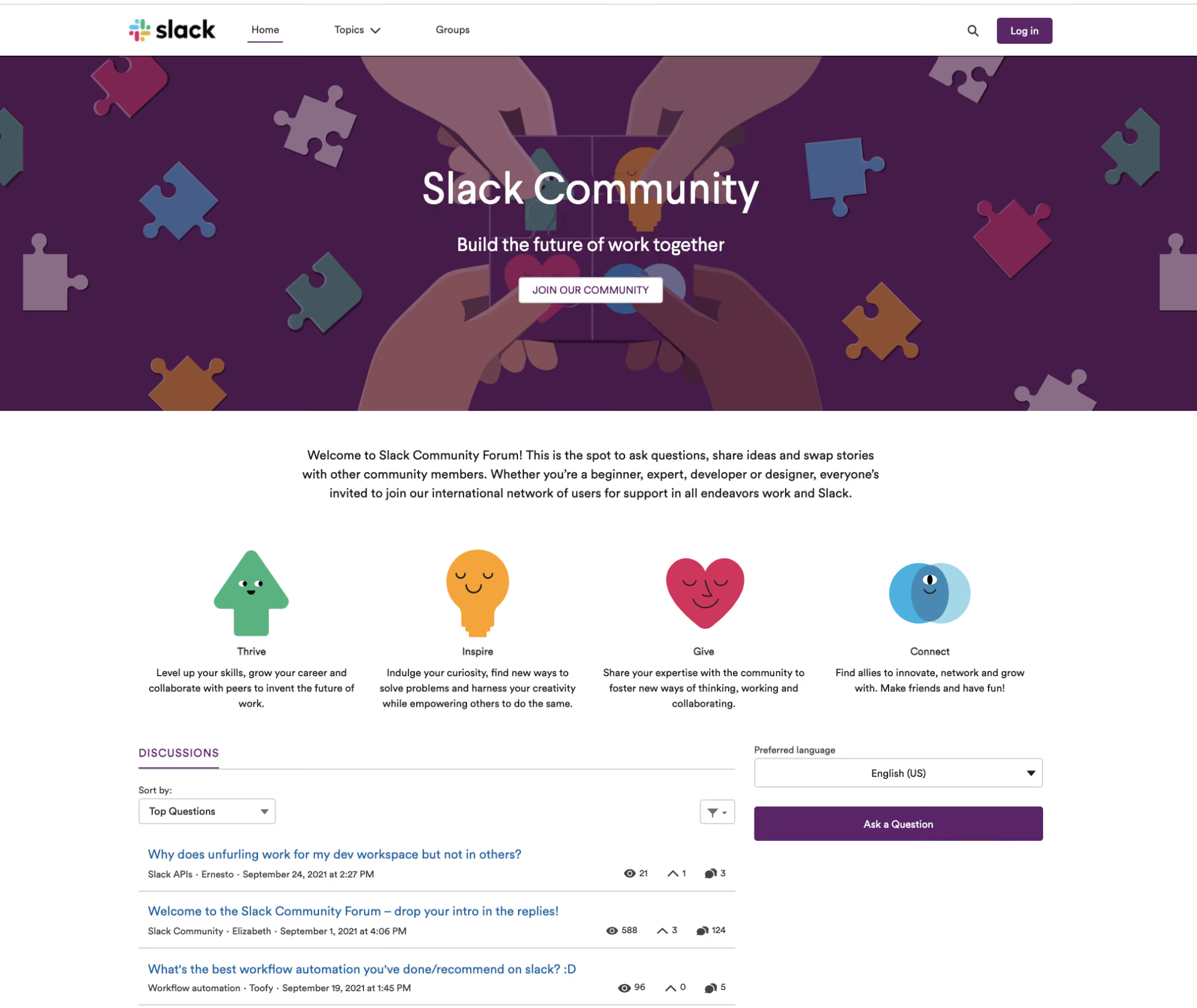
Slack uses a combination of in-app surveys, user interviews, and community feedback forums. What makes their approach notable is that product managers are required to directly review a quota of raw customer feedback each week – no filtered summaries, no aggregated reports. Direct exposure to unmediated customer voice prevents the distortion that happens when actionable insights pass through too many layers.
Read also: Omnichannel Customer Support Examples That Actually Work
Don’t lag behind those brands. Use this free, pre-filled template as a starting point for your first VoC cycle. Adapt columns to your tools and team structure in the empty table below.
You can adapt this template for specific channels, too – functional customer support channels often require their own customer feedback loops, especially in eCommerce personalization contexts where touchpoints multiply quickly.
Even well-resourced teams stumble in predictable ways. Watch for these:
The right voice of the customer tools don’t replace judgment – they handle the volume that judgment alone can't process. Here's a snapshot of the leading options, by use case.
When evaluating tools, prioritize integration depth over feature breadth. A VoC platform that doesn't integrate with your CRM, support desk, and product analytics is just another silo. Check the pros and cons of AI in customer service before committing to AI-heavy platforms – the capability is powerful, but only when your data infrastructure can support it.
And if you're exploring a human-AI support model, most modern VoC platforms now offer native AI summarization and tagging that integrates directly with blended support teams.
Read also: 8 Ways Digital Customer Service Tools Deliver ROI + Free Calculator
{{cta-lm}}
Most support teams are built to close tickets. EverHelp is built to surface patterns.
Here's how we embed VoC thinking into day-to-day support operations:
{{cta}}
A voice of the customer program is only as good as the organization that is willing to act on it. The companies winning on CX right now aren't the ones with the most sophisticated survey tools – they're the ones where customer feedback has a clear path from collection to decision-making to follow-through.
If your current setup collects data but struggles to operationalize it, the bottleneck is usually organizational, not technological. To close the gap, you need:
That's where outsourced support, done right, can accelerate your VoC maturity. An experienced customer support team that's been trained to flag systemic issues, not just close tickets, becomes an always-on qualitative research arm. The qualities of a good customer service representative include exactly this: the ability to distinguish a one-off complaint from a pattern worth escalating.
Ready to turn customer feedback into a competitive advantage? Let's talk about how EverHelp can be the execution layer your VoC program needs!
A voice of the customer program is a structured process for capturing, analyzing, and acting on customer feedback across every touchpoint. It matters because it closes the gap between what customers experience and what internal teams assume – turning raw feedback into decisions that reduce churn, improve products, and build lasting loyalty.
Start by defining a specific business goal tied to a measurable outcome – not "improve CX," but something like "reduce onboarding drop-off by 20%." Then choose your data sources (surveys, support tickets, reviews, usage data), run contextually triggered VoC surveys, analyze findings by frequency and impact, assign every insight to an owner, and close the loop by communicating changes back to customers. Measure results, then iterate.
The most consistently reported benefits include reduced customer churn, higher lifetime value, faster product iteration cycles, stronger customer loyalty, lower support costs from fixing root causes, and sharper competitive positioning. The common thread: VoC programs replace guesswork with evidence at every level of the business.
EverHelp embeds VoC thinking directly into support operations through structured ticket tagging, recurring-theme escalation protocols, closed-loop feedback reporting, and qualitative insight capture across all channels. Rather than just resolving contacts, our teams flag systemic patterns and feed them back to your CX, product, and operations stakeholders – acting as a continuous frontline intelligence layer for your VoC program. As a result, our teams resolve issues fast, with a 76% rate for first contact resolution, and customers are happy, as shown by our 83%+ CSAT.
Help someone else stay in the know. Hit that share button!
.png)

.avif)
.avif)
.png)
.png)