Growth & Metrics
Published on
01.05.2026
Last updated on
01.09.2026
The 2026 SaaS retention benchmarks every founder should know

Hlib
Delivery Manager

Hlib
Delivery Manager
TL;DR: In 2026, SaaS retention benchmarks have become a primary valuation input – not a vanity scorecard. The median annual B2B SaaS retention sits around 88–90%, but top performers push NRR above 120% by combining proactive support, AI-driven churn detection, and smarter onboarding. This article breaks down the metrics that matter (CRR, GRR, NRR, churn, DAU/MAU), explains how to calculate them, and shows – with a real case study – how AI-driven support moves the numbers that boards actually watch.
The era of "growth at all costs" is over. Boards and investors are now scrutinising SaaS retention benchmarks with an intensity that would have felt excessive three years ago – because retention has become a core valuation input. When the median annual customer retention for B2B SaaS sits in the high 80s to around 90%, a five-point gap above or below translates into millions of ARR at scale. At EverHelp, we partner with SaaS and app companies on user retention and SaaS Support – and this article turns those raw numbers into a practical playbook.
Before you can improve retention, you need clarity on what "retention" actually means — because the term covers at least two very different things. This section covers the three core metrics every SaaS team should track: Customer Retention Rate (CRR), Gross Revenue Retention (GRR), and Net Revenue Retention (NRR).
This tracks the raw number of accounts you keep over a given period. Lose 10 out of 100, and your annual rate is 90%. Simple – but flat. It weighs a $500/month account the same as a $50,000/month one: a useful starting point, but a poor North Star.
Revenue retention weights accounts by monetary value, giving a far more accurate picture of business health. It splits into two key metrics:
GRR strips out expansion to show pure retention – how well you hold onto existing revenue before any upsells. It can never exceed 100%, which makes it the clearest early warning for product-value fit issues.
NRR layers expansion back in – upsells, cross-sells, seat additions – making it the metric investors look at first. It's the only number that shows whether your existing customer base is growing or shrinking on its own.
The gap between average and top performers is wider than most founders expect. Aggregate B2B SaaS data shows the broad average sits well below what top-quartile teams achieve – at $5M ARR, that gap means hundreds of thousands of dollars of lost revenue annually, before expansion compounding enters the picture. Good retention is the floor. The top quartile is the target.
Pro tip: Identify your single biggest retention breakpoint – usually onboarding drop-off or first-renewal friction – and solve that first.
Stop tracking vanity metrics and start optimizing for the ones that move the needle. When we audit clients' dashboards, we routinely find teams measuring dozens of KPIs while ignoring the handful that actually predict revenue outcomes.
Title is a good example: their team was monitoring ticket volume and response time, but no one had connected support friction at the trial-to-paid transition to their renewal rate. Once EverHelp surfaced that link and built interventions around it, 3-month retention moved above the category baseline. See the full case study for details.
NRR measures how much recurring revenue you retain and expand from existing customers, excluding new business entirely. Start a quarter with $1M in MRR, end it with $1.1M after churn, downgrades, and upgrades – your NRR is 110%.
Instead of 25 KPIs, optimize for these. The table below covers the core SaasS customer retention metrics every B2B SaaS team track consistently.
Source: SaaS Capital 2025 Private B2B SaaS Retention Benchmarks
One of the most common mistakes we see is benchmarking against the wrong peer group. Understanding SaaS customer retention rates by industry stops you from optimizing toward the wrong number.
According to AppsFlyer and Statista data, the drop-off is sharp:
The lever that bridges app-level user retention to account-level NRR is activation: whether users hit their "aha moment" quickly enough to stick.
{{cta}}
In our work supporting apps across CRM integrations and customer support, modest improvements in early retention cohorts compound into meaningful NRR gains. Here's what EverHelp delivered for each:
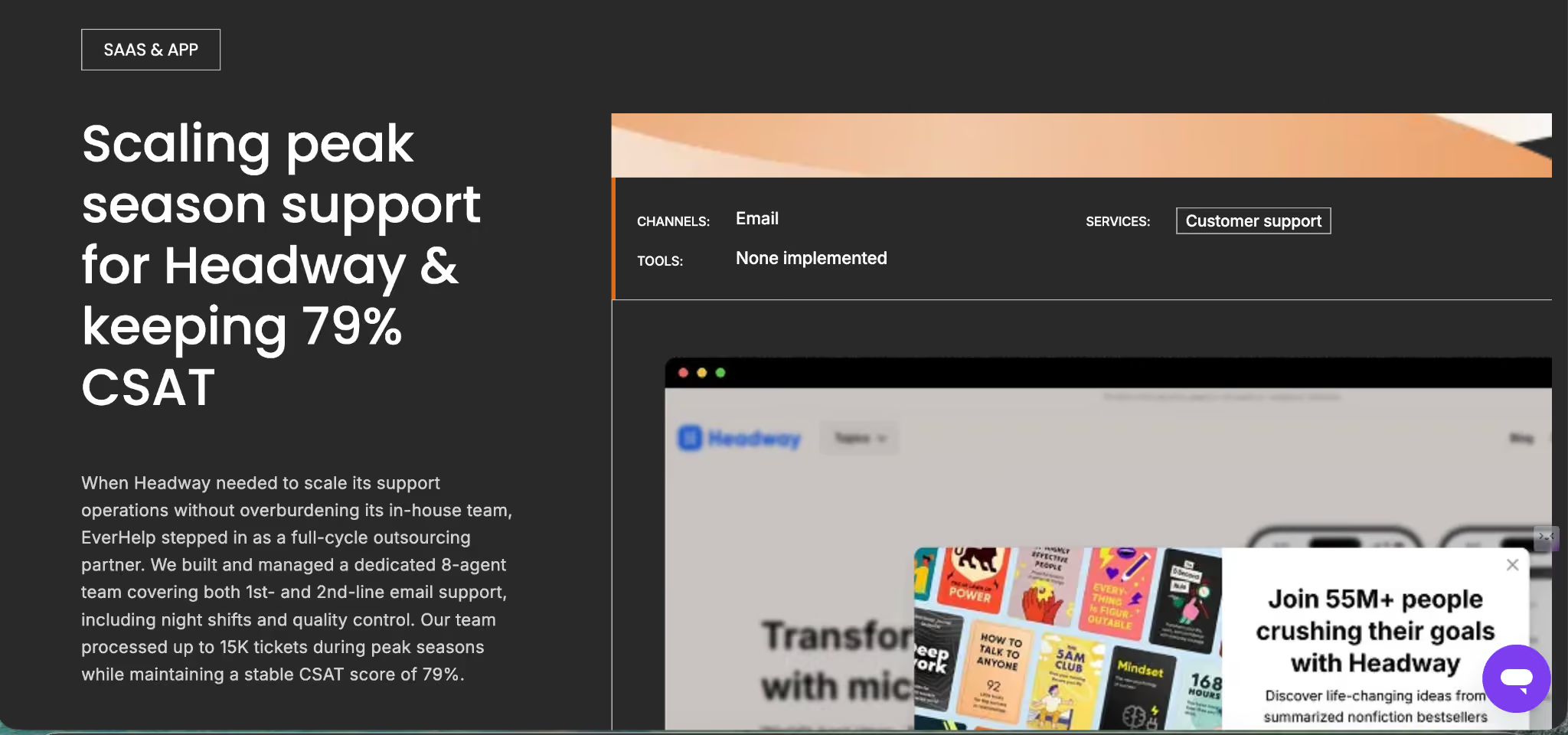
Book summary and learning app, 10M+ downloads, 150+ countries
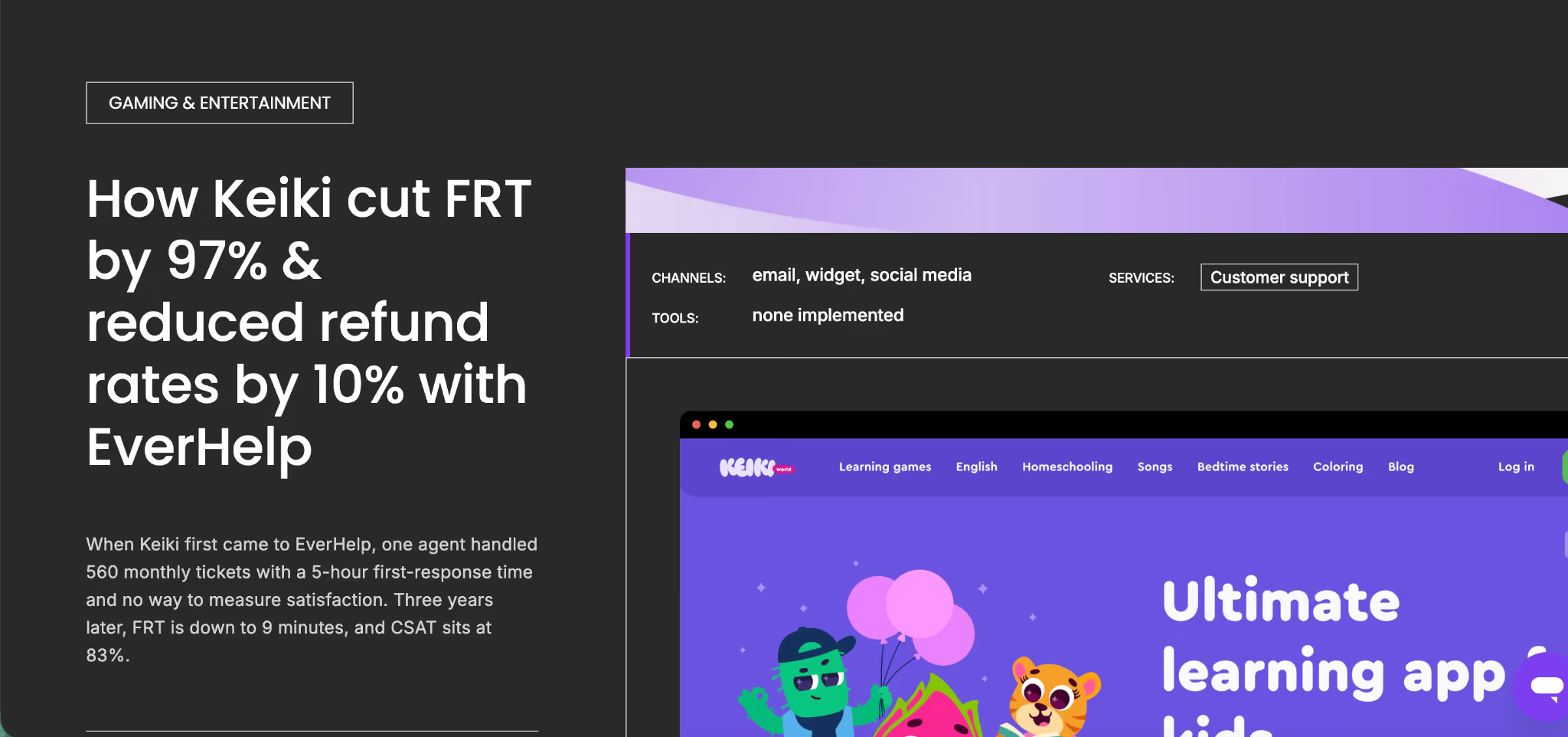
Kids' educational app, trusted by 12M+ families
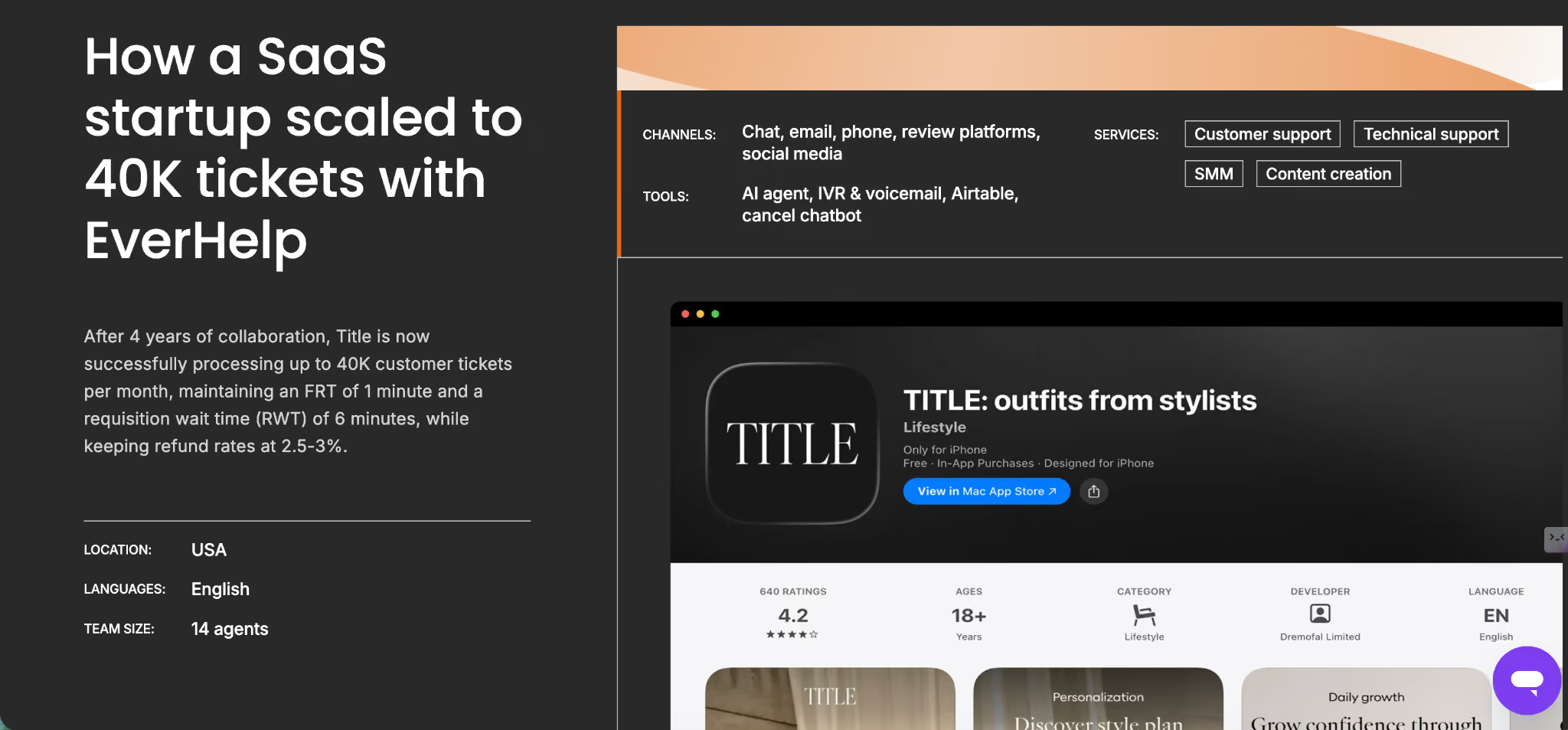
Personal styling subscription app, 500K+ users
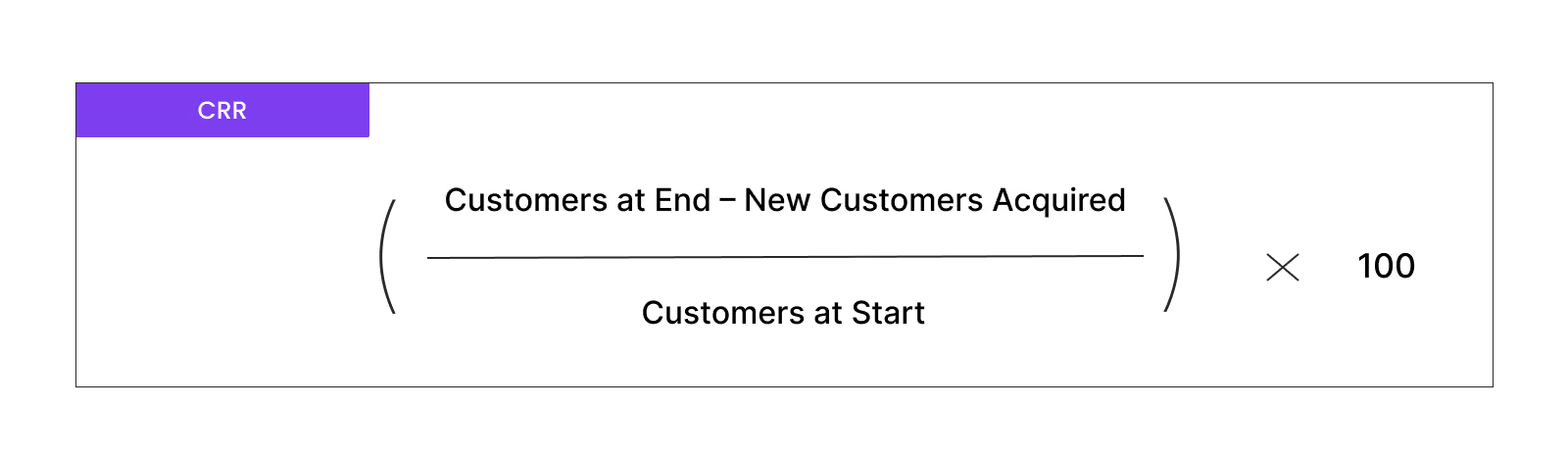
CRR example: 200 start, 190 end, 10 new → CRR = 90%.
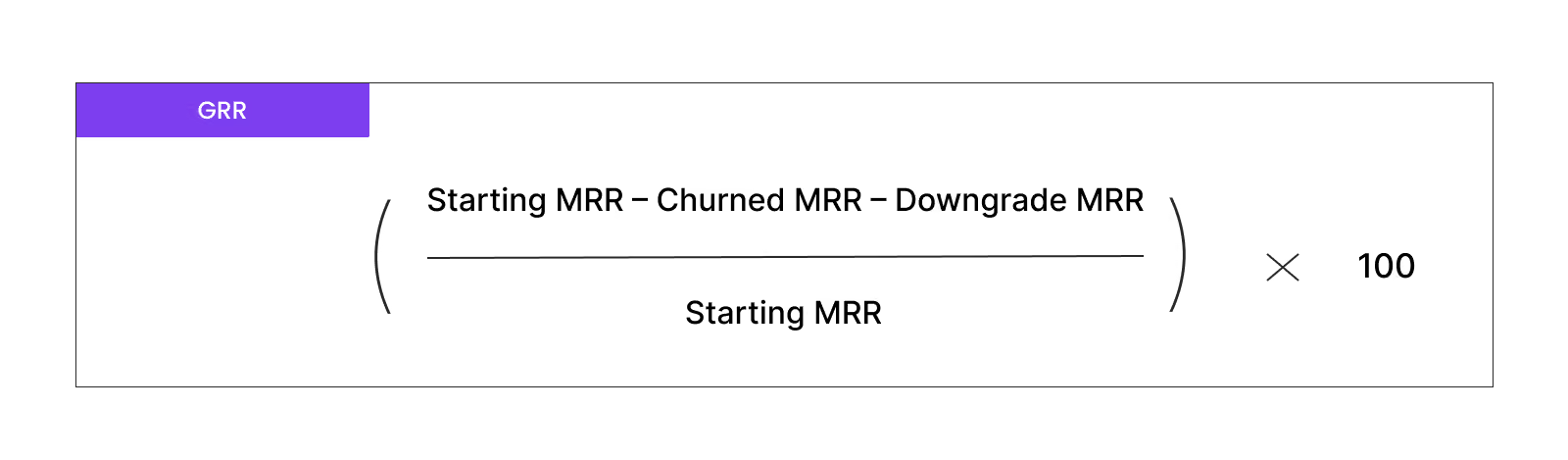
GRR example: $100K start, $5K churn, $3K downgrades → GRR = 92%.
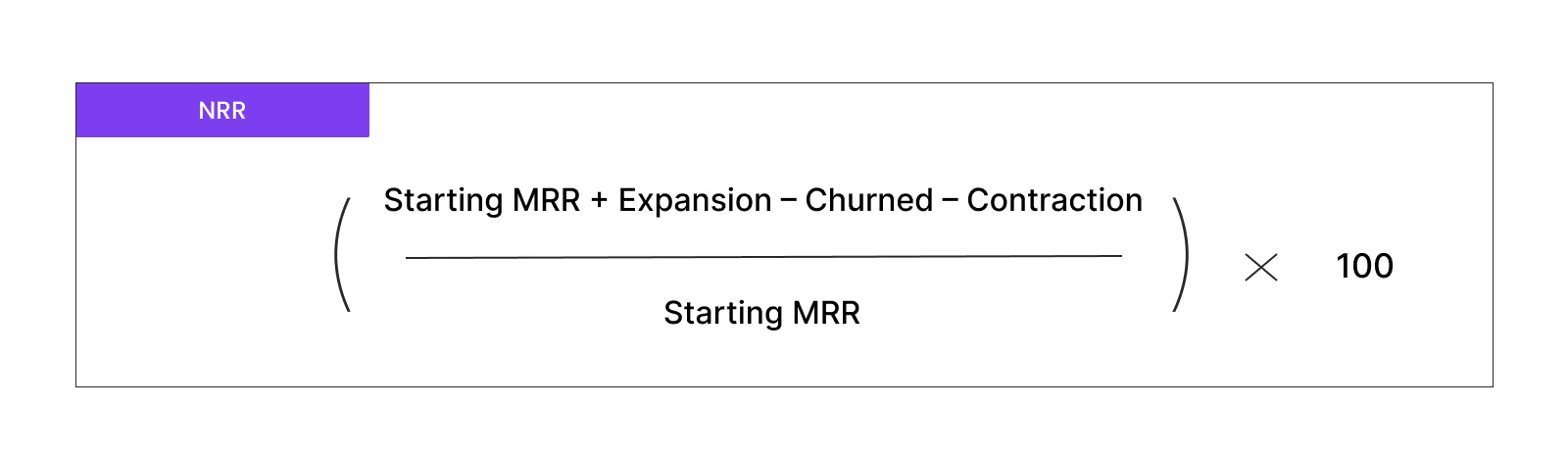
NRR example: $100K start, $12K expansion, $5K churn, $3K downgrades → NRR = 104%.
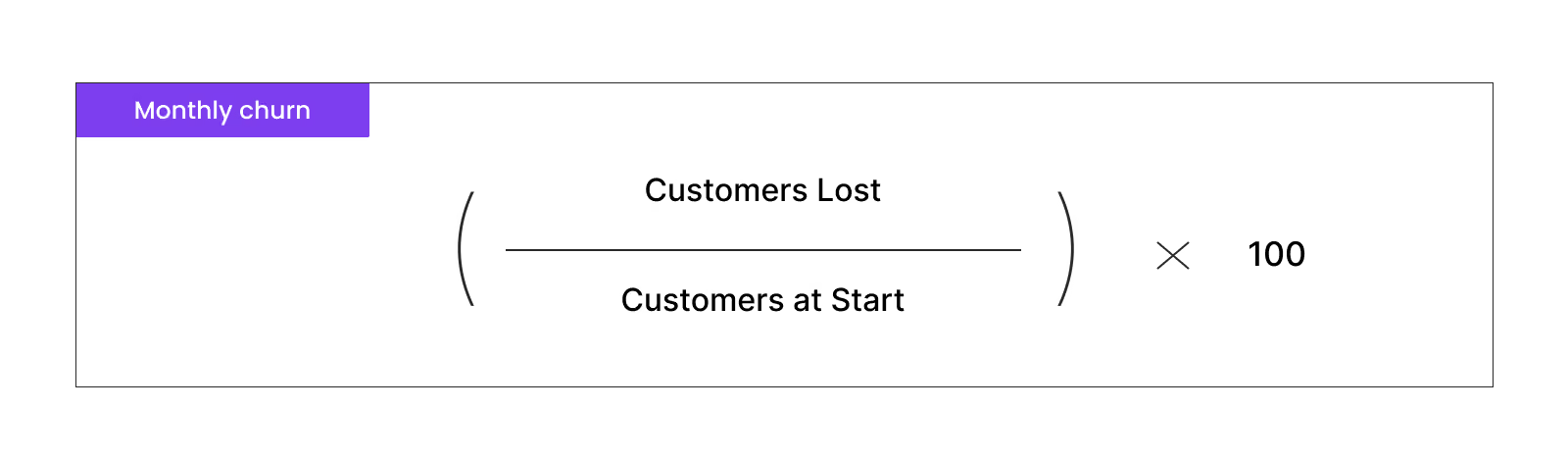
To annualize: 1 – (1 – monthly rate)^12. A 3% monthly rate compounds to ~31% annually – not 36%.
Even a 1-2 point monthly improvement is highly valuable at scale.
Now that you know how to calculate churn, the next question is: what does "bad" actually look like? The SaaS churn rate benchmarks for 2026 tell a nuanced story depending on who you sell to.
According to the 2025 Recurly Churn Report, the B2B SaaS average monthly churn sits at 3.5%, with top performers below 2%. At 2% monthly, the average customer lifetime is ~50 months. At 5%, it collapses to 20.
Teams using AI-driven early-warning systems consistently reduce churn faster than reactive ones. Catching a risk signal three weeks before cancellation is very different from finding out the day they leave.
AI has moved from "nice-to-have" to core retention infrastructure. Three mechanisms move the benchmarks:
Headway is the world's most downloaded book summary app, operating in one of the most competitive mobile subscription categories where early drop-off is the norm.
When Headway partnered with EverHelp, the core challenge was to support quality and speed at scale. High volumes of subscription, billing, and onboarding queries were creating early friction – driving disengagement before users experienced full product value. EverHelp deployed a combined human-and-AI support operation across three areas:
The result: measurable improvement in user satisfaction and a reduction in support-driven churn that had been suppressing renewal rates. See the full case study on our website.
Here's how to turn the benchmarks above into a practical action plan: five steps covering measurement, benchmarking, breakpoint analysis, intervention design, and iteration.
Calculate CRR, GRR, NRR, monthly churn, and DAU/MAU using the formulas above. Don't skip involuntary churn – most teams underestimate it.
Compare against the 2026 SaaS retention benchmarks in this guide for enterprise, mid-market, or SMB. Segment context matters more than raw numbers.
Find where users drop off: onboarding friction, feature adoption cliffs, renewal friction.
Triggered support flows, predictive churn alerts, and personalized in-app education move metrics fastest.
Monitor uplift in user retention, churn, and NRR every 30–90 days.
Use this alongside your SaaS customer support guide to check each area:
If this audit reveals gaps, that's exactly where proactive customer service and EverHelp's AI-driven support deliver the highest ROI.
SaaS retention benchmarks in 2026 are a roadmap for profitable growth. Track the right things (CRR, GRR, NRR, churn, DAU/MAU), act on early signals, and close the gap before it compounds. AI-driven, user-centric support is quickly becoming the differentiator between average and top-quartile user retention SaaS performance because customer loyalty is earned at every touchpoint, from first login to renewal.
If your numbers are below the SaaS retention benchmarks in this guide, start with one AI-powered support experiment. Check our SaaS retention strategies and SaaS customer support tips to build your playbook today.
{{cta}}
EverHelp's AI agent Evly monitors usage and support signals in real time to catch at-risk users before they reach the cancellation window. Early churn detection lowers monthly churn, onboarding nudges lift 1-month and 3-month user retention, and faster resolution pushes CSAT to 64% – above the 47.6% human baseline.
The median annual customer retention for B2B SaaS is 88–90% — that's the floor, not the target. Top-quartile benchmarks to aim for:
Because it's the only number that shows whether your business can grow without constantly acquiring new customers. An NRR above 100% means existing customers generate more revenue than you're losing to churn. Below 100%, new logos are just replacing what's leaving, making it a direct proxy for product-market fit and pricing power.
Teams with AI-driven systems report monthly churn reductions of 2–3 percentage points – enough to shift from median to top-quartile performance.
Top performers push below 2% monthly. Nearly half of all churn is involuntary billing recovery is one of the fastest wins available.
Help someone else stay in the know. Hit that share button!

.png)

.png)
.avif)
.png)
%2520(1).avif)