Omnichannel Support
Published on
12.04.2026
Last updated on
01.09.2026
Inbound call center services: The 2026 strategic guide to scaling ROI
.avif)
Andrew
Chief Commercial Officer

Andrew
Chief Commercial Officer
Voice is having a comeback moment, and the numbers back it up.
Based on 6,500 service professionals, AI and voice are slashing resolution times, and 79% of service leaders say investing in AI agents is essential to meet current business demands.
That pressure lands squarely on inbound call center services. The teams that answer when customers reach out now carry a strategic weight they didn't five years ago:
So, this guide was created to show how to do exactly that in 2026. Here, we’ll offer you a 360° view of essential inbound service features to pay attention to, as well as a checklist for handpicking the perfect vendor fast.
A good inbound operation in 2026 is measured less by how fast it picks up and more by how completely it resolves the caller's intent, in the channel they chose, without friction. Speed still matters, but resolution quality, context, and data flow decide whether ROI scales or leaks.
Customers don't grade you on politeness alone; they grade you on whether the first agent they reached actually fixed the issue. Our point of view is simple: a missed or half-resolved call is revenue walking out the door, which is why we wrote a whole piece on missed call recovery for you to check out. And besides, strong first call resolution is still the single biggest lever you have.
Good call center inbound services now treat demand forecasting and omnichannel integration as table stakes.
If your partner can't pull both levers, you're buying a 2015 service in a 2026 wrapper.
EverHelp builds inbound operations around a blended human + AI model, a living knowledge base, and measurable SLAs. We don't treat voice as a separate silo – it plugs straight into your ticketing, CRM, and quality loops.
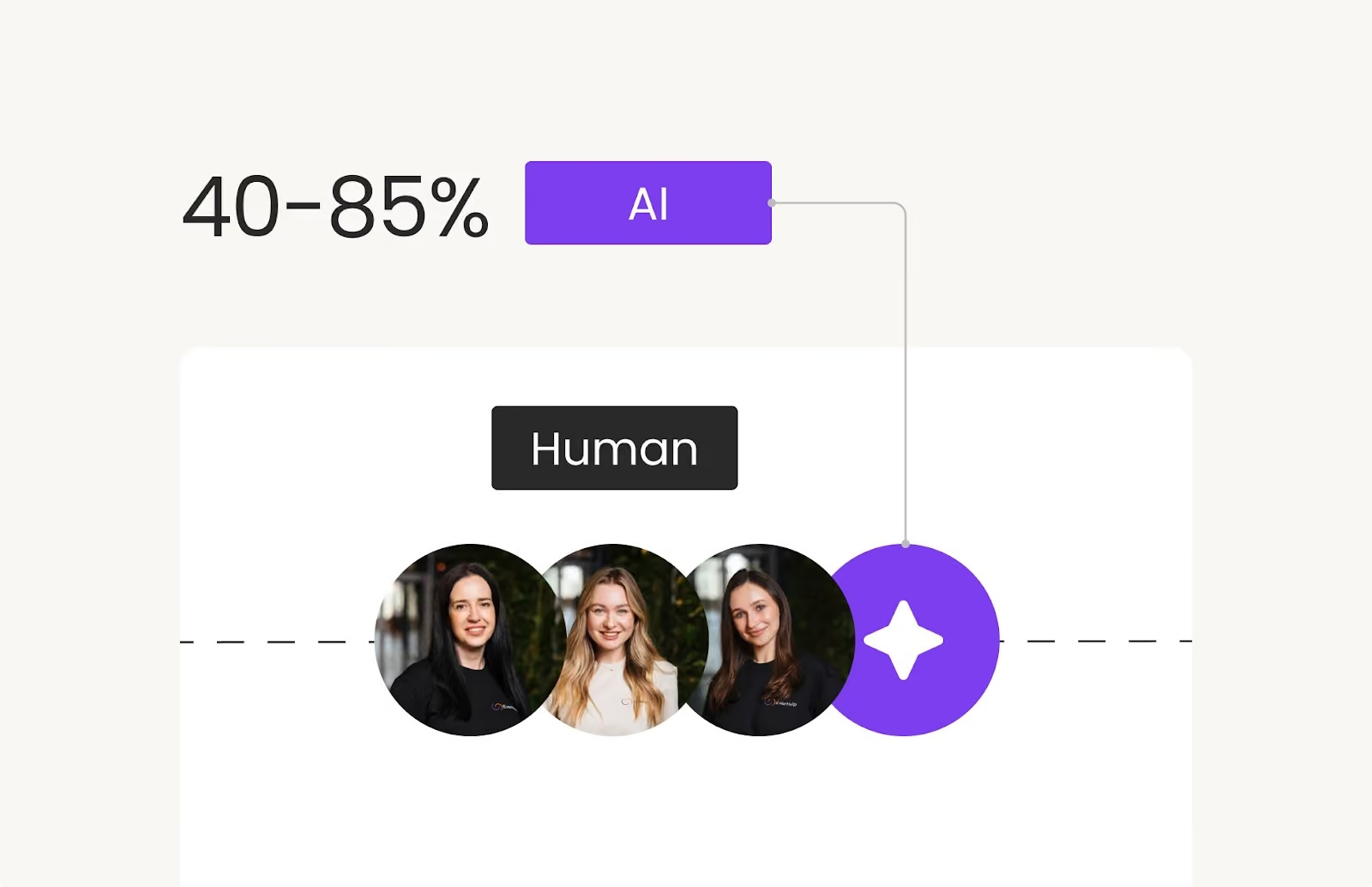
Our inbound operation runs on this human + AI approach, and the impact numbers from our hybrid support practice speak for themselves:
At the center of the stack sits Evly, our proprietary AI agent trained on more than 100K support interactions. Evly resolves repetitive inquiries in seconds, which frees our human agents for the complex, high-empathy calls where people actually want a person on the line.
The split is deliberate: AI handles the volume, humans handle the value.
Pair that with contact center AI news updates we publish monthly, and you can see how quickly the voice channel is being re-engineered under everyone's feet.
{{cta}}
Dynamic knowledge bases are the quiet hero of good inbound. When an agent or AI can pull the right answer in two seconds, the whole economics of the call shifts:
We update ours continuously based on ticket clusters, then feed the learnings back into agent coaching and call center quality assurance reviews. The loop is the whole point: every solved ticket makes the next one faster.
Not every industry needs the same call center inbound services stack. For example, a SaaS company bleeds from churn, fintech – from fraud panic, while a hospitality brand – from a missed late-night booking. Feature priorities that follow this bleeding.
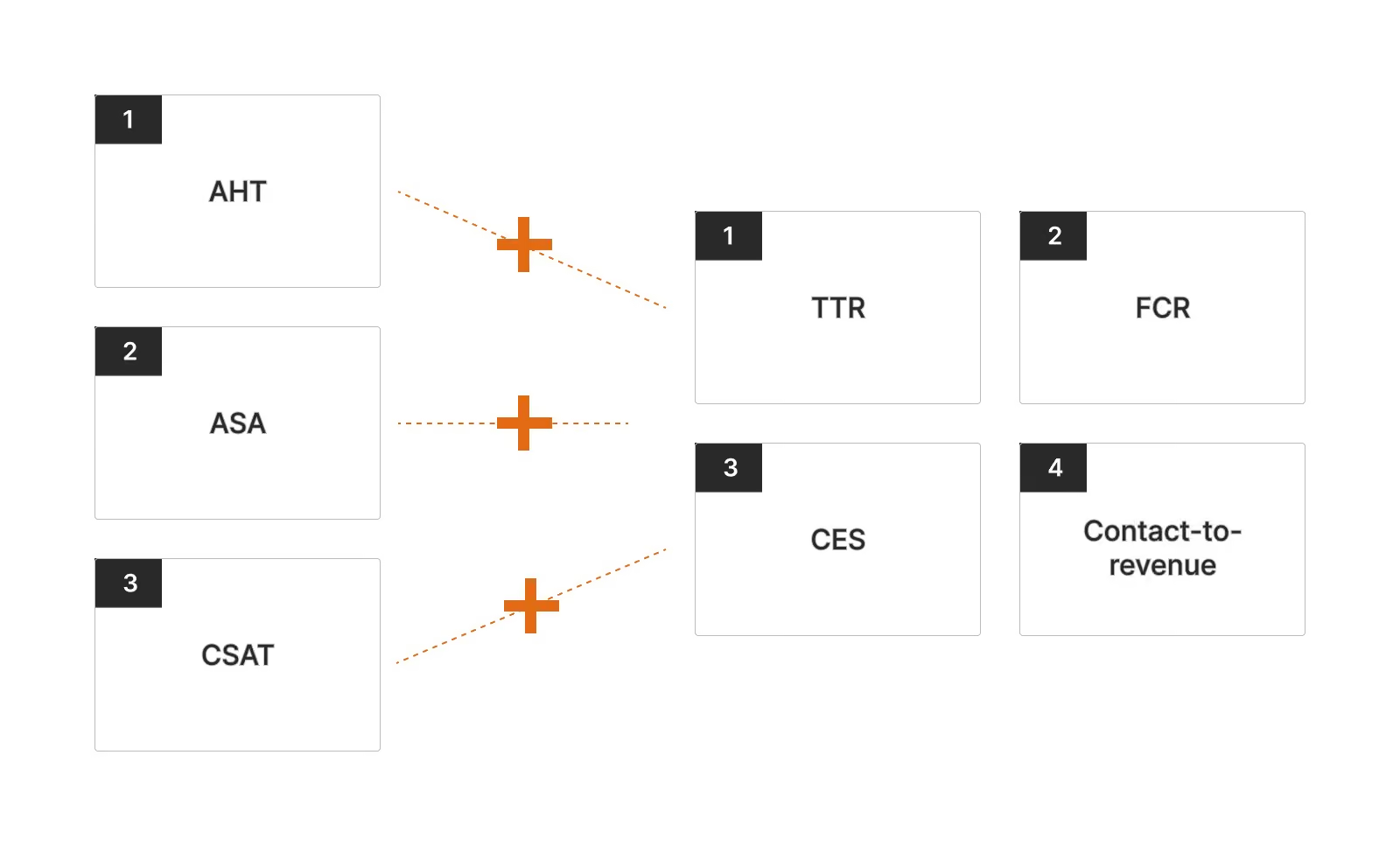
The old trio of AHT, ASA, and CSAT isn't dead, but alone, it hides more than it reveals. In 2026, the contact center metrics that matter are the ones tied more to business outcomes:
Pro tip: Speed and satisfaction do matter and shouldn't be excluded from the KPI. However, true performance becomes clear when tracking these metrics as well: TTR, FCR, CES, and contact-to-revenue.
CES deserves extra attention. Customers don't remember the hold music. They remember how hard they had to work to get help. Low-effort calls correlate tightly with retention, which is why we build customer service analytics dashboards around them. Layer a good contact center workforce optimization strategy on top, and the math starts compounding, giving you:
One breach, one leaked recording, one misrouted PII field, and it’s over. We hold ourselves to PCI DSS Level 1 and GDPR compliance across every region we operate in, and we've documented our approach in our security commitment.
So, when looking for a vendor, ask these questions:
The right partner matches your volume curve, your compliance bar, and your growth plan without forcing you into a rigid contract. Here's the short version of what to evaluate.
See a more detailed breakdown of these two models via the links in the table and on a general pricing page.
SLAs are the teeth of the contract. A solid inbound SLA agreement covers first response time, resolution time, abandonment rate, CSAT floor, and escalation paths – with real penalties if they slip. If a vendor's SLA reads like a wish list, it is one.
Watch out for these red flags in SLA agreements:
Before you sign, align internally. The prep work decides whether month one feels like a rescue or a relaunch. Our view, expanded in our customer experience in call center playbook, is that the fastest transitions share five traits.
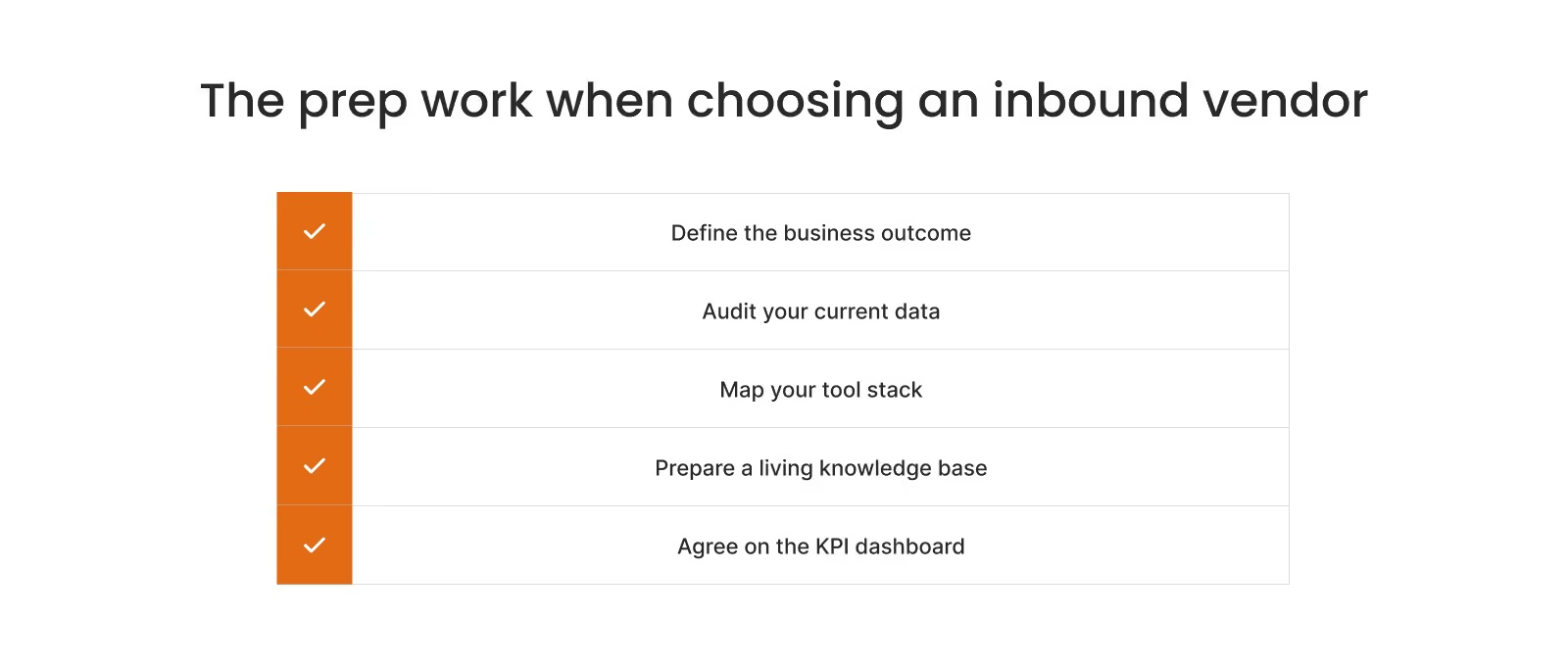
See a more detailed preparation and vendor handpicking guide in our downloadable checklist.
It walks you through scalability scoring, flexibility, peak support, compliance, and reporting cadence. Use it alongside our roundup of top call center outsourcing companies to shortlist credibly.
Pricing is where most buyers get tripped up. An inbound call center service's price isn't a flat rate – it's a function of volume, complexity, language mix, hours of coverage, and team model.
Our working range for most projects aligns with credible BPO benchmarks. The real question isn't "how cheap," it's "how much ROI per dollar spent."
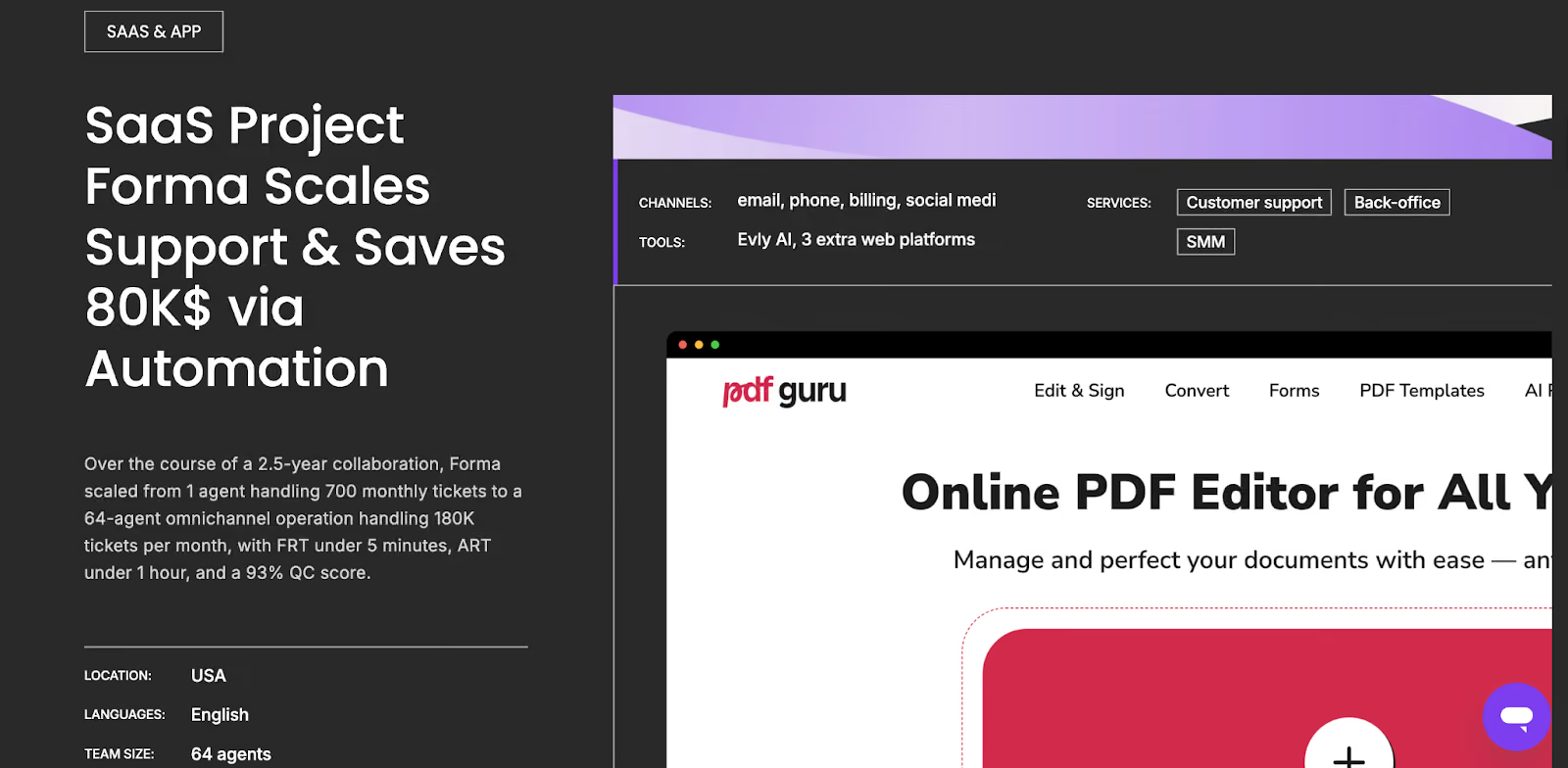
When Forma, the AI-powered PDF tool, came to us in 2023, one agent was handling 700 monthly tickets over email alone, with FRT stuck above 12 hours. For a product serving 100M+ users, phone support wasn't optional; it was overdue.
We rebuilt the operation around voice. Phone launched alongside social media and billing queries as a first-class channel, backed by a 64-agent team and Evly handling routine tickets.
The results:
{{cta}}
Call center inbound services in 2026 are no longer a cost line. Done right, they're a revenue engine, a loyalty moat, and a data goldmine. Done wrong, they quietly leak both. The winners will be the brands that pair human empathy with AI speed, enforce real SLAs, obsess over CES and TTR, and pick partners who treat security as non-negotiable.
That's the EverHelp playbook, by the way, and we'd love to tailor it to yours.
Book a call with EverHelp today, and we'll map your inbound scaling plan in a few days.
Inbound call center services handle incoming customer contacts initiated by the customer. The goal is resolution, not just answering.
Typical scope includes:
For a fuller breakdown, see our guide on inbound vs outbound.
It depends on volume, hours, languages, and complexity. Most projects fall under $25/hour, but the honest answer is that pricing is built per account. What you should really compare is cost per resolved contact, not cost per hour – that number exposes efficiency gaps instantly.
Most growing brands start shared and graduate to dedicated as volume stabilizes. If you’re unsure yet, contact EverHelp to get a personalized team setup recommendation!
A well-run onboarding takes around four weeks. That covers hiring, training, knowledge base setup, tool integrations, and pilot calls. If a vendor promises "live in 48 hours," ask what they're skipping – it's usually QA, compliance, or coaching.
We train every agent on an empathy-first script: acknowledge the frustration, take ownership, then act. No downplaying, no scripted apologies that sound rehearsed.
Our de-escalation flow:
Empathy first, action second. That sequence turns most angry calls into retention wins.
Across our portfolio, we deliver sub-45-second response times on voice and live chat, with QC scores consistently in the 90%+ range (mostly 96%). On the Title project, we’ve cut first response times (FRT) to just 1 minute.
Benchmarks we hold ourselves to:
Numbers vary by vertical, but the bar stays high.
Security isn't an add-on at EverHelp; it's baked into every workflow. We hold PCI DSS Level 1 certification (the highest tier) and run fully GDPR-compliant operations across all regions.
Our standard controls:
Agents never see full card numbers or raw PII unless the use case requires it.
Peak season is when most vendors crack. We're built for it. Our elastic staffing model adds trained agents quickly, and Evly absorbs routine volume so human agents can focus on the complex stuff.
How we handle surges:
Yes. Our PCI DSS Level 1 certification means our agents can securely process card payments, refunds, and billing queries directly on the call, without exposing sensitive data.
How we keep it safe:
Our agents can process payments or refunds end-to-end, with compliance built into the workflow. On the Keiki project, we reduced refund rates by 10%. As for simple & repetitive cancellations and refunds, we loop in our AI agent and leave the complex and nuanced financial inquiries to humans.
In-house means salaries, benefits, tools, training, and management overhead. Outsourcing bundles all of that into one predictable cost, usually 30–50% lower.
Where the savings come from:
On the Forma project, this model saved the client $80K monthly on hiring alone.
Help someone else stay in the know. Hit that share button!


.webp)

.avif)
.webp)