Support Ops & Teams
Published on
25.05.2026
Last updated on
14.09.2026
Customer wants and needs: the key to support that retains customers

Valentyna
VP of Customer Support

Valentyna
VP of Customer Support
.avif)
TL;DR: Customer needs are the core problems customers require to be resolved; wants are their preferred ways of getting there. Mapping both alongside expectations turns reactive ticket-handling into proactive loyalty-building. The most effective methods combine data analysis, direct feedback, and frontline agent input. At EverHelp, five rules guide every interaction: treat it as a needs assessment, respond fast and resolve completely, personalize with context, close the feedback loop visibly, and make empathy non-negotiable.
Are you sure your customer support team really understands your customers' wants and needs, or are they just resolving tickets?
According to Salesforce's State of the Connected Customer report, 80% of customers say the experience a company provides is as important as its products and services. Yet most support operations are measured on volume and speed, with little attention to why customers reach out in the first place. That gap shows up directly in loyalty, customer lifetime value, and churn.
This article covers how to define customer wants, needs, and expectations; how to analyze them using data and feedback; and how we apply these principles at EverHelp across live client accounts.
Before any analysis can happen, teams need a shared definition. Ambiguity here leads to strategies that address the wrong problem entirely, and the cost shows up in repeat contacts and churn.
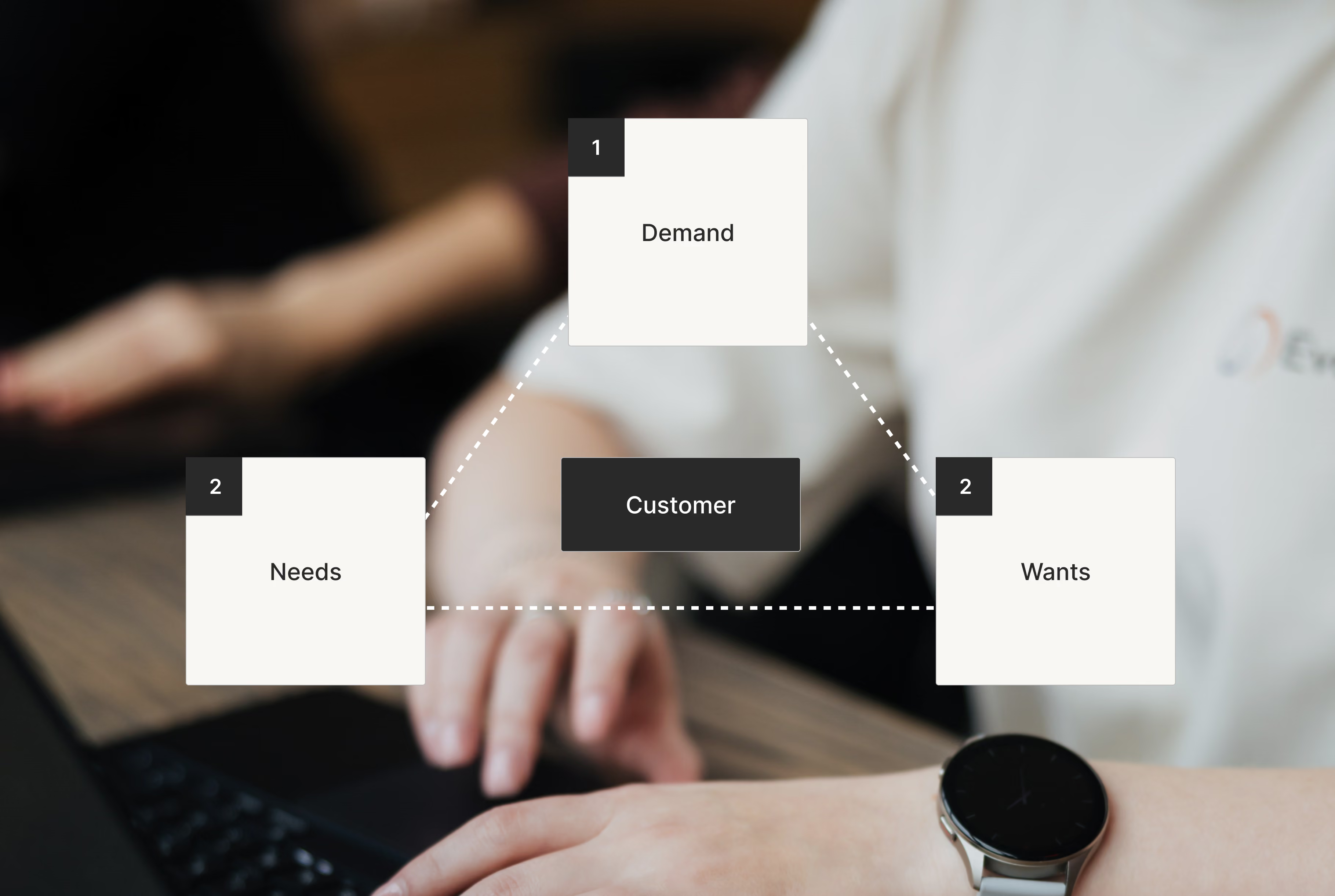
A customer need is the core problem requiring resolution. A customer's want is the preferred solution or delivery format they would like to use.
Harvard Business School outlines three need types that apply directly to support:
Every ticket carries all three dimensions. Agents who recognize them resolve cases more completely and generate fewer follow-ups.
The distinction shapes how agents prioritize in real time, and mixing them up creates experiences that miss on both fronts.
Our article on support channels covers how to match each channel to customer preferences.
The research on this is consistent, and the operational implications are direct. This section connects to both the metrics that matter most in support.
McKinsey's Next in Personalization research found that 71% of consumers expect personalized interactions, and 76% report frustration when that does not happen. Across every digital customer experience, this means knowing who the customer is, what they experienced before, and what they need right now.
Teams that consistently meet customer wants, needs, and expectations see fewer repeat contacts, fewer escalations, and stronger customer loyalty. The effects show up in CSAT, NPS, and first-contact resolution.
Drive Research identifies the gap between what customers expect and what they actually experience as the starting point for meaningful service improvement. In support, it appears as repeat contacts on the same issue, escalations from routine requests, and survey comments focused on feeling rather than outcome.
Common gaps we see across accounts: fast response promised against slow queues in practice, omnichannel support marketed against real channel fragmentation delivered, and empathetic tone in policy against scripted replies in execution. Closing them requires a system for identifying what customers expect and measuring whether you actually deliver it.
{{cta}}
Consistent customer needs and wants analysis separates teams that react to problems from teams that prevent them. Three sources provide the most reliable and actionable picture of what customers actually need.
The fastest starting point is data already in the support stack. Sources to prioritize in any customer service analytics review:
Build this into a monthly routine with a clear owner rather than relying on annual audits.
Data shows what is happening; direct feedback explains why. Both HBS Online and Drive Research highlight surveys, interviews, and observation as essential for understanding the motivations behind support patterns. Post-contact CSAT surveys, NPS programs that surface wants around customer onboarding and channel preferences, and qualitative interviews each reveal a different layer. Two questions that consistently surface useful answers:
Our VoC guide covers the full VoC framework in detail.
Agents hold the most direct insight into recurring customer wants and needs. A weekly pattern-sharing huddle, a shared channel for logging emerging needs in real time, and a quarterly review where ops and product prioritize the top unmet needs flagged by agents will surface more actionable insight than most formal research projects. This approach directly enables proactive customer service.
Needs, wants, and expectations look different at each stage of the support journey. The table maps them across three stages, with the right operational response for each.
Meeting these in practice means investing in self-service quality and knowledge base search for pre-contact, setting clear SLAs and using empathy statements in QA rubrics during contact, and building follow-up sequences that close the customer feedback loop visibly post-resolution.
These rules shape how we operate across every account. They are practical habits grounded in the methods above. For real examples, see our excellent customer service examples page.
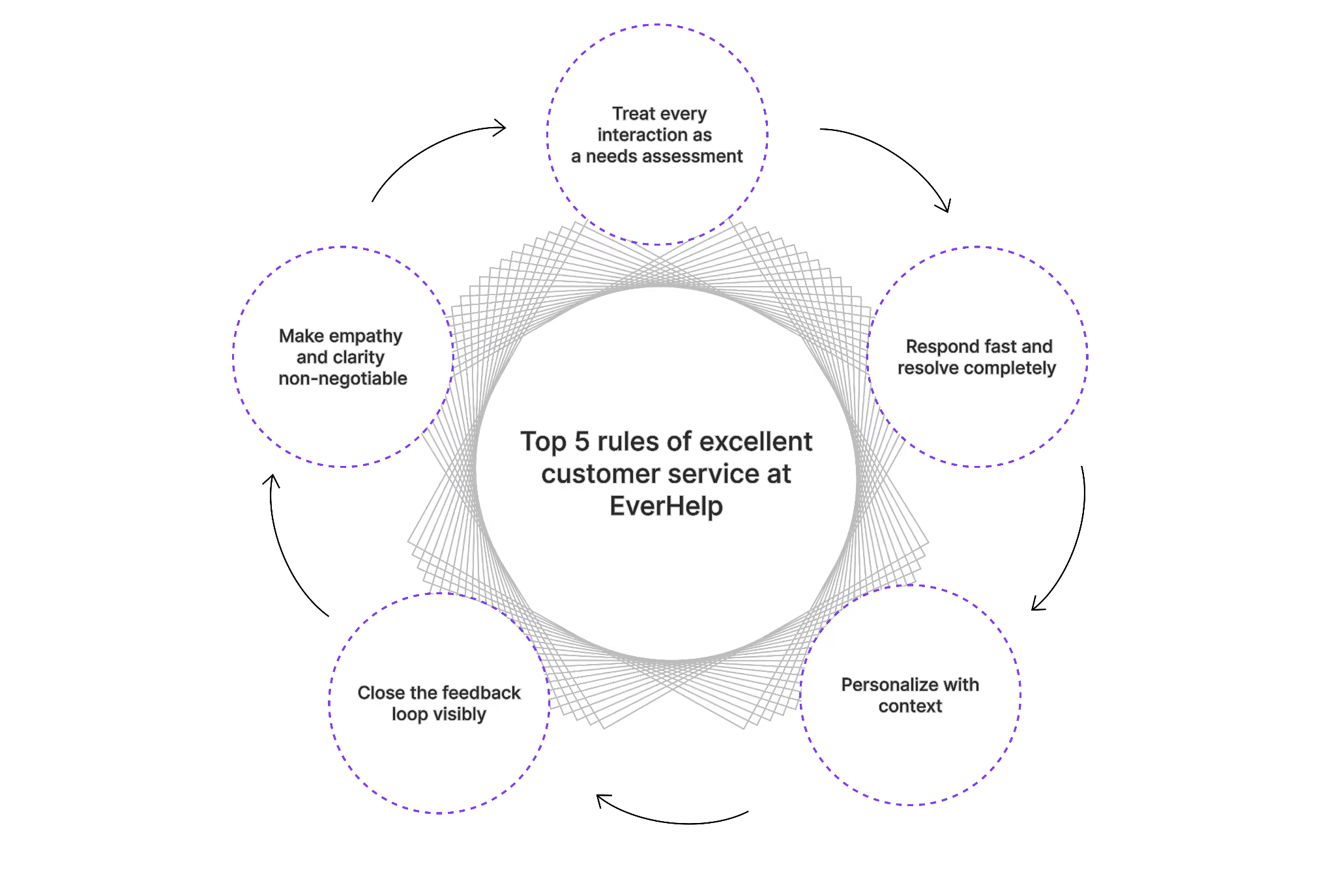
Before resolving anything, our agents identify the functional need, the expressed want, and the expectation baseline using probing questions, paraphrasing, and outcome confirmation before closing. This structured approach significantly reduces follow-up contacts and repeat cases.
Sensible SLAs, intelligent triage, and playbooks built to avoid partial fixes ensure both speed and depth. Our teams deliver first replies in under 45 seconds on average, achieving 83% CSAT across accounts. With 24/7 support coverage, urgent needs reach the right agent at any hour.
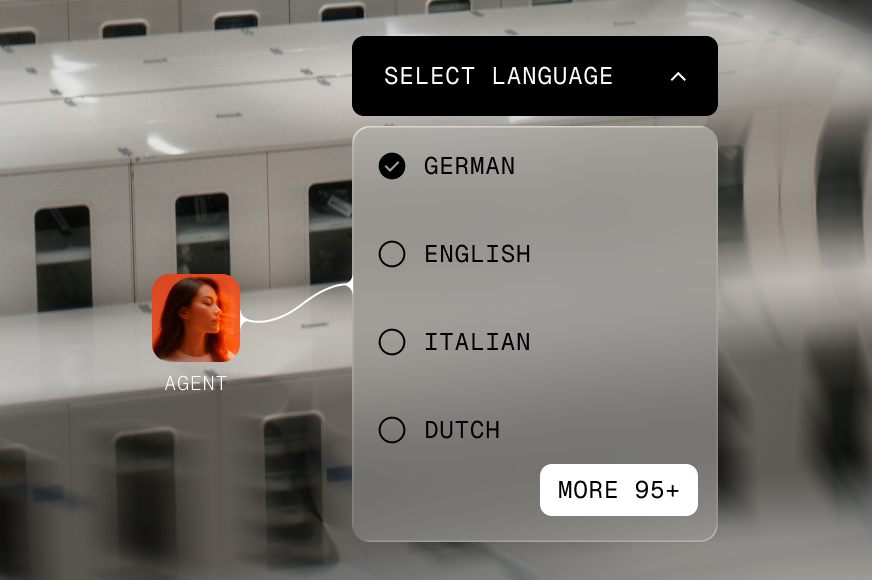
Our agents review previous interactions, purchase history, and account context before every response. In one account, recognizing that a customer's billing query matched a flagged issue from three months earlier allowed the agent to acknowledge that history directly, improving both resolution speed and CSAT. That is personalized customer support in practice. For teams serving global markets, personalization also extends to multilingual support that meets customers in their own language.
We log recurring patterns through structured ticket tagging, coordinate with clients on what warrants a change, and tell customers when a fix comes from their input. That transparency does more for customer retention than any discount or credit.
Our QA rubrics score every interaction on tone, ownership, and clarity of next steps. Agents receive coaching on empathy statements that feel genuine and on keeping language simple. Every customer should leave knowing what happened, what comes next, and that we own the outcome.
Identifying what customers need only creates value when it changes how a team operates. This section gives a repeatable process and the tools that support each stage.
A simple four-step cycle makes customer needs and wants analysis repeatable at any scale:
High-volume teams should run this monthly, with a full quarterly review involving operations and product. Those reviews should also assess whether existing tools still support business goals. Solutions like Artisan help B2B companies streamline sales workflows, improve prospecting, and strengthen collaboration across customer-facing teams.
Pro tip: Your existing support data is often the most underused research tool available. Ticket tags, escalation paths, and CSAT comments capture customer needs in their own words, unsolicited and in real time, something no survey or focus group can fully replicate. Zendesk's CX Trends research shows that companies actively mining support data for behavioral patterns consistently outperform peers on satisfaction and retention.
Everything covered in this article reflects how we build and run support for our clients. This section explains what that looks like in practice and how to get started.
We work with businesses across eCommerce, SaaS, fintech, and hospitality to build support operations grounded in what their customers actually need. That means auditing support data to surface unmet needs, designing feedback loops through post-contact surveys and VoC programs, and implementing omnichannel support with clear SLAs and customer service standards from day one.
Read our excellent customer service examples to see the five rules in action, then fill out the form. We start with a needs audit and show exactly where customers' wants, needs, and expectations are going unmet.
Customer wants, needs, and expectations are not universal. They shift by industry, and so does the way we apply our five rules. We serve eCommerce, SaaS, travel and hospitality, and fintech businesses, among others. Below are the patterns we see most consistently across each.
{{cta}}
Help someone else stay in the know. Hit that share button!


.webp)

.avif)
.avif)
.webp)