AI & Automation
Published on
17.05.2026
Last updated on
01.09.2026
Customer onboarding strategy: how to turn new buyers into lifelong customers
Hlib
Delivery Manager

Hlib
Delivery Manager
.avif)
TL;DR: SaaS retention is decided in the first 90 days, and most companies lose it before customers hit a single milestone. The fix: define "first value," the specific action that predicts long-term retention, then build a five-step process around it. Align teams before day one, map a phased journey, remove setup friction, guide users to their first win, close with a clean handoff. In B2B, onboarding is a managed project with named owners and role-based paths. Automation handles repeatable nudges; humans handle the milestones that matter. Get the support layer right, and onboarding becomes a retention engine, not a churn risk.
What separates SaaS companies with strong retention from those stuck in a churn spiral?
Usually, it comes down to what happens in the first three months. Pendo's 2025 SaaS benchmarks found that software retains just 30% of users after 90 days on average. Most customers leave before the relationship gets going, and a well-built customer onboarding strategy is the biggest lever you have to change that.
Customer onboarding is the structured process that takes a new customer from sign-up through to first value and independent product use. Not a welcome email or a training library collecting dust in a knowledge base. A goal-oriented journey with defined stages, owners, and measurable outcomes.
Three terms get conflated in SaaS. Customer onboarding covers the full journey from sale to active adoption. User onboarding is the in-product experience for end users: guided setup and feature discovery inside the product. Implementation is the technical phase (integrations, data migration, configuration) that typically comes first. A lightweight SaaS tool might complete all three in a week; an enterprise platform can run 90 days.
Poor onboarding is the top predictor of early churn. Focus Digital's 2025 SaaS churn analysis shows 43% of all SMB customer losses happen in the first quarter post-purchase. If your CS team spreads attention evenly across the lifecycle, that number makes a strong case for rebalancing toward day one.
The payback is concrete: stronger customer retention and NRR, faster CAC payback, and early adopters who become referral sources over time. The ROI on a well-run program typically surfaces within one renewal cycle.
That's why more SaaS companies treat onboarding as a cross-functional program, assigning clear ownership across product, CS, and support rather than leaving execution to a stretched CSM.
{{cta}}
A repeatable customer onboarding process separates scalable SaaS operations from improvised firefighting. Five steps apply across self-serve and high-touch models.
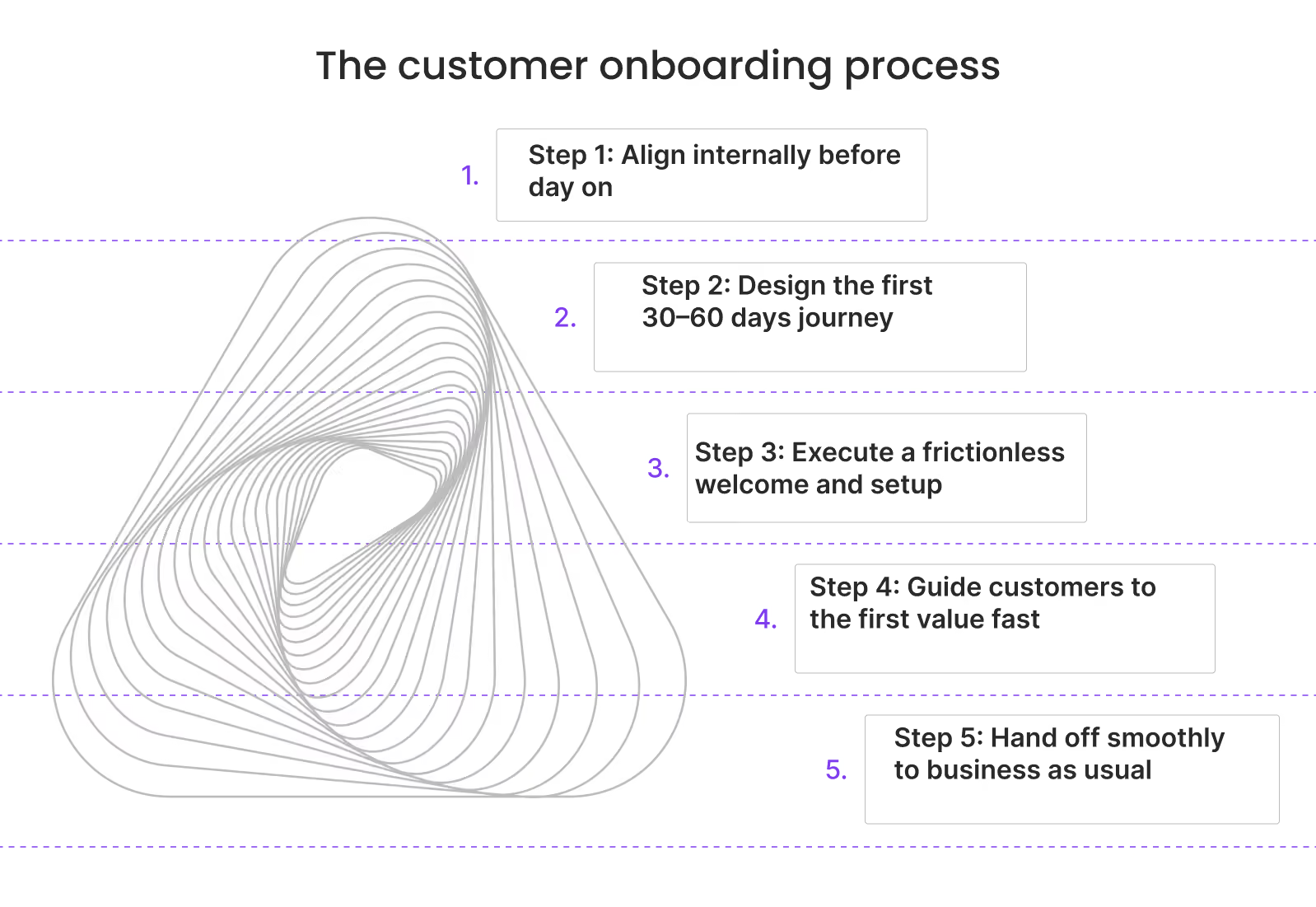
Before a customer logs in, document their goals and key stakeholders. Define who owns onboarding and what the RACI looks like. Match your model (self-serve, low-touch, or high-touch) to ARR and product complexity.
Map each stage (welcome, setup, enablement, first value, adoption ramp) and assign a goal, a metric, and an owner to each. Customers overwhelmed in week one go quiet rather than asking for help; phased rollout consistently outperforms front-loading.
Sign-up should be fast: short forms, SSO where possible, one clear next step. For B2B SaaS, keep the kickoff call to goals, scope, timeline, risks, and room for the customer to define success on their own terms.
Define the action that predicts 90-day retention and build onboarding around it, not your feature list. An admin configuring permissions and an end user completing their first task need different paths. Use analytics to track logins and feature adoption as early warning signs, and close customer feedback loops before friction becomes a cancellation.
Review goals, confirm outcomes, and hand off with a clear cadence: QBRs, health reviews, renewal conversations. VoC data collected via CSAT and CES at this stage shapes the next version of your process
Most onboarding failures are operational. Execution breaks under volume, unclear ownership, and inconsistent tooling. The following practices address the most common gaps, grounded in how leading SaaS companies approach the problem.
Define timeline, responsibilities, and data requirements before day one. Salesforce shares a written Success Plan before go-live, mapping milestones and owners so both sides start aligned.
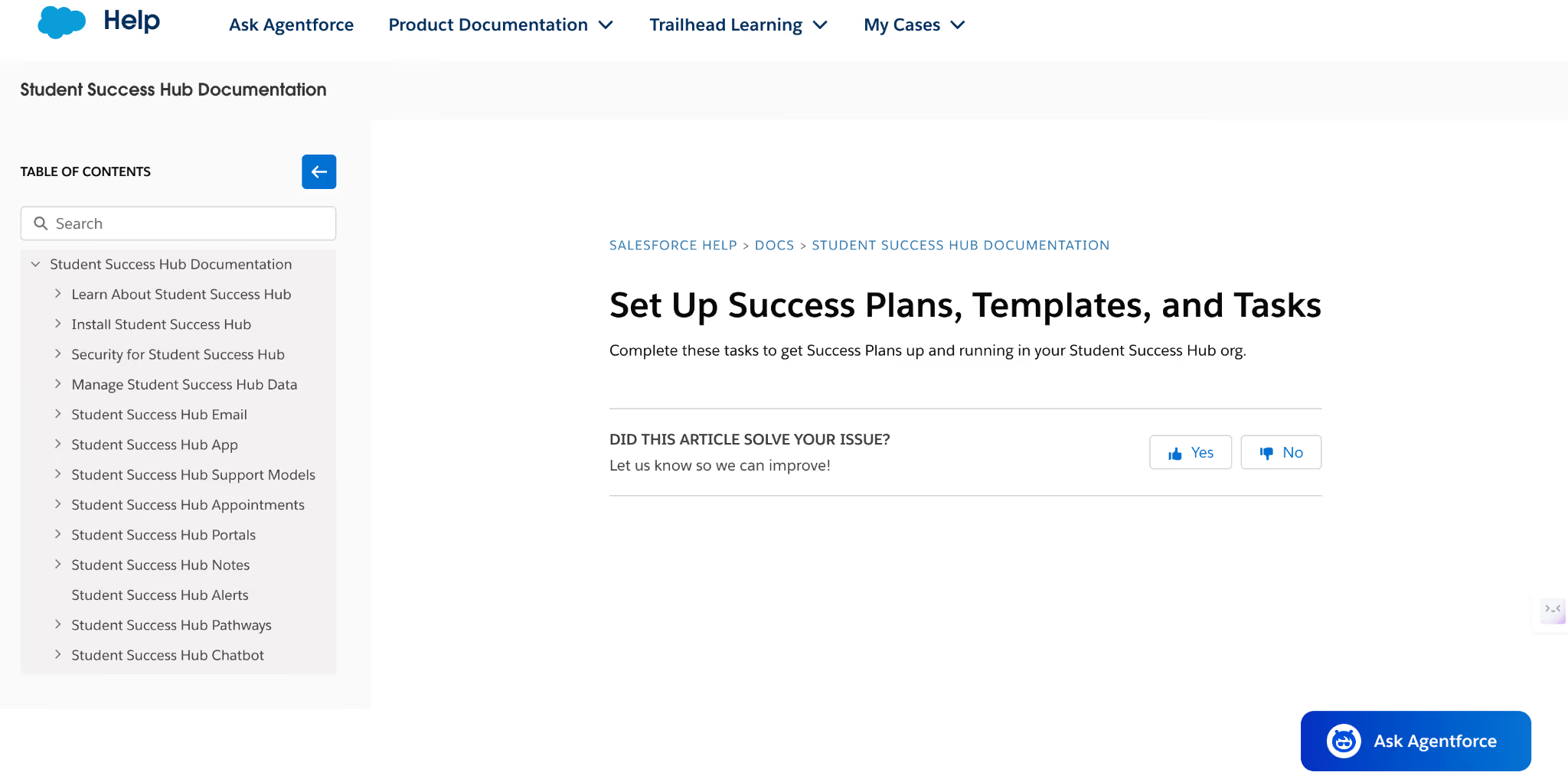
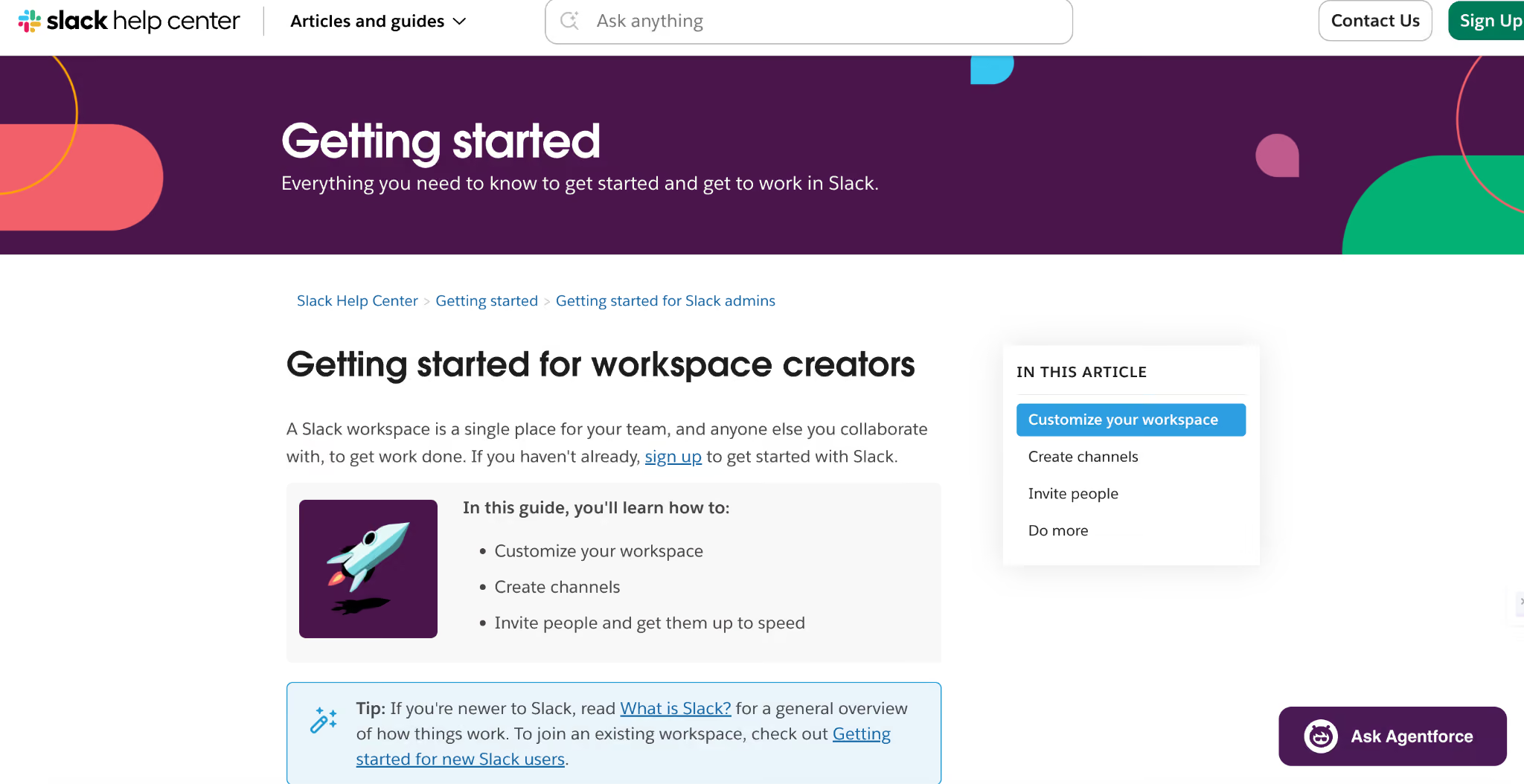
Personalized customer support at the onboarding stage is one of the highest-ROI touchpoints in the journey. Slack builds distinct onboarding flows for workspace admins and end users from day one, covering configuration and daily workflow separately.
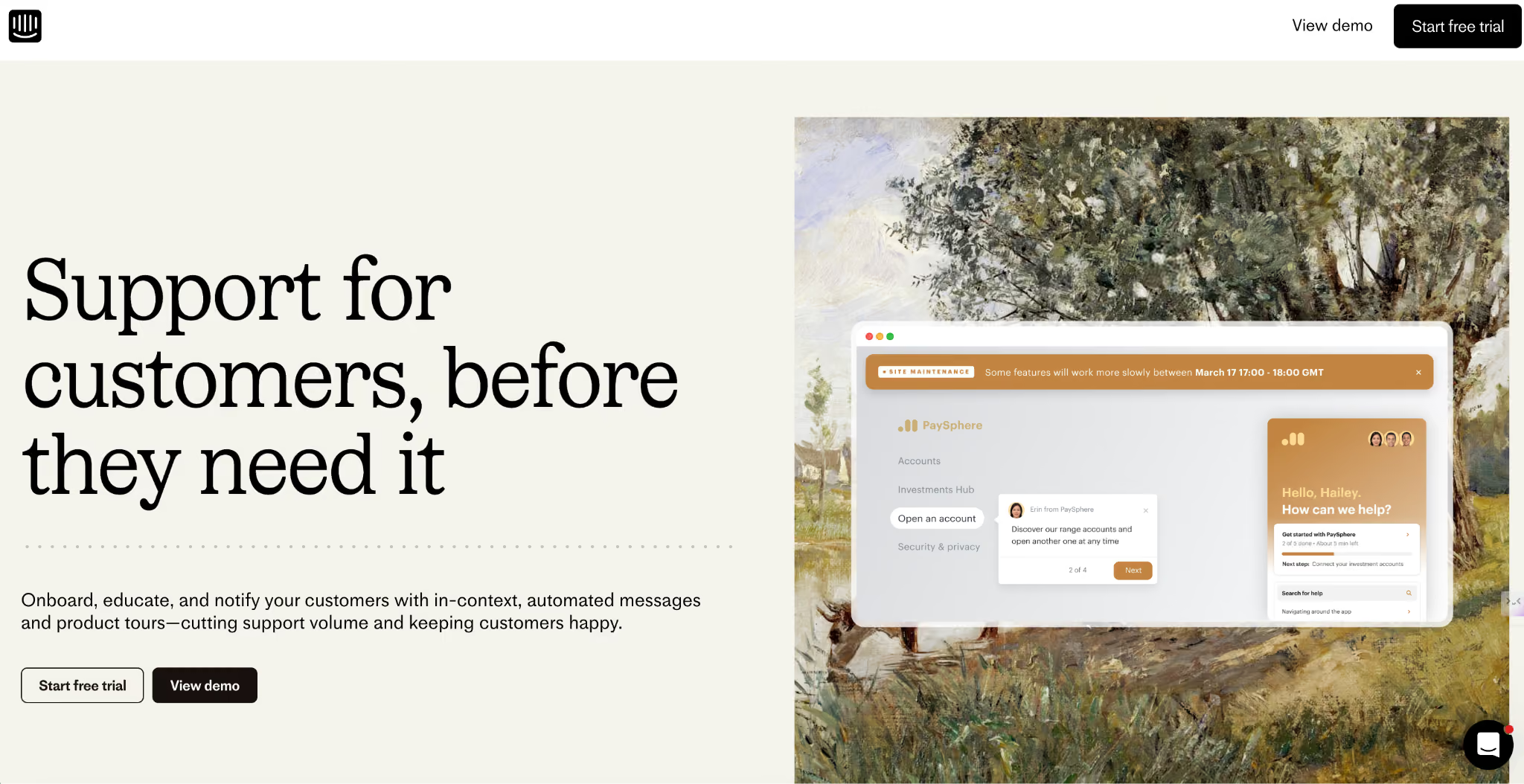
Intercom sends behavior-triggered in-app messages when users stall at specific steps, delivering the right prompt at the right moment without CSM involvement.
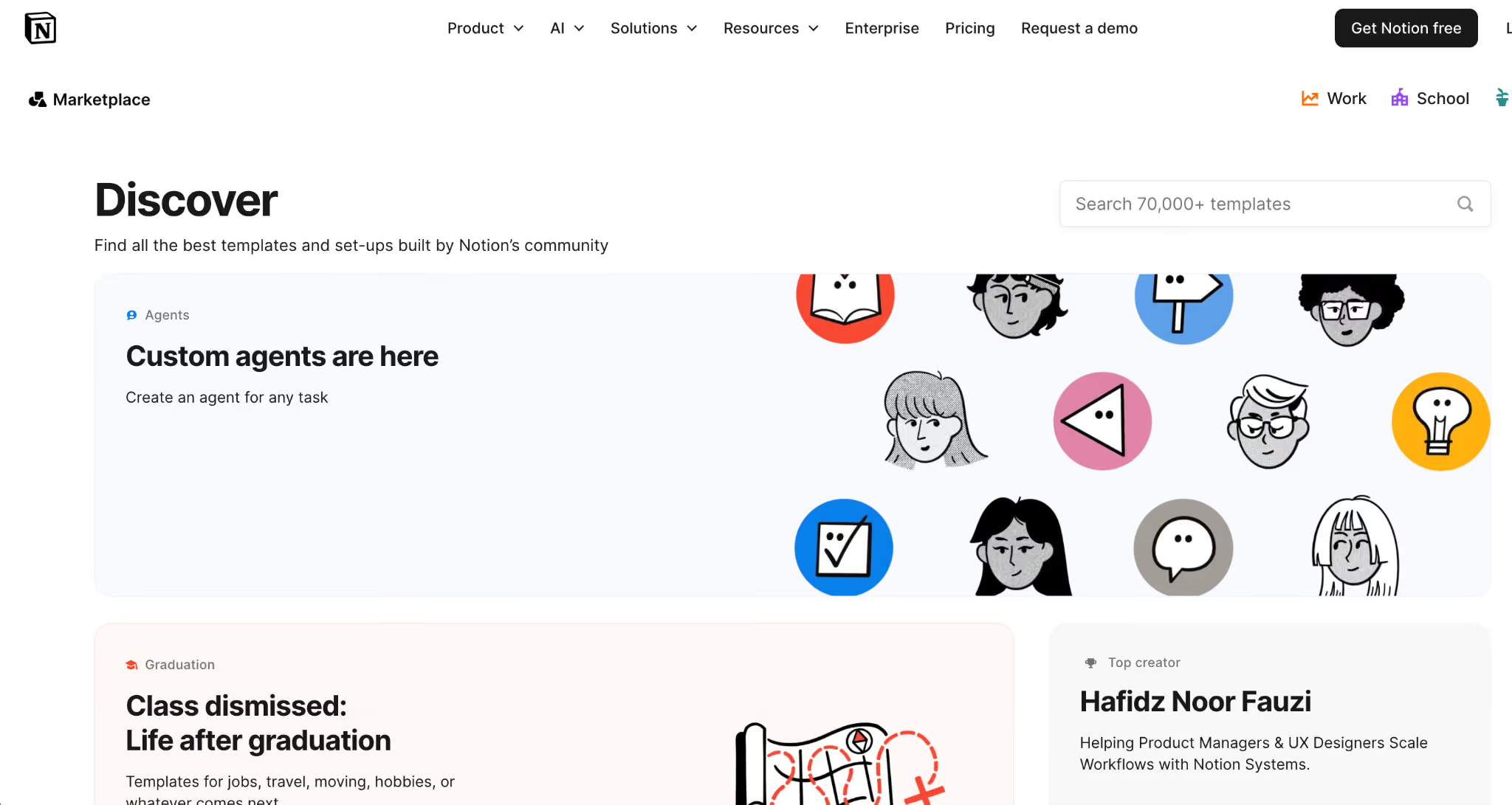
Strong self-service and omnichannel support coverage reduces friction when it costs the most. Notion combines a help widget, template library, and live community: three ways to get unstuck without opening a ticket.
HubSpot pairs in-product guidance with direct CSM outreach at key milestones, knowing that customer loyalty decisions form in the first 30 days, not at renewal.
Track time to first value, completion rates, and early feature adoption on a shared dashboard, not in a spreadsheet nobody opens until it's too late. Building real customer service standards around onboarding KPIs means accountability is built into the process, not bolted on after the fact.
B2B onboarding is a project: a plan, a named owner, governance checkpoints, and a risk log. The exec sponsor wants strategic ROI; the admin wants working integrations; end users want a lighter daily workflow. Three different success criteria, three different conversations.
The most useful onboarding signals are time to first value, completion rate, early feature adoption, and CSAT/CES at close. Gainsight's customer health score guide is a practical starting point for building a weighted scorecard. Track customer lifetime value from the onboarding stage, not just at renewal, and A/B test sequences monthly.
Automation handles the repeatable parts of onboarding, freeing the team for conversations that need real judgment.
Customer onboarding automation fits:
- welcome sequences
- setup reminders
- milestone check-ins
- usage-drop alerts
Gainsight and ChurnZero both run automated playbooks across hundreds of accounts simultaneously, with in-app messaging and journey orchestration layered on top. Understanding how AI can improve customer service opens further paths: intelligent routing and proactive outreach that surfaces struggling accounts before they stop responding.
The problem isn't too much automation; it's under-monitoring it. A missed signal from a struggling high-value account does more damage than silence. Use tiered logic: heavier automation for self-serve, a human-automation blend for strategic accounts. Review triggers monthly.
The challenge isn't knowing what good onboarding looks like. It's executing it consistently when one CSM covers 60-plus accounts across self-serve and enterprise. This is where customer onboarding support for SaaS specialists adds immediate value.
Overloaded CSMs, fragmented ownership, and inconsistent playbooks are the usual culprits. Recurly's research, cited in Vitally's 2025 B2B retention benchmarks, links poor onboarding to over 20% of voluntary churn, showing up in lower customer satisfaction scores and early cancellations.
Dedicated specialists for the first 30-90 days. Standardized playbooks aligned to your ICP. Clear SLAs covering response times, go-live timelines, and session counts. Churn prediction tooling flags at-risk accounts before they go quiet; dedicated multilingual support is a differentiator for SaaS teams serving global markets.
{{cta}}
The right stack depends on whether your model is product-led, CS-led, or hybrid. Building a strong digital customer experience layer means choosing tools that match your onboarding model. Use SaaS retention benchmarks to set targets before committing to a stack.
The r/CustomerSuccess thread on SaaS onboarding best practices surfaces patterns that vendor content rarely covers.

A few themes repeated across comments:
Vendor content pushes automation stacks. Practitioners push restraint: fewer touchpoints done well beat a 12-email drip sequence.
EverHelp plugs into existing CS programs rather than replacing them. Trained specialists run welcome calls and follow-ups; live chat and email cover the onboarding window with multilingual support across time zones; dashboards are shared with the internal team. Think excellent customer service extended across more accounts, focused on the first 30-90 days where retention is decided.
Mili, a SaaS video chat app, came to EverHelp with one support agent handling 215 monthly requests, a 207-hour first response time, and 58.2% CSAT. For users trying to onboard and get value from the product, that support gap was effectively no support at all.
EverHelp built a shared team, a structured training program, escalation processes, and a product feedback loop. Result: 11x capacity, first response time down 99.7% to 4 minutes, and customer satisfaction up to 85%. Users who can't get help during onboarding don't give the product a second chance.
207 hours to 4 minutes. Here's exactly how EverHelp did it
Most teams know what good onboarding looks like. Four steps to start next week:
Talk to EverHelp about designing and running your onboarding program.
{{cta}}
Help someone else stay in the know. Hit that share button!
.webp)

.webp)

.avif)
.avif)
.webp)
.webp)