Growth & Metrics
Published on
19.05.2026
Last updated on
01.09.2026
Beyond support: how EverHelp built a stylist academy to deliver hyper-personalized cx

Nataliia
Chief Executive Officer

Nataliia
Chief Executive Officer
TL;DR. Most outsourced CX fails not at resolution, but at brand voice. The result: neutral sentiment, invisible churn, and loyalty that quietly erodes. EverHelp's Stylist Academy fixes this with a three-phase curriculum that transforms agents into genuine brand experts, having helped Lumi grow from 1 agent to 36 specialist stylists while lifting CSAT from 69% to 92%.
Why do outsourced support teams still sound generic when 58% of companies already know they have a brand voice problem? And why does hyper-personalized CX feel out of reach the moment support moves outside the building?
According to the Global Growth Insight Report, more than half of enterprises struggle with brand voice consistency across outsourced teams. That figure only captures brands that have noticed the gap. Forrester's 2025 CX Index confirms the cost: 25% of US brands saw CX score declines in both 2024 and 2025. Customers didn't leave angrily. They became neutral, and that's where customer retention quietly collapses.
Brand voice failure in outsourced support rarely announces itself. Two dynamics explain why it goes undetected for so long: the way the data is collected, and the way the damage compounds before anyone has named the cause.
The 58% figure from the Global Growth Insights study mentioned above comes from enterprise self-reporting: companies that have already noticed the problem via customer feedback scores or QA flags. The quieter majority, whose outsourced teams have drifted without anyone raising a complaint, never appears in any survey. That damage shows up in churn rates, with no obvious cause.
The structural reason is predictable. In most BPO arrangements, brand guidelines are shared at onboarding and rarely revisited. Agents turn over, processes evolve, and without a continuous feedback mechanism tied specifically to brand tone, the gap between how a brand sounds in-house and how it sounds through an outsourced team widens gradually. By the time a VoC program surfaces, months of customer interactions have already occurred at the wrong register.
The Forrester study mentioned previously is precise: customers feel slightly less positive and more neutral. They're more likely to churn at renewal, less likely to refer a friend, and more receptive to a competitor's pitch. At scale, it compounds into real revenue impact with no single metric to blame.
The reason neutral sentiment is particularly damaging is that it generates no signal. A dissatisfied customer complains, requests a refund, or leaves a review. A neutral customer does nothing. They simply become statistically less likely to renew or recommend. No support ticket captures "something felt slightly off, and now I'm open to alternatives." The loss only becomes visible at the cohort level, in retention data, after the pattern has been running for quarters.
{{cta}}
A CX Stylist combines product knowledge, an internalized brand voice, and the judgment to read each customer's situation. Personalized customer support at that level can't be scripted. It requires structured immersion into the brand’s culture and values, rather than a generic one-hour implementation.
While most BPOs prioritize speed to deploy at the expense of quality, we take a different path. At EverHelp, we build the training system first to ensure every interaction is meaningful. This core distinction is what makes digital cx feel human at scale.
Learn more about how we work to transform customer experiences through dedicated expertise and thoughtful preparation.
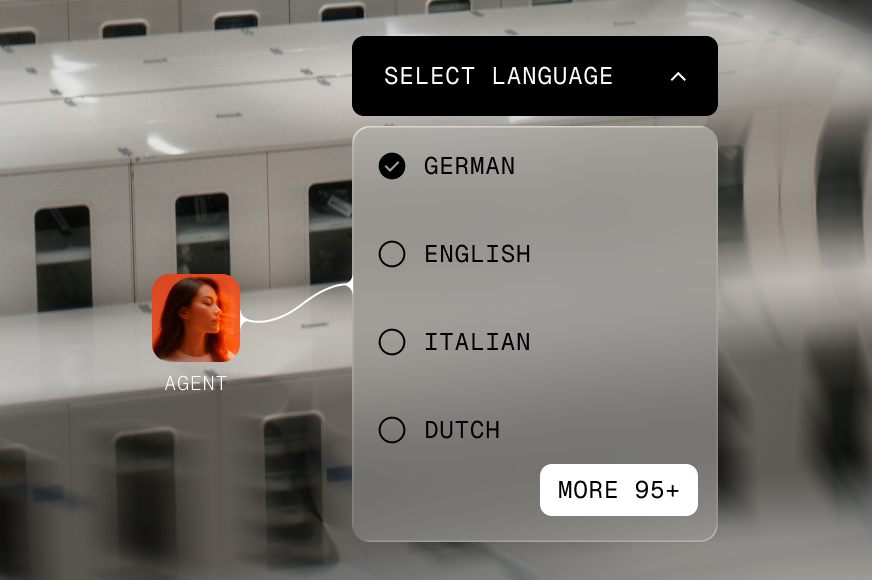
The Stylist Academy runs in three phases, each targeting a different layer of what makes support feel genuinely personal.
Agents study real customer interactions and role-play edge cases until the brand voice is internalized rather than referenced. Weekly analytics-driven reviews flag tone drift at the interaction level.
Agents learn to read the story of a ticket, not just the text, understanding each customer's history and intent to turn a technically accurate response into a personal one.
Agents are trained to think through complex cases rather than escalate them, keeping queues clear and customers from having to explain themselves twice.
Here's what the Stylist Academy looks like applied to a real brief. Lumi came to us with one agent, 600 monthly tickets, and a product whose entire value proposition was personalization. Below is the challenge we inherited, the system we built, and what changed.
Lumi is an AI-powered personal styling app helping over 100,000 women choose outfits daily, with suggestions personalized by style, body type, budget, and occasion. A product built entirely on personalization, backed initially by one agent handling 600 tickets a month with no workflows and no training system.
When we first engaged with Lumi, FRT ran over 20 minutes, average replies took up to 2 hours, and customer satisfaction sat at 69%. The problem wasn't volume. Standard agents were being asked to represent a product that required genuine styling knowledge and a highly personal communication style.
This 100x increase in volume wasn't just a matter of adding headcount. By implementing the Stylist Academy framework, we increased individual agent productivity by 176% compared to the original setup. We didn't just add "hands"; we built a high-output system where quality remains consistent whether handling 600 or 60,000 requests.
Trustpilot reviewers specifically called out the tone and warmth of the support team alongside the speed.

Read the full Lumi case study
Improving customer retention delivers compounding value that reducing cost-per-ticket simply can't match. Yet most brands optimize for the latter, because ticket metrics are easy to measure, and the emotional signal is not. The compounding effect of neutral sentiment (higher churn, fewer referrals, more competitor receptivity) accumulates in annual revenue long before anyone names it as a support problem.
The Stylist Academy shifts focus from cost-per-ticket to ROI through retention. When agents operate as brand experts, they prevent the "neutral drift" that makes loyalty program strategies harder to sustain. In Lumi's case, the 23-point CSAT jump represents customers who stayed because the interaction felt like a premium styling session, not a support transaction.
Standard QA catches errors, not tone drift. VoC programs close this gap, but only when someone is measuring an emotional signal alongside resolution rates.
Better software helps at the margins. It doesn't fix an agent who hasn't absorbed the brand. The comparison below shows the difference between a tools-first approach and a system-first one.
If your outsourced team resolves tickets but doesn't sound like you, that's a brand problem, not a staffing problem. EverHelp builds the internal training infrastructure that turns agents into genuine brand experts and delivers excellent customer service at scale. Scalable, auditable, and built around your voice.
{{cta}}
Help someone else stay in the know. Hit that share button!


.webp)
.avif)
.avif)
.webp)