Growth & Metrics
Published on
28.08.2026
Last updated on
17.09.2026
Ecommerce returns management: reduce costs without losing customers

Valentyna
VP of Customer Support

Valentyna
VP of Customer Support
.webp)
A generous return policy is one of the strongest conversion levers in ecommerce. 82% of shoppers say free returns shape where they buy, according to NRF's 2025 Retail Returns Landscape, part of a wider shift in eCommerce customer experience trends.
However, that same policy has a downside: it creates a need for eCommerce returns management after every sale. Appriss Retail's 2026 Total Retail Loss Benchmark Report states that $706 billion in total merchandise was returned in 2025, based on transaction data across roughly 250 million unique customer identifiers plus a survey of 1,000+ consumers. Of that $706 billion, $100 billion (14.2%) was classified as preventable loss from fraud and abuse.
If you look deeper into your own return tickets, you will notice each one was often preceded by a support ticket or two. And that’s where the opportunity to apply returns management in eCommerce is the highest.
The hard part for any support or CX leader, though, is cutting return costs without driving away good customers. This guide is designed for that. We will cover:
We can all agree that return costs don’t equal the actual refund. For a business, the cost of a return also includes:
So, since returns also demand involvement of the support, finance, and logistics teams, it’s usually tricky to estimate exactly how much you end up paying for it. Well, we’ve tried to calculate that price below for you.
Processing a single ecommerce return costs retailers roughly 27% to 30% of the item's purchase price on average, according to Optoro's returns research. For a $50 item, that's roughly $13.50 to $15 in handling cost alone.
Yes, part of it is the refund amount your business issues to the customer’s bank account. Other expenses come from:
And the pricier the item is from the beginning, the costlier it is for your business to process its return.
Only about 47% of returned items get resold at full price, so nearly half carry a markdown or liquidation loss on top of the handling cost.
Then there are the support costs. Usually, returns start with a follow-up, which then leads to order status checks, filing a complaint, and opening a dispute. All of this adds to agent time and drags on your customer satisfaction metrics.
{{cta}}
Unfortunately, not every return is done for a legitimate reason. There’s a certain volume of eCommerce return fraud that might happen no matter how well your policy is written. Based on Appriss Retail's 2026 report, of the 14.2% ($100 billion) of loss from fraud and policy abuse:
Though these two figures shouldn't be conflated, both indicate that return fraud happens more often than we might think, and it takes a good chunk of your expenses. That gives you so much more reason to include them on the list of call center metrics that matter for future return strategy planning.
Most eCommerce return fraud trends and abuse fall into a few recognizable patterns. Once you know what they look like, they're easier to spot in your own ticket queue:
That latest emerging “fraud trend” is why capturing evidence at intake matters more now than it did a couple of years ago. If your agents log the reason and proof at the point of return, you have something to check a claim against later.
Luckily, you can spot return fraud in eCommerce if you watch a few key triggers. So, if your trained agent sees and flags any of the following in the moment, you might just prevent the issue in time:
Retailers aren't ignoring the problem. NRF and Happy Returns' 2025 Retail Returns Landscape survey found that 85% of retailers now deploy AI or machine learning to detect and prevent return fraud, though only 45% have considered these tools effective so far. T
This underscores that automated detection is necessary but not sufficient without human review and escalation for high-risk cases. Still, tools that catch red flags mean little without a consistent workflow, and that’s where policy comes in.
When the return rates climb, the typical business instinct is to tighten the policy. Yet, this decision is the one most likely to backfire.
According to the UPS & NRF joint 2025 survey, 81% of shoppers read a return policy before buying, so a stricter policy will likely result in cart abandonment rather than fewer returns.
Thus, the practical question is how to reduce returns in ecommerce without touching the policy customers rely on. Since most returns trace back to a fixable cause, the better move is then to reduce what triggers them in the first place, while leaving the customer's rights the same.
Apparel and footwear carry the steepest return rates in ecommerce, as evidenced by Radial and Two Boxes' State of Retail Returns in 2025 report. The research found that:
In that case, fixing the issues doesn’t take much effort. All you need is to include:
With this information, your product page might look something like this.
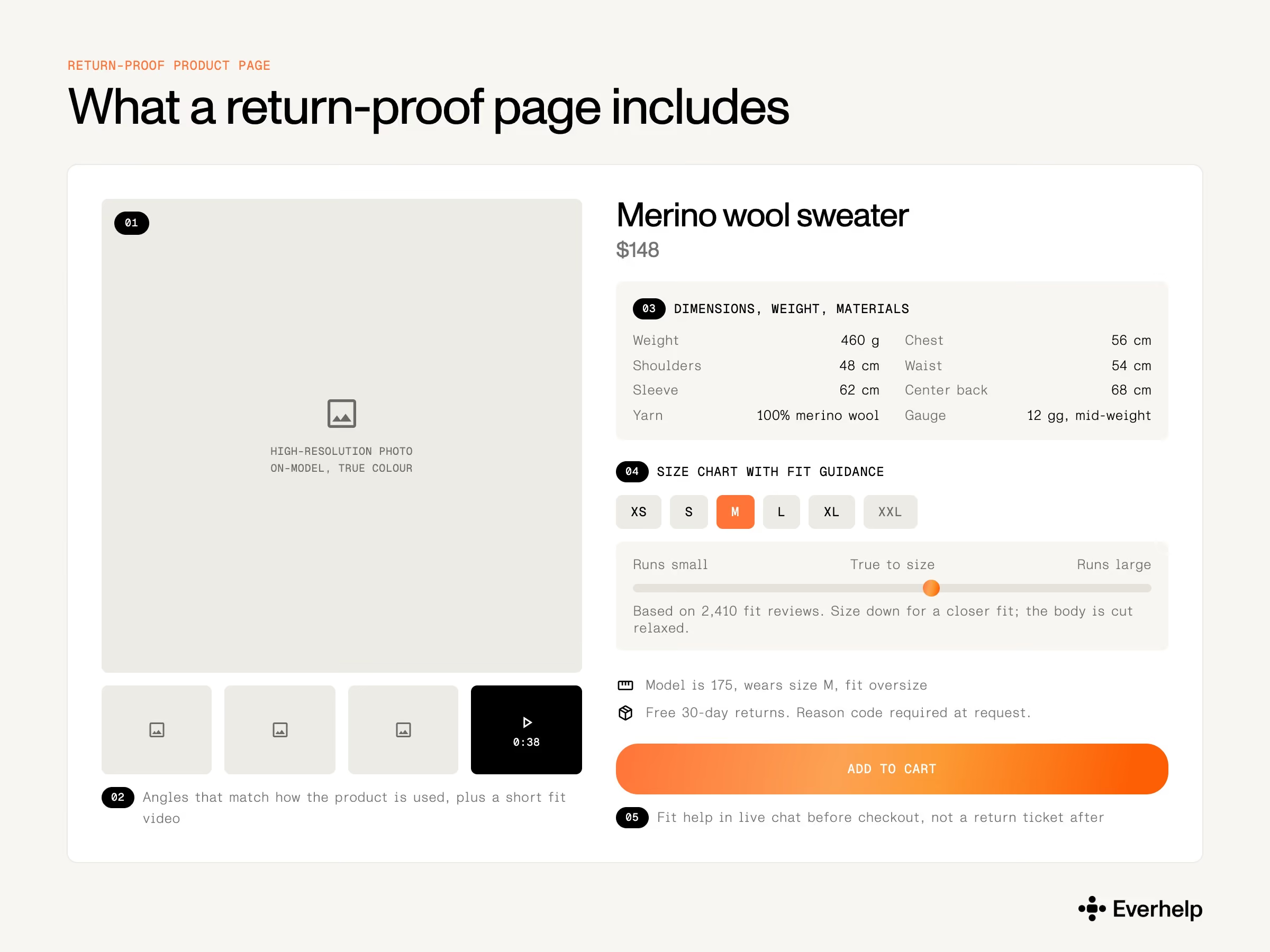
Providing your customers with this will help bring down the typical “it didn't look like this” and “it didn’t fit” complaints in your ecommerce live chat to a minimum. So far, this is the cheapest strategy to prevent returns from becoming tickets in the first place.
As we mentioned before, extra support is a major driver of rising return costs. And since you can’t eliminate these cases (there will always be unsatisfied customers anyway), you should be smarter about how your support handles them.
Here, you need to understand that the large share of return-related tickets are mostly about anxiety. Customers ask questions like “where's my order”, “has my return arrived”, and “when do I get my refund” because they feel like they are being kept in the dark — and they don't like it.
So, we recommend trying proactive updates to take most of that volume off the queue before it lands. You can specifically use:
Routing the routine version of these questions to an AI chatbot for customer service is also a good strategy. It keeps agents free for disputes that actually need judgment, while still giving customers the reassurance they need.
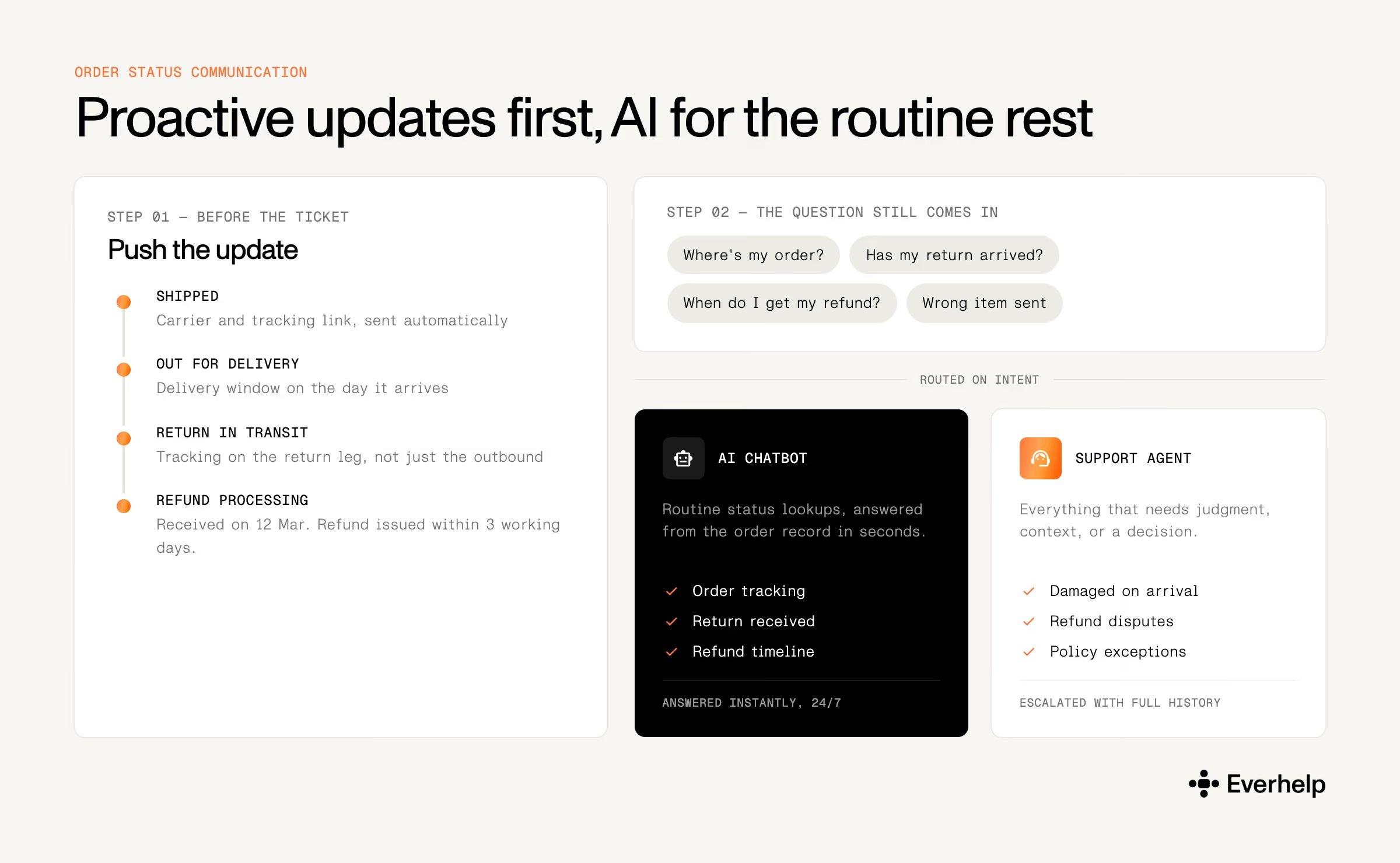
Pro tip: When the tracking data itself is patchy, you should look into your ecommerce shipping software to fix it. With clean tracking, your customers won't even have the reason to contact you in the first place.
What do you do, though, when you actually end up with a return case? Most guides simply tell you to process it fast. For us, that’s the baseline.
We think a better strategy (and the one we follow in Everhelp’s ecommerce customer support outsourcing) is to analyze why the return happened in the first place. That data lets you fix the cause instead of paying for the same return again next month.
The way to do it is simple: have your returns portal or support workflow log a reason code at intake. Then you can see which SKUs, sizes, or descriptions are driving the volume.
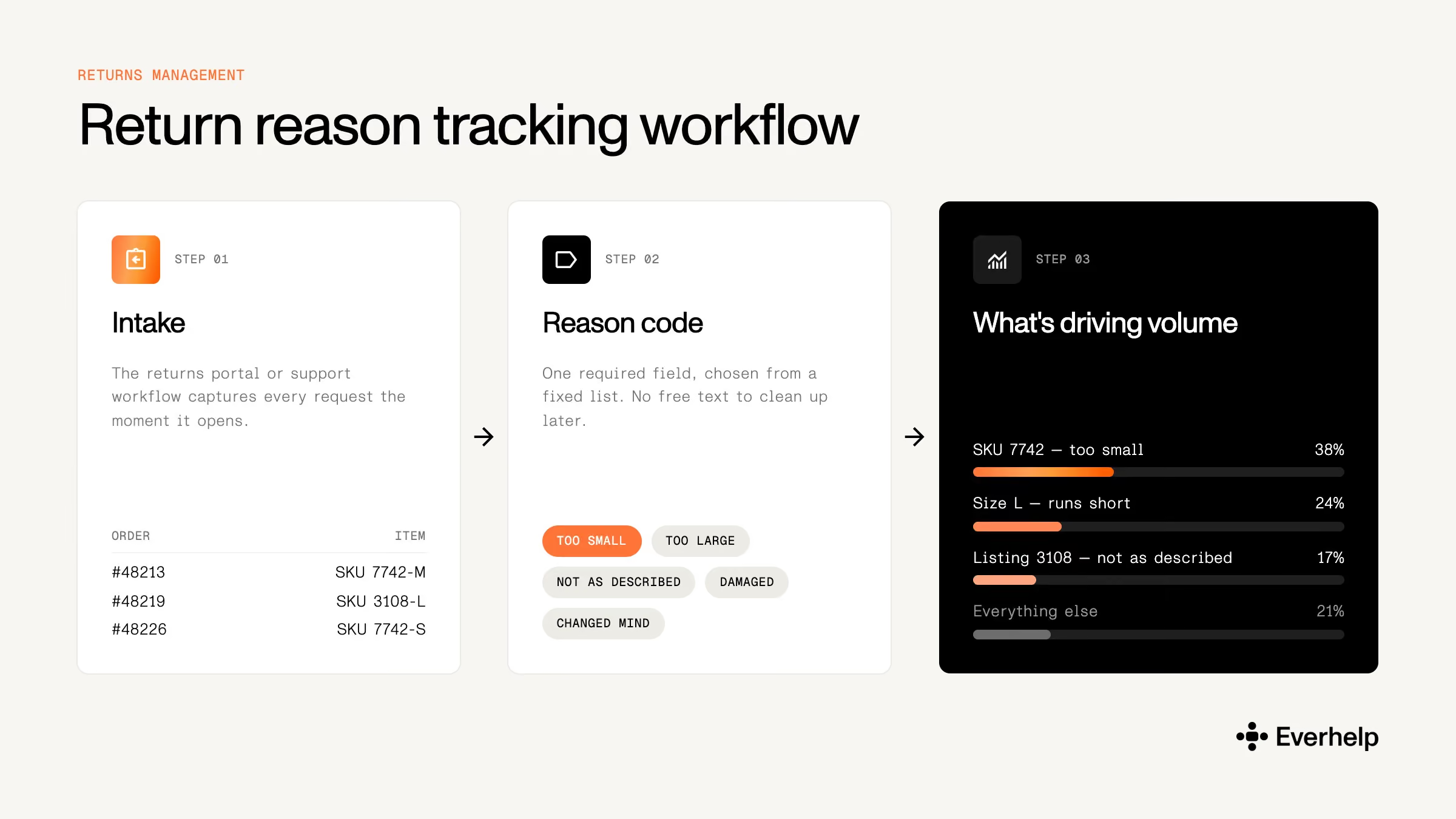
And most reason codes point straight at a specific fix:
Without this data, every return looks the same, and you end up treating a product-page issue like a logistics issue. With it, you can feed what you learn back into the product page, the sizing guide, or the supplier, and actually bring the return rate down over time.
Pro tip: Review your top reason codes monthly, not quarterly. The sooner you catch a specific issue cluster on a new style, the fewer units ship before you fix the listing.
{{cta}}
A well-written return policy, beyond being a sound legal document, also becomes a strong support tool.
Because most return-related contacts are just customers looking for an answer the policy should have given them upfront:
Answer those clearly and visibly, and you'll pre-empt most tickets. Thus, your policy has to get two things right: the content and its enforcement.
The eCommerce return policy best practices most worth copying come down to 5 key elements:
Use very simple, plain language when writing these details. A policy full of legal hedging creates the exact "does this apply to me" contacts it's meant to prevent, so write it the way an agent would explain it in chat.
And make sure it’s easy to find. You can even include notes about it at every stage where the customer makes a purchasing decision, e.g., on the product page, cart, checkout, and order-confirmation emails.
The potential of your business to be exposed to customer fraud shouldn’t make you seem less generous. The risk comes from ambiguity: a vague policy applied differently by each agent both invites abuse and generates disputes.
Here are a few guardrails that will let you stay generous without absorbing the losses:
This is where having an established eCommerce business return policy customer service standard pays off. When every agent applies the same rules the same way, a generous policy won’t turn into a free-for-all. That consistency is hard to maintain with a rotating in-house queue, but much easier with a trained customer service outsourcing team.
A refund dispute is really just a billing dispute with a few extra steps. The customer is contesting a charge, someone has to review the evidence, and it has to be resolved quickly and consistently.
Since it works like any other payment dispute, you can hand it off the same way. Which is why ecommerce returns management outsourcing works so well as a business tactic. An experienced support partner such as Everhelp absorbs your return-volume spikes, so you don't have to build out a heavy in-house returns operation to handle them.
With our client Relatio, we built a structured billing-support workflow from the ground up, since none existed before the partnership.
Before our partnership, their complex payment disputes, including unrecognized charges and failed transactions, were handled ad hoc, leading to slow, inconsistent resolutions. We refined the escalation path so those cases route to the right people quickly:
We then applied the same tiered logic directly to refund disputes. Because a highly sensitive question about returns that needs real judgment and a follow-up action shouldn't be in the same queue as a simple status check, and it shouldn't bounce between agents who each will have to piece the case together and will most likely handle it differently.
Refunds, like any other sensitive case, need to be routed straight to someone equipped to close it. That's how you avoid the slow, case-by-case handling that creates repeat contacts and chips away at customer trust.
Returns will never hit zero, and chasing that isn't the goal. The goal is control. Once you can see the full cost of a return, catch fraud and abuse for what they are, and trace each return back to the cause that triggered it, you can stop treating these cases as unavoidable tax. At the end of the day, they're part of your operation like any other, and they need good management.
Most of that work comes down to two things:
If you're weighing partners to do that work for you, our rundown of the ecommerce customer service outsourcing companies worth considering is a practical starting point.
You can also see how we structure ecommerce customer support outsourcing for online brands at Everhelp, and book a meeting with our experts if you think we are a fit.
Help someone else stay in the know. Hit that share button!




.webp)

.avif)
.avif)