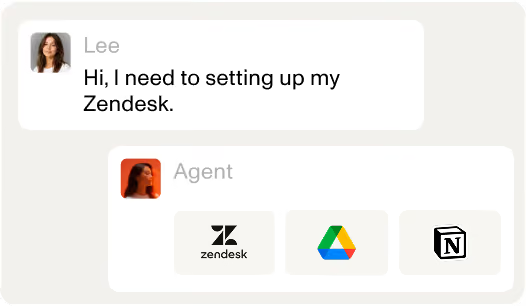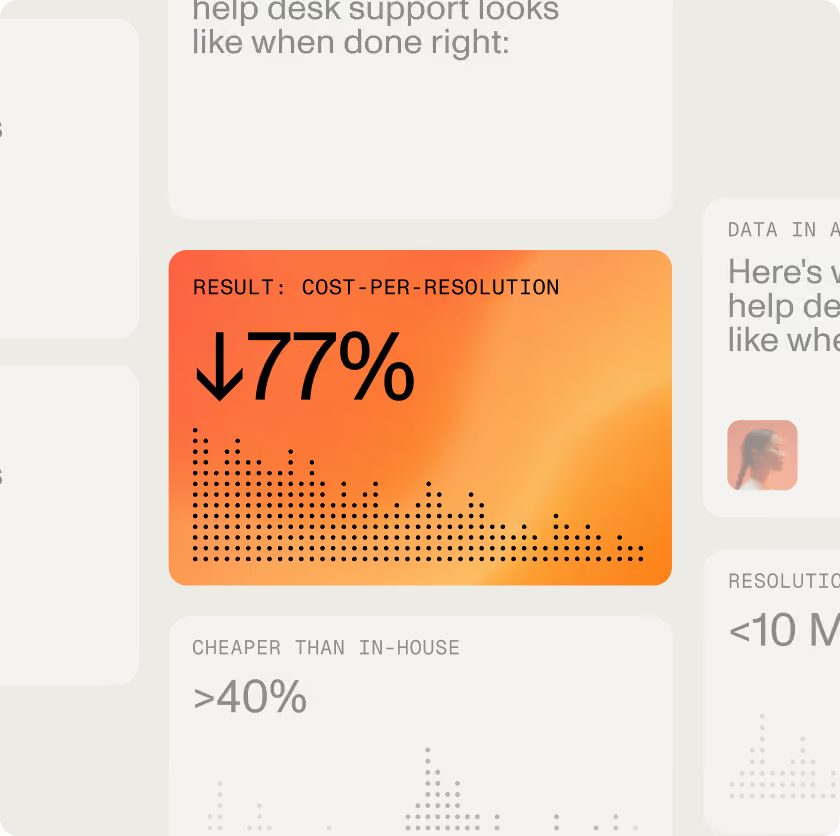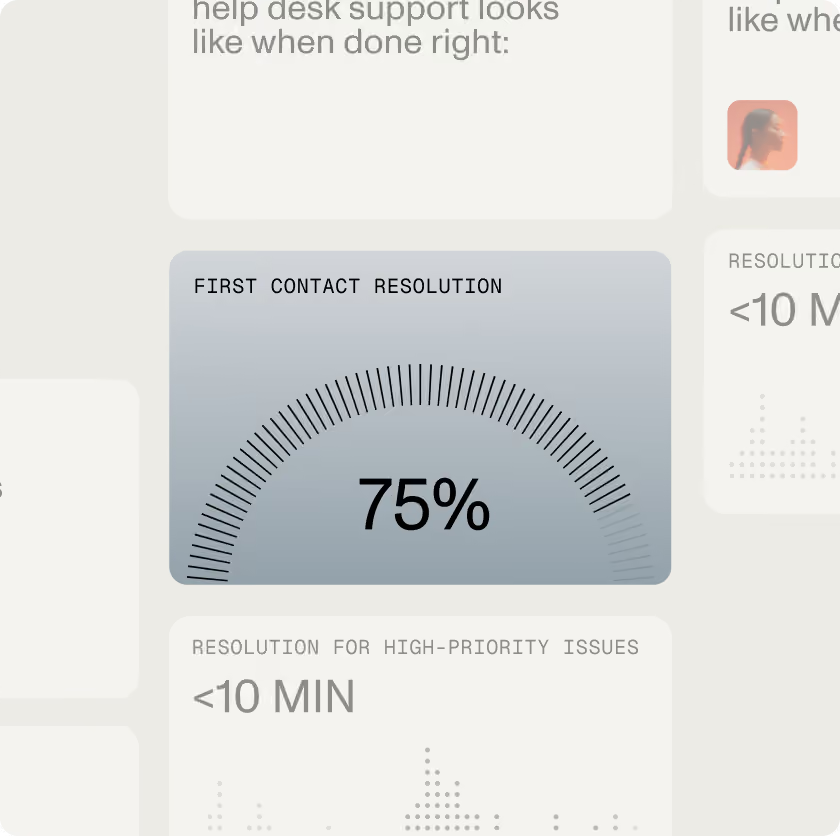
We help companies set up Zendesk from scratch, migrate from their current tool, and connect it to their existing stack, handled by a team that has run Zendesk across hundreds of support operations.


Delivered by the team that relies on Zendesk daily, not consultants who disappear after go-live.

We work with companies at different stages of their Zendesk journey. Most projects fall into one of three services below, and some combine all three. Once your instance is live, we also layer in automation, train your agents inside the real environment, and document everything we build.


A Zendesk integration only earns its place if it removes a manual step for your agents. That is already the norm for most Zendesk customers: Zendesk reports that over 58% of its customers have installed at least one marketplace app or integration, and that usage now touches close to 75% of the company's annual recurring revenue. We connect Zendesk to the systems your team already relies on:
Customer support is all we do. That focus means we know the niche, industry-specific requirements that come up in a Zendesk configuration, the ones a generalist consultant would miss: support tier structures, escalation paths, SLA rules for regulated industries, multilingual routing, and the small automation decisions that quietly cost agents hours each week.
Every new client we onboard runs through Zendesk, every single time. That constant, hands-on use across every onboarding is where our expertise actually comes from, not a one-time certification earned and shelved.
Because we also provide outsourced support teams, we can hand your new Zendesk instance straight to trained agents if you need extra coverage, or simply leave it fully configured for your in-house team. We quote Zendesk implementation costs upfront, with no surprise per-seat fees added later.
Every agent is required to secure sensitive information whenever they step away – locking screens, storing physical documents in locked drawers, and keeping no passwords visible near their workstation. Unattended data, in any form, is a risk we don't leave to chance.
Got questions? We’ve got answers. Let’s clear things up.
Most Zendesk implementation projects take two to four weeks from kickoff to go live. The exact timeline depends on:
Reconfiguration projects for teams already on Zendesk often move faster, sometimes within one to two weeks.
We also document everything we build, so your internal team always has a clear reference. Ask for our internal Zendesk implementation guide during your discovery call for a full breakdown.
We connect Zendesk to most of the tools support and sales teams rely on daily, including Salesforce, HubSpot, Shopify, Slack, Jira, WhatsApp, and Microsoft Teams and others. A Zendesk integration with HubSpot is one of our most requested setups, since it keeps marketing, sales, and support working from the same contact record. If a tool is not on this list, ask us. We have built custom integrations for platforms that do not have a native Zendesk app.
Yes. A large share of our Zendesk projects are reconfigurations rather than new builds. We audit your existing setup first, keep what works, and rebuild the parts that are slowing your agents down: messy ticket views, outdated macros, or routing rules that no longer match your team structure.
Zendesk implementation costs depend on a few factors:
We provide a fixed quote after a short discovery call, so you know the full cost before any work begins.
Yes. If your custom tool has an application programming interface (API), we can usually connect it to Zendesk. We have done this for proprietary order management systems, internal CRMs, and niche industry platforms without an off-the-shelf connector.
We are not a reseller or certified implementation partner in the formal sense. What we bring instead is operational depth. We help you navigate the options to choose the wisest Zendesk pricing tier for your needs, ensuring you only pay for what your team will actually use.
We have configured and run Zendesk within real support teams for years, not only during handover periods. That experience shapes how we read Zendesk's service culture and translate it into the triggers, macros, and escalation paths we build for your team.
Not exactly. Zendesk is built as a help desk and customer service platform, not a sales-focused customer relationship management (CRM) system like Salesforce or HubSpot. It does store customer data and interaction history, which is why some teams use it as a lightweight customer record system. Still, its core strength is ticket management rather than pipeline tracking. If you are comparing it with other helpdesk software, Zendesk stands out for its depth of automation and its wide library of integrations.
It depends on your team's complexity. Freshdesk tends to suit smaller, leaner teams that want a fast setup and lower cost. Zendesk fits larger teams that need advanced routing, custom workflows, and enterprise-grade reporting. For a full breakdown, read our Zendesk vs Freshdesk comparison.
Schedule a call to see how we scope, configure, and connect Zendesk for your business, with a fixed quote before anything begins.