

Human+AI Support Model: The New 2026 CX Scaling Standard
.png)

Probably the most asked question since AI technologies have gained traction is, “Can you replace human customer support with AI?” And our answer is no. But you can definitely replace human-only support with a Human+AI support model.
The debate around AI vs human support in customer service has been going on for quite some time now. And some may still see AI through rose-colored glasses, as a quick and objective solution that limits the possibility of human-factor mistakes. However, if we look at the data, today, 84% of consumers believe humans to be more accurate than AI, and 89% think companies should absolutely provide an option to talk to a human agent.
What this tells us is that people actually prefer businesses having that human factor. Yet, this doesn’t mean that you shouldn’t amplify your operations and try to improve the quality of service through AI technologies. That’s exactly why professionals in the field of customer service (EverHelp included) are increasingly adopting the Human+AI support model, combining empathetic human touch with the precision and speed AI offers. And, according to our contact center AI news analysis:
“As contact centers are increasingly becoming engines of customer loyalty and growth, there’s a growing need for businesses to shift from tool-by-tool adoption to platform-level AI strategies, where agentic capabilities are woven into every customer interaction.”
In this article, we're drawing from this analysis of recent AI news, as well as our own operational experience and observations across the industry to break down what this model actually looks like, why it works, and what it means for businesses ready to scale CX in 2026.
Why "AI vs Human" Is the Wrong CX Question?
Because asking "AI vs. Human" is like asking whether a hammer or a paintbrush is better, you need both to finish your renovations, and do it the right way. AI bots are best at providing fast, surface-level responses to those clients needing quick updates and fixes. On the other hand, they don’t perform too well when the situation involves emotions or unusual issues/formulations. In these cases, people were proven to be the best performers.
Yet, the framing of AI against humans took hold for understandable reasons:
- cost pressure
- mounting ticket volumes
- and the promise of headcount reduction.
All of this made AI live chat software look like a silver bullet. But treating it as an either/or question leads companies to build brittle support operations, either under-automated and expensive, or over-automated and cold.
The evidence for successful hybrid models is hard to ignore. According to analysis of real support operations, Human+AI support models consistently outperform both ends of the spectrum:
- CSAT scores with hybrid support can cluster around 80%.
- First contact resolution rates with Tier 1 AI support can be boosted by 5-10% or more.
- And cost reductions can reach up to 40-80% at scale.
At the same time, a report from Zendesk reveals that 56% of customers expect AI bots to carry out genuinely human-like conversations in 2026. As these expectations continue to rise, businesses face mounting pressure to deliver more sophisticated AI experiences to reach customer satisfaction.
The answer to this isn't replacing your human agents with automation tools, though. As, for instance, routine, high-volume work (e.g., password resets, order tracking, FAQ responses) is built for automation. But empathy, complex judgment, and relationship building still require people. The 2026 standard isn't AI vs. humans. It's a Human+AI support where each does exactly what it does best.
Customer Support Response Rates – AI vs Human
Response time is often where the AI vs. human comparison starts, and for a good reason. After all, customer support response rates differ dramatically between the two models.
AI systems respond in as little as 3–15 seconds, 24/7, without fatigue or coverage gaps. Human-only teams, even well-staffed ones, typically can respond in 1-2 minutes on live chat and 1–4 hours on email. Not to mention that their availability can be largely limited to business hours.
According to HubSpot, 75% of CRM leaders say AI has already helped reduce their customer service response times — a clear signal that the performance gap between the two is growing.
But first call resolution and general response time are just a small part of the whole support communication process. In a truly hybrid model, AI not only handles the first response in seconds but also triages context and resolves straightforward issues fully autonomously. And when complexity or emotion enters the picture, a human agent with empathy takes over. With AI providing initial context, they are faster and better-informed than if they'd handled the ticket cold. The result: better first-response time and CSAT. And that’s the lane we, at EverHelp, started to follow.
The Human+AI Support Model Explained
The human+aI support model means AI systems and human agents working as a single, coordinated unit, not two parallel tracks that occasionally intersect.
In practice, the division of labor looks like this:
- AI handles customer support automation triage, knowledge retrieval, and pattern spotting across high-volume, predictable interactions.
- Humans step in for nuanced decisions, emotional support, policy exceptions, and anything where judgment or relationship matters.
Neither operates in isolation and needs to constantly exchange context and knowledge with the other to perform at its best.
Thanks to such a workflow, businesses can unlock:
- lower ticket backlogs
- stronger SLA adherence
- scalable 24/7 coverage
- and real SaaS tech support scaling without the proportional headcount costs that legacy BPO models demand.
We ourselves have noticed that for teams, incorporating AI alongside their agents, CX operational excellence stops being a goal on a slide deck and becomes a measurable operational reality.
What’s our stance, you may ask? Well, we're definitely not a traditional BPO selling agent seats, and we're not a software vendor selling a bot. Since we launched Evly, we’ve grown into the Human+AI operating system that runs modern CX teams, handling everything from technology to QA to coaching in a single integrated model.
How We Implement the Hybrid Human+AI Model at EverHelp
How does this model look in action? We believe that it’s better to show than to tell, and we have a great example – our client Title.
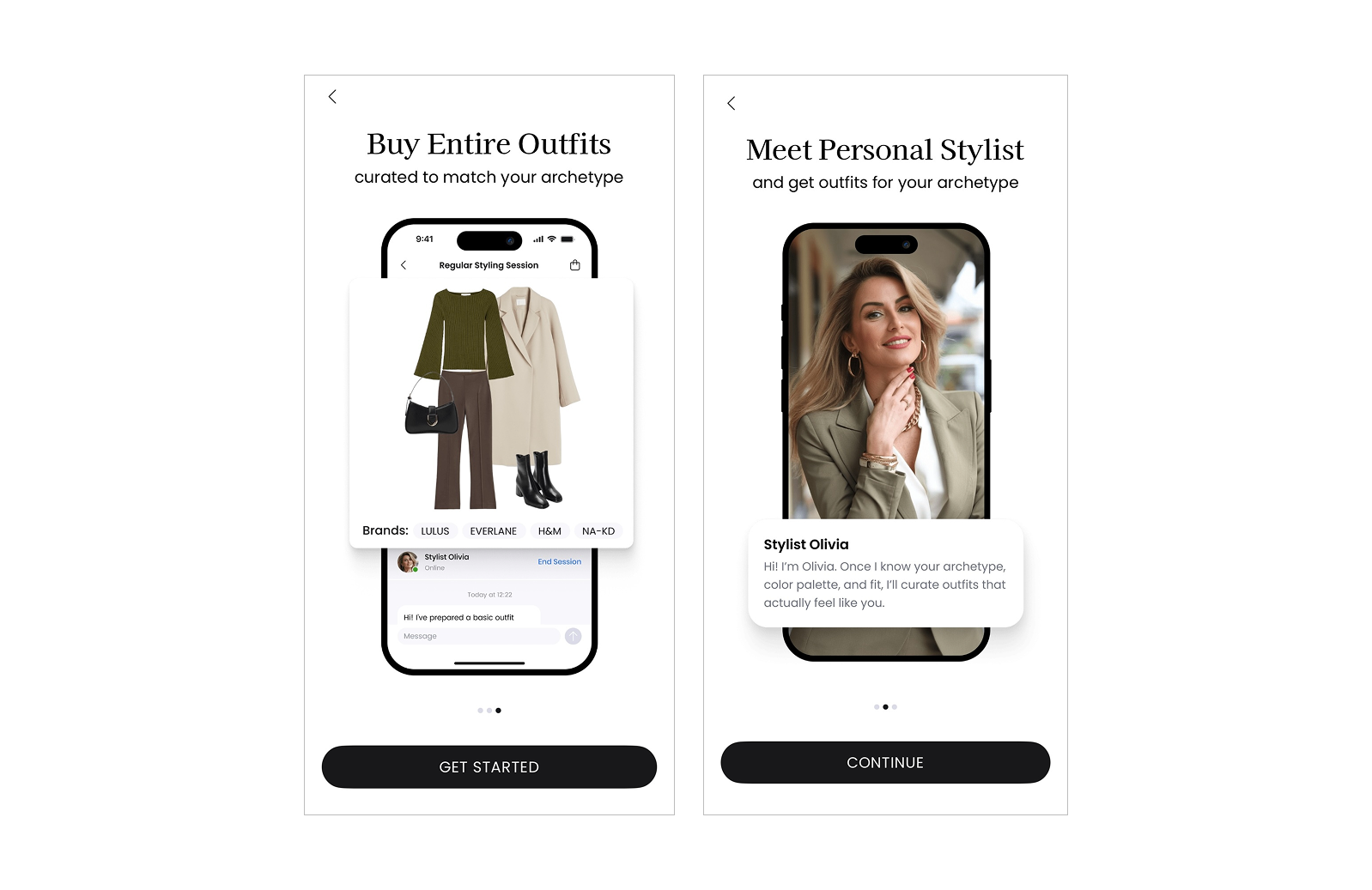
Title is a startup application project focused on providing styling services to individuals worldwide. They came in with the need for a well-organized support system, as they didn’t have one yet. So the first thing we did was hire 5 agents to handle general chat and email inquiries. However, after we finally launched our product, we decided to strengthen their support with the newly founded AI. As the Evly agent was training on their data and got finally integrated into their system, it is now:
- Handling 65% of all requests end-to-end
- Covering 75% public responses, together with Title’s own chatbot
- Providing responses with 90% accuracy.
As such, their support team, despite having around 40K tickets a month coming in, doesn’t actually deal with routine requests and now only focuses on the most complex cases, such as, for instance, completing refunds for the users. Of course, we didn’t see these results immediately. Still now, after months and months of iterations, we know exactly what creates the backbone for a successful hybrid support model. Yet, Title is not the only client of ours that have tested out the power of the hybrid approach, and if you want to learn more about the way we implement it, check out our AI in customer service handbook.
The 3 Pillars: Automation, Augmentation, Visibility
As such, our model is built on three interconnected pillars, which we believe are non-negotiable in a hybrid system. Each of these addresses a different layer of our support operation:
- Autonomous Automation (which we cover with Evly AI) takes on the sheer ticket volume → resolving repetitive interactions end-to-end and performing classification and tagging before a human ever sees a ticket.
- Augmented Experts (powered by the Co-Pilot) keep human agents sharp → surfacing context, suggesting replies, and accelerating complex or compliance-heavy conversations.
- Total Visibility (handled through Kaizo QA Integration) closes the loop → Auto QA, Empathy Scores, and sentiment analysis that create a real-time performance layer across 100% of interactions.
Legacy BPOs can hire more agents. Bot-only vendors can add (or cut) more flows. Neither can easily replicate a model where automation, human expertise, and continuous quality intelligence all reinforce each other. That's what makes such a model sustainable.
Pillar 1 – Autonomous Automation
The volume problem in customer support is real. A SaaS company scaling from 5000 to 500,000 users doesn't need ten times more agents. It needs to scale its tech and IT support tiers through automation.
And that was one of the reasons we came up with Evly – the AI customer service agent, designed to handle the repetitive, high-volume workload that consumes human capacity. Now, Evly resolves straightforward interactions in approximately 15 seconds and automates up to ~85% of ticket processing by:
- classifying intent
- retrieving answers from a curated knowledge base
- and resolving or routing without human intervention across chat, email, and voice channels.
Aside from improving operational efficiency, this also allows us to optimize costs up to 40%-60%, as it allows businesses to scale their support operations without increasing the team’s headcount. Here’s exactly where Evly allows you to save.
The automation triage layer is where Evly shines the brightest. Rather than applying keyword matching, Evly:
- reads full conversational context
- identifies what the customer actually needs
- and either resolves the request or routes it to the right queue with the relevant context already attached.
As a result, teams are building a 24/7 support experience:
- fewer tickets reaching human agents
- faster incident communication during product outages,
- and consistent coverage across time zones.
However, we firmly believe that AI can’t operate without guardrails. For Evly, we’ve established clear escalation thresholds defining when it hands off to a human, such as in situations involving:
- billing disputes above certain thresholds
- compliance-sensitive topics
- or negative sentiment patterns that signal a frustrated customer.
After all, quality and compliance shouldn’t be traded for speed.
Multilingual Customer Support AI: Global Automations at Scale
Global expansion gets expensive fast when language coverage means hiring specialized agents per market. But when we introduce autonomous multilingual customer support AI, the equation changes.
In our case, Evly handles tasks like language detection, translation, and response generation across 95+ languages, while also maintaining a certain pre-set tone. This ensures that a customer in Brazil and a customer in Germany get the same quality of answer, calibrated to their language and regional context. For complex or regulated interactions, like responding to negative reviews, for instance, native and near-native human agents step in to ensure accuracy and compliance.
From a CX operational excellence standpoint, this is a meaningful cost lever. Done this way, adding a new market doesn't require recruiting a whole new language team from scratch. Marginal cost per new market drops significantly, and global coverage scales without the coordination overhead that typically slows expansion.
Pillar 2 – Augmented Experts: The Co‑Pilot AI Agent
The "humans vs. AI" narrative assumes humans stay static while AI advances. But the reality is that AI progresses only alongside humans, while also making them more capable.
With this in mind, we built the co-pilot AI agent within Evly so it can be used as a live assistant embedded directly in the agent's workspace. So what exactly does it do? As a conversation unfolds, the co-pilot:
- Surfaces relevant account history
- Suggests the next best response
- Flags compliance-relevant phrasing
- And recommends resolution paths.
As such, thanks to the co-pilot mode, agents don't have to hunt through documentation or escalate to senior staff for common edge cases. The answer basically comes to them thanks to the omnichannel customer support system.
Through the experience of our clients, we have found that teams working with the co-pilot resolve complex workflows faster, make fewer policy errors, and handle sensitive conversations with more consistency.
You may be wondering what separates EverHelp's co-pilot from off-the-shelf agent assist tools. And mainly it's the training. The model is calibrated against each client's specific knowledge base, QA scorecards, and historical ticket data. It reflects real-world customer service standards and is learned from actual tickets that agents have already solved. So, when a customer asks a nuanced question that doesn't fit a standard flow, the co-pilot has the right institutional context to guide the agent.
In 2026, the agent's role is shifting. They're no longer just answering tickets — they're orchestrating AI suggestions, applying judgment to edge cases, and providing the empathy that no model can replicate when a customer has genuinely had a bad day.
AI vs Human Support in Customer Service (Co‑Pilot View)
We presented you with the benefits of implementing AI alongside your agents. In the table below, we consolidated this information, showing how these models compare across the dimensions that matter most in real operations.
AI vs Human Support in Customer Service – Co-Pilot AI Agent Comparison
Sources: WorkFlux AI analysis (2025); EverHelp operational benchmarks.
Pillar 3 – Total Visibility with AI‑Driven QA
The key issue with quality assurance in traditional BPOs is sampling. In the best case scenario, a QA manager reviews 2–5% of tickets, flags some issues, and generates a report that usually arrives too late to course-correct anything.
At EverHelp, we solve this with Kaizo QA Integration. We use this platform to evaluate 100% of conversations automatically, as it covers mechanical quality checks via Auto QA, and deeper emotional quality tracking through Empathy Score and Customer Sentiment Analysis.
This way, between 2023 and 2024, we increased the number of tickets handled per hour by 280–300%, while keeping the Internal Quality Score (IQS) consistent at 90%. Our QA ratings volume also grew by 270% over the same period.
Based on this experience, we can firmly say that for client stakeholders and operations leaders, AI-driven QA delivers a real-time, single source of truth on performance across both AI and human interactions. It also makes sentiment trends, policy compliance, and tone consistency all visible and actionable, so teams don’t have to wait for quarterly reviews.
Automated QA as a Path to Coaching & Design Improvements
QA data is a perfect source of truth for product and service insights. And that’s why in EverHelp's model, it feeds directly back into the operation.
For us, agent-level insights from Kaizo power targeted coaching sessions and personalized training playbooks, so underperforming agents get specific guidance on what to improve. Evly is also continuously retrained using patterns surfaced by customer service analytics, refining intent classification and improving autonomous resolution rates over time.
This creates a reinforcing loop:
More AI interactions generate more data → better QA insights surface faster → and both the humans and the AI improve in response.
The Future of AI in Customer Service: 2026 and Beyond
The future of AI in customer service is already arriving in production environments. What was "pilot" in 2024 is becoming the default operating infrastructure in 2026. Agentic AI is now moving towards IVR, co-pilot workflows, workforce management, and real-time analytics as a part of the core infrastructure.
The broader shift is from reactive ticket clearing to predictive and proactive customer service. Modern-day AI systems are already being implemented to:
- Identify a customer likely to churn before they file a complaint
- Predict a surge in similar queries based on historical data
- Detect a product bug before engineering flags it.
As hybrid human+AI workforces are increasingly becoming popular, leaders are under pressure to redesign KPIs and roles accordingly. Agentic AI is projected to resolve a significant majority of common support issues autonomously by the end of the decade. Namely, according to Cisco, by 2028, 68% of all customer service and support interactions with technology vendors are expected to be handled by agentic AI. This means the remaining human work will increasingly require higher judgment, deeper empathy, and stronger institutional and technical knowledge.
Prepare for the AI-Powered Human Support System – Start Now
In view of these industry changes, we have already aligned our current architecture with this trajectory:
- Our AI customer service assistant, Evly, handles the autonomous automation layer, scaling with volume without proportional cost increases.
- The co-pilot keeps human agents sharp and consistent as they handle more complex, higher-stakes interactions.
- Kaizo-powered QA gives operations leaders full visibility across both layers, in real time.
The key question of this year isn't whether to adopt a Human+AI model. It's whether your current vendor (or in-house system) can actually run one. And we at EverHelp aren’t just another vendor. So, if you're ready to build a customer support team, ready for the future, and redesign your 2026 CX blueprint, book a meeting, and let's build it together.


Help iemand anders op de hoogte te blijven. Druk op die deelknop!